Here’s what CNN has cooked up now.
CNN has identified a close aide to President Donald Trump as a key figure in the chain of events that reportedly preceded the White House decision to bar CNN, MS NOW and Politico from White House access.
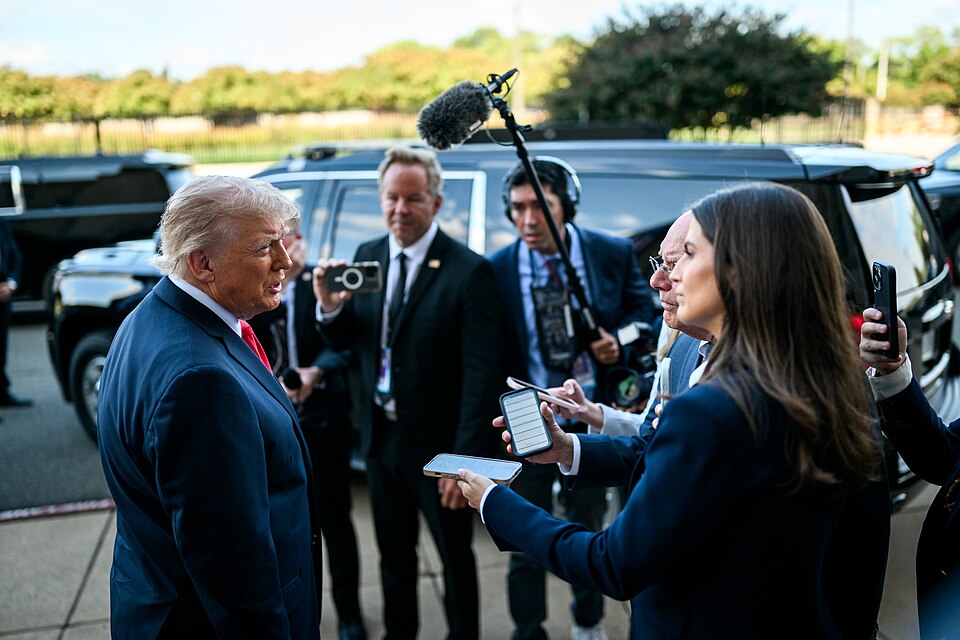
According to CNN chief White House correspondent Kaitlan Collins, Trump aide Natalie Harp showed the president a Politico graphic containing negative coverage of his administration.
Collins reported that the material angered Trump and was followed by additional press clips and television coverage that he believed was unfair or unfavorable. Trump subsequently moved to block the three news organizations from covering him from inside the White House and from participating in certain presidential travel assignments.
The report is drawing new attention to Harp, a longtime Trump aide who helps manage some of the information that reaches the president.
It also comes as CNN, MS NOW and Politico challenge the White House restrictions in federal court.
CNN Says Natalie Harp Showed Trump Coverage Before Ban
Collins reported Monday that Harp showed Trump a Politico graphic that prompted an angry reaction from the president.
According to CNN, Trump then viewed additional press reports and television clips he regarded as unfair to his administration.
CNN reported that the coverage helped trigger Trump’s decision to bar CNN, MS NOW and Politico.
The reporting does not establish that Harp personally ordered the ban or possessed the authority to remove the organizations.
Instead, CNN described her as the aide who presented Trump with some of the coverage before the president made his decision.
That distinction is important because the controversy has generated considerable attention around Harp’s increasingly visible role inside Trump’s orbit.
Who Is Natalie Harp?
Natalie Harp serves as a special assistant and executive assistant to President Trump.
She has frequently traveled with Trump and has become known for providing him with printed news reports, social media material and other information.
Her proximity to Trump means she can play an important role in determining which news stories and other material reach the president.
CNN’s latest report has placed that responsibility under a brighter spotlight.
Harp has sometimes been described in media reports as Trump’s “human printer” because she regularly provides him with physical copies of articles and other information.
She has also assisted with Trump’s social media operation and has helped handle material connected to his Truth Social account.
Trump Says Media Ban Was About ‘Fake News’
Trump has offered a different emphasis when explaining why the three organizations lost access.
The president has repeatedly accused CNN, MS NOW and Politico of spreading what he describes as “fake news.”
Trump announced the restrictions on September 18 and suggested that additional media organizations could eventually face similar treatment.
When reporters questioned Trump about the decision, he indicated that his frustration had accumulated over time rather than stemming from one isolated article.
The White House has argued that news organizations do not possess an automatic right to work from inside restricted areas of the presidential complex.
The affected organizations strongly disagree with the administration’s justification.
CNN, MS NOW And Politico Sue Trump Administration
The dispute moved into federal court Monday.
CNN, MS NOW and Politico filed a lawsuit against Trump and his administration seeking restoration of their White House access.
The organizations argue that they were punished because the president objected to their reporting.
Their lawsuit contends that such treatment violates First Amendment protections against government retaliation based on speech or viewpoint.
The administration argues that the White House has broad authority to control physical access to secure presidential facilities.
That disagreement is now at the center of the legal battle.
White House Press Credentials Deactivated
The restrictions became concrete over the weekend when journalists from CNN, MS NOW and Politico were prevented from entering the White House.
Reporters from the three organizations had their press credentials deactivated and were denied entry to the grounds.
The move represented a significant escalation from Trump’s long-running verbal criticism of major media organizations.
It also created an immediate problem for the system television networks use to cover the president.
Major TV Networks Suspend White House Pool Coverage
CNN is one of the major television organizations participating in the presidential television pool.
The system allows ABC, CBS, CNN, Fox News and NBC to rotate responsibility for providing camera coverage of presidential events when space is limited.
CNN was scheduled to handle a pool assignment Monday.
Because the White House prevented CNN from carrying out that responsibility, the other networks declined to take its place.
The television pool subsequently suspended coverage of designated presidential events.
That decision dramatically expanded the practical impact of the dispute.
Instead of affecting only three news organizations, the restrictions began interfering with the system major broadcasters use to provide Americans with independent television footage of the president.
Fox News Joins Networks In Objecting
Fox News joined ABC, CBS, CNN and NBC in objecting to the White House restrictions.
The networks argued that administrations should not restrict a news organization simply because officials dislike its reporting.
The development is notable because the five networks frequently compete with one another and have significantly different audiences and editorial approaches.
Their shared position demonstrates that the dispute has developed into a broader disagreement over the rules governing presidential press access.
Republican Reaction Is Divided
Republicans have not responded uniformly.
Vice President JD Vance has defended the administration’s decision and criticized the affected organizations.
Other Republicans have opposed using unfavorable reporting as a justification for restricting press access.
Idaho Republican Rep. Mike Simpson said Monday that disagreements with journalists should not lead to press bans.
That split reflects the larger debate surrounding the controversy: how much discretion should a president have over which journalists receive access to restricted White House spaces?
Why The First Amendment Is Central To The Lawsuit
The media organizations are not arguing that every journalist has an unlimited constitutional right to enter the Oval Office or other secure presidential spaces.
The legal question is narrower.
Their argument is that once the government creates a press-access system, officials cannot selectively punish specific organizations because they dislike those organizations’ viewpoints or reporting.
The White House counters that access to presidential facilities is a privilege subject to security and administrative control.
A federal judge will now have to consider how those competing principles apply to the current restrictions.
Previous Trump Media Cases Could Matter
Trump has faced several legal battles involving press access.
One of the most prominent occurred during his first administration and involved CNN reporter Jim Acosta.
The White House suspended Acosta’s press credential following a contentious 2018 news conference.
CNN sued.
A federal judge ordered the White House to restore Acosta’s credential while the case continued.
The administration ultimately restored his access.
That dispute established an important precedent involving procedural protections for journalists who already possessed White House credentials.
Associated Press Also Fought White House Restrictions
Another major case involved The Associated Press.
The Trump administration restricted AP access after the organization continued using the name “Gulf of Mexico” while also noting Trump’s decision to call the body of water the “Gulf of America.”
The AP challenged the restrictions in court.
A federal judge initially concluded that the news organization was likely to succeed on its argument that it had faced viewpoint discrimination.
An appeals court later paused that ruling while the litigation continued.
The result left important legal questions surrounding White House press access unresolved.
Those unresolved questions could now become relevant to the lawsuit involving CNN, MS NOW and Politico.
Kaitlan Collins Has Been In Similar Dispute Before
Collins herself was involved in a White House access controversy during Trump’s first administration.
In 2018, while serving as a CNN White House correspondent, she was excluded from an event following an Oval Office exchange in which she repeatedly questioned Trump.
The White House said her conduct was inappropriate.
CNN said the decision amounted to retaliation for aggressive questioning.
That disagreement became one of several Trump-era battles over how much control an administration should have over individual reporters.
White House Ban Changes Presidential Coverage
The newest confrontation is particularly significant because of its effect on pooled television coverage.
When presidential events take place in small rooms or other restricted settings, the White House cannot accommodate cameras from every television outlet.
Networks therefore rely on the pool system.
One crew records the event and shares the resulting footage with other broadcasters.
Because CNN was prevented from performing its scheduled pool duty, the other networks chose not to provide a replacement crew.
That means Americans could see fewer independently recorded images from some presidential events while the dispute continues.
Trump Administration Expands Direct Communication
The confrontation also comes as the administration increasingly communicates directly with Americans through its own digital platforms.
The White House has promoted ways for supporters and members of the public to receive administration announcements and watch government-produced video without relying on traditional television networks.
Direct presidential communication is not new.
Presidents of both parties have long used radio addresses, social media, websites and government video feeds to bypass traditional media filters.
The present controversy has renewed a separate question, however: whether administration-produced coverage can serve the same role as independent journalists who are able to question officials and report material the White House may not emphasize.
Why Natalie Harp Is Suddenly At Center Of Story
Until recently, Harp remained relatively unknown outside political and media circles.
Her role puts her much closer to the president than her public profile might suggest.
By regularly supplying Trump with printed stories, social media posts and other material, Harp acts as one of several conduits through which outside information reaches the president.
CNN’s reporting suggests that function became particularly important immediately before the latest media-access decision.
Again, there is no indication in CNN’s reporting that Harp personally had the authority to impose the ban.
The significance of the report is that she allegedly presented Trump with material that contributed to his frustration before he took action.
What Happens Next?
The dispute is now playing out on several fronts.
CNN, MS NOW and Politico are asking a federal court to restore their access.
The Trump administration is defending its authority to decide which organizations may operate within restricted White House facilities.
Meanwhile, the major television networks have disrupted the traditional press-pool arrangement rather than replace CNN when it is denied its scheduled assignment.
That makes the controversy more than another disagreement between Trump and the press.
The eventual court rulings could help clarify how presidential authority over White House facilities interacts with constitutional protections for journalists once a system of press access has been established.
For now, Natalie Harp’s reported role in showing Trump the coverage that preceded the ban has made the once-low-profile aide one of the central figures in the story.