This was a wild accusation to make.
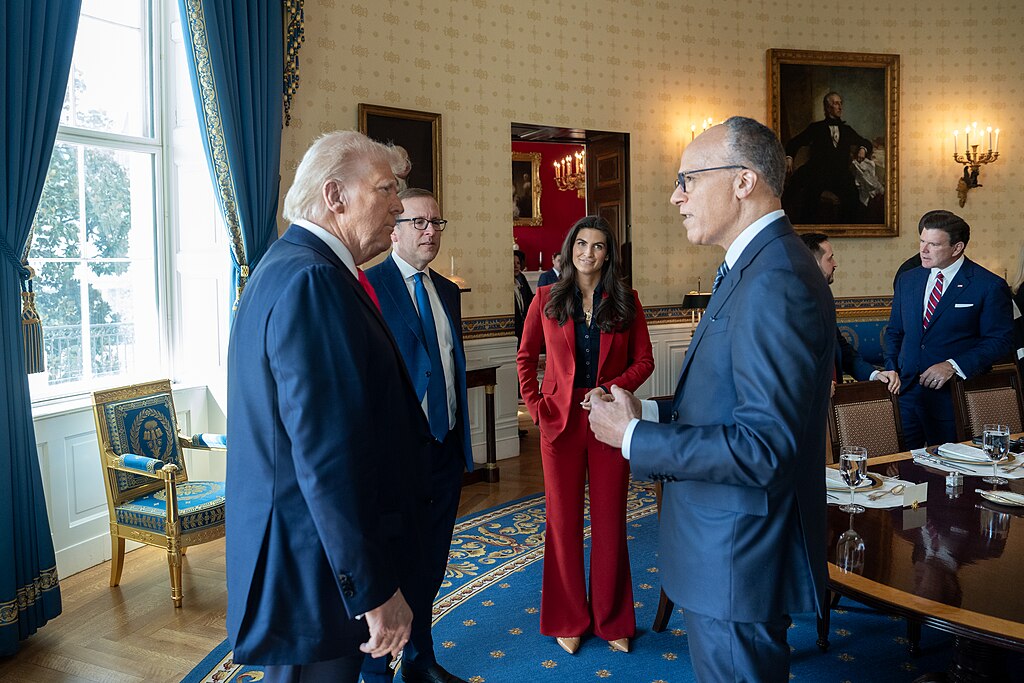
CNN anchor and White House correspondent Kaitlan Collins is facing renewed attention after criticizing President Donald Trump over his sharp exchanges with female reporters.
During an appearance on comedian Heather McMahan’s podcast Absolutely Not, Collins argued that Trump’s comments toward journalists including Catherine Lucey and Weijia Jiang were “inappropriate.” She also emphasized what she described as the importance of media “solidarity.”
But critics are asking a different question: Is this about professionalism — or about politics?
Collins Calls for “Backbone” in the Press Corps
On the podcast, Collins described moments when President Trump pushed back against reporters during tense White House exchanges. She said journalists must show “backbone” and stand up for colleagues when they believe questioning is being unfairly dismissed.
She specifically referenced a past exchange during Trump’s first term involving Weijia Jiang and a COVID-related question. Collins said she ensured Jiang was allowed to ask a follow-up, arguing that defending colleagues sends an important message both inside the briefing room and to the public watching at home.
According to Collins, reporters don’t need to ask identical questions — but they should support one another in moments of conflict.
Trump’s Direct Style — Supporters See It Differently
President Trump has never hidden his frustration with what he often calls “hostile media coverage.” Supporters argue that his blunt responses reflect transparency and strength rather than personal attacks.
For many Americans — particularly voters over 50 who have witnessed decades of evolving media landscapes — confrontations between presidents and journalists are nothing new. What has changed, they say, is the intensity of partisan framing in cable news coverage.
Some conservatives believe media outlets like CNN focus disproportionately on Trump’s tone rather than the substance of policy discussions, reinforcing long-standing concerns about media bias.
The Ongoing Media vs. Trump Dynamic
The tension between President Trump and major news networks continues to shape political coverage heading into the 2026 election cycle.
While Collins frames her comments as defending journalistic standards, critics argue that such narratives often contribute to a broader adversarial tone between legacy media and the White House.
The larger issue may not be one exchange on Air Force One or in the briefing room — but rather the ongoing struggle over who controls the narrative in modern American politics.
Why This Matters to Voters
For many Americans focused on economic policy, border security, national strength, and energy independence, media controversies may feel secondary to larger issues. Still, how the press covers the presidency can influence public perception in powerful ways.
As political tensions rise and campaign season intensifies, expect more high-profile clashes — and more debate over whether those clashes represent accountability or agenda-driven coverage.
Final Thought
The question isn’t simply what was said in a heated exchange. The real question is how those moments are framed — and who benefits from the framing.
In today’s divided media environment, that may be the story behind the story.