Here’s what happened.
A new political clash is unfolding in Washington after Defense Secretary Pete Hegseth, a key official in President Donald Trump’s administration, faced criticism from Democratic lawmakers over remarks he made about the ongoing conflict involving Iran.
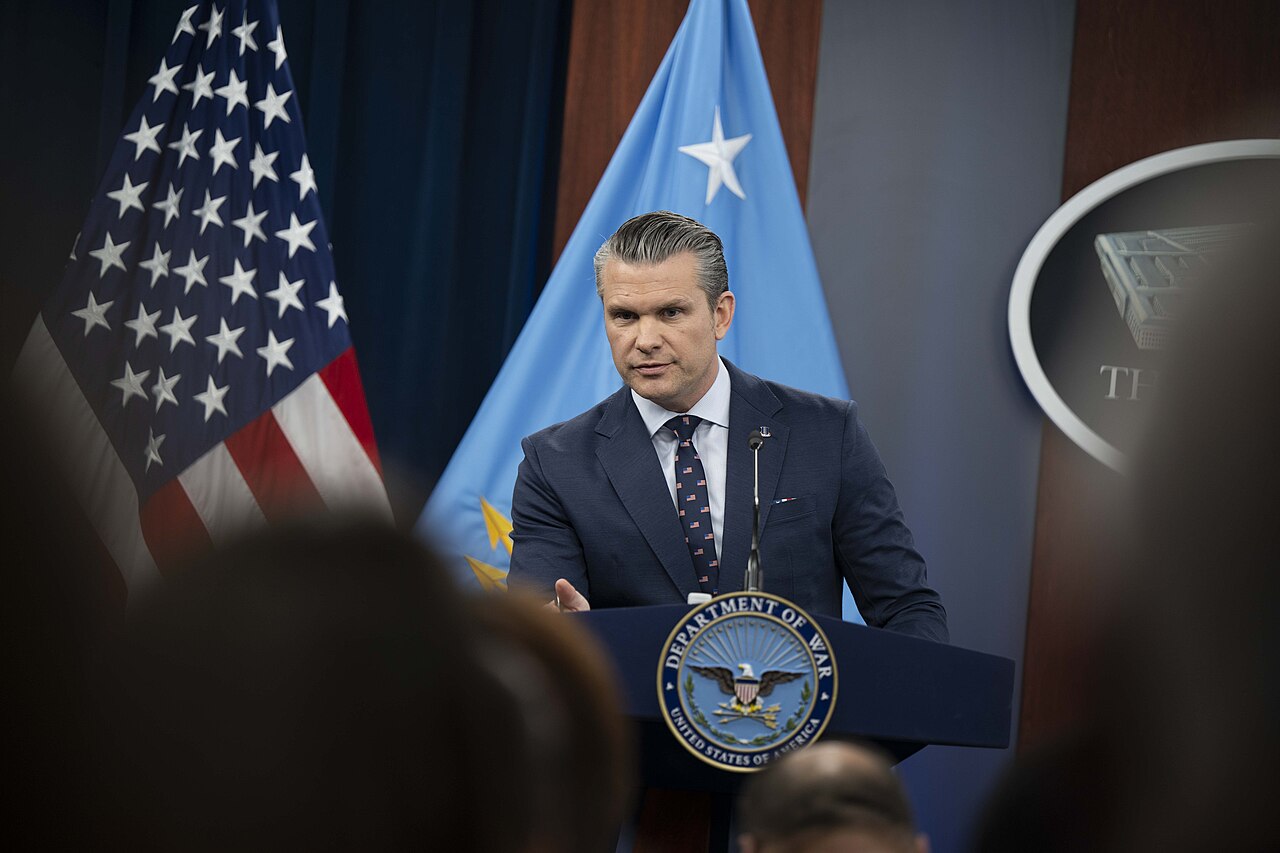
The comments came during a Pentagon press briefing on March 13, where Hegseth discussed the United States’ military posture as tensions in the Middle East continue to escalate.
Hegseth Signals Tough Approach Toward Iran
During the briefing, Hegseth emphasized that the United States and its allies intend to maintain pressure on Iran as military operations continue.
While describing the administration’s approach toward Iran, Hegseth said the United States would continue to intensify pressure, stressing that American forces would keep moving forward and show no mercy in the effort.
The phrase “no quarter” has historic military roots and traditionally refers to a situation where opposing forces are shown no mercy during battle.
However, Hegseth did not issue any directive or operational order to U.S. troops during the briefing. Military experts note that under modern international law, commanders cannot order forces to refuse surrender from enemy fighters.
According to the International Committee of the Red Cross, international humanitarian law has long prohibited declaring that “no quarter will be given,” a rule recognized in historic legal frameworks such as the Lieber Code, the Brussels Declaration, and the Hague Regulations.
Democratic Lawmakers Push Back
Despite the context of the remarks, several Democrats quickly criticized the language used by the Trump administration’s defense secretary.
Senator Mark Kelly (D-AZ) argued that the phrase carries significant legal implications and warned that it should not be used loosely.
Writing on social media platform X, Kelly said the term “no quarter” historically refers to refusing surrender and killing enemy combatants instead of taking prisoners.
Kelly suggested such language could raise concerns under the law of armed conflict, which governs how wars must be conducted.
Another Democrat, Senator Mark Warner (D-VA) — the top Democrat on the Senate Intelligence Committee — also criticized the rhetoric.
Warner emphasized that the United States is bound by the Geneva Conventions and international humanitarian law, saying statements that appear to dismiss established rules of engagement could create unnecessary confusion.
Experts Offer Different Interpretations
While Democratic lawmakers expressed concern, some legal experts say the remarks may have been political rhetoric rather than a literal policy statement.
Marko Milanovic, an international law professor at the University of Reading in the United Kingdom, told reporters that the phrase likely reflected general political messaging rather than a directive encouraging unlawful conduct.
According to Milanovic, the war crime associated with declaring “no quarter” would only apply if a commander explicitly ordered troops to kill enemy fighters attempting to surrender.
Other analysts, including Brian Finucane of the International Crisis Group, said the language nonetheless raises questions about how wartime messaging can influence perceptions of U.S. military operations.
Hegseth Also Raises Questions About Iran’s Leadership
During the same Pentagon briefing, Hegseth made another headline-grabbing statement involving Iran’s leadership.
The defense secretary claimed that Mojtaba Khamenei, Iran’s recently installed supreme leader, may have been wounded during recent attacks.
“We know the new so-called not-so-supreme leader is wounded and likely disfigured,” Hegseth said.
He pointed to a recent written statement attributed to Khamenei that did not include video or audio, suggesting the absence of a public appearance could raise questions about the Iranian leader’s condition.
However, the Pentagon did not present evidence supporting the claim, and Iranian officials have not publicly confirmed any details regarding Khamenei’s health.
Political Debate Intensifies As Conflict Continues
The exchange highlights the growing political tension in Washington as the Trump administration manages escalating conflict with Iran.
Supporters of the administration argue that strong rhetoric signals determination against hostile regimes, while critics say military language must be carefully chosen in order to avoid misunderstandings under international law.
With the situation in the Middle East continuing to evolve, debates over U.S. military strategy, international law, and presidential leadership are likely to remain a major focus in Washington.