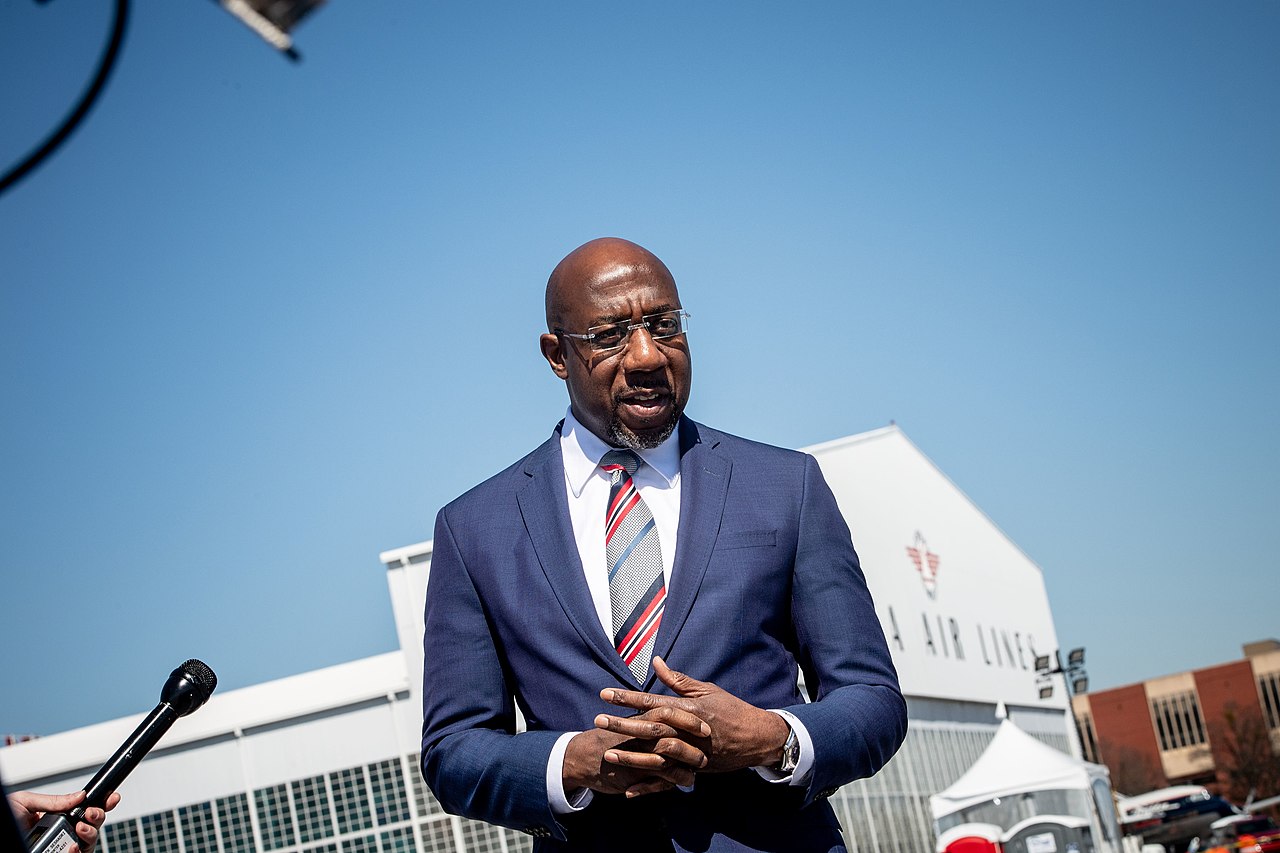
On one of Christianity’s most sacred holidays, political tensions took center stage as Democrats once again turned their focus toward President Donald Trump.
Sen. Raphael Warnock (D-GA), speaking during an Easter Sunday appearance on CNN’s State of the Union, said he prays for President Trump—while also delivering pointed criticism that quickly drew attention.
“I absolutely pray for him,” Warnock said, noting that Trump holds significant influence over millions of Americans. But the message didn’t stop there.
Faith Meets Politics on Easter Sunday
While presenting his comments through a religious lens, Warnock shifted into a broader critique of Trump’s leadership. He raised concerns about immigration enforcement policies and accused the administration of fostering division.
Warnock framed his remarks as part of his pastoral duty, explaining that prayer and accountability go hand in hand.
“I’m not going to stay silent,” he suggested, emphasizing that his faith requires him to speak out on political issues he views as unjust.
Ongoing Tensions Between Trump and Democrats
This is not the first time Warnock and President Trump have clashed over religion and politics.
Trump has previously criticized Warnock for, in his view, using faith to divide Americans. In response, Warnock has taken public shots at Trump’s understanding of Christianity—deepening an already tense relationship.
Earlier this year, Warnock made headlines again after suggesting that Christian values were being misrepresented in Trump’s White House, a claim that sparked backlash among conservative voters.
2020 Election Disputes Resurface
Warnock also referenced a federal investigation into a Georgia elections office, connecting it to ongoing debates about the 2020 election.
President Trump has consistently raised concerns about election integrity, a position that continues to resonate strongly with his supporters.
A Growing Debate Over Faith and Politics
For many Americans—especially those who value tradition and religious observance—bringing partisan criticism into Easter celebrations raises important questions.
Should major religious holidays remain focused on faith, or have they become another platform for political messaging?
As the country moves deeper into another heated political cycle, moments like this highlight a broader cultural divide—one that extends beyond policy and into the role of faith in public life.