Here’s what happened.
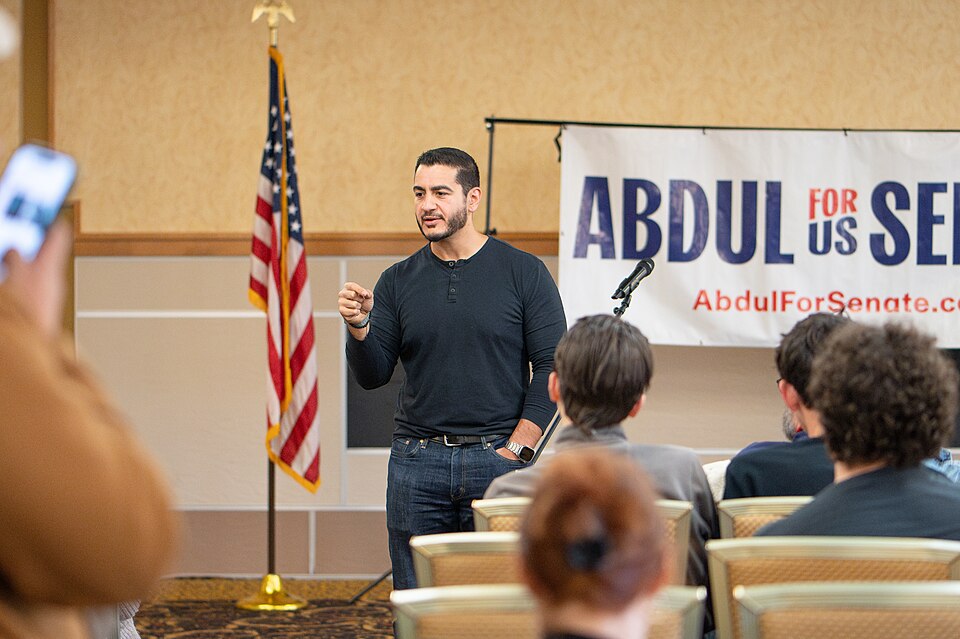
Michigan Democratic Senate candidate Abdul El-Sayed is taking his political feud with President Donald Trump into deeply personal territory, responding to a Trump social media post with pointed remarks about the president’s marriage to first lady Melania Trump.
The clash comes as El-Sayed emerges as a major progressive figure in Michigan politics following his narrow Democratic primary victory.
Trump started the latest exchange Saturday with a post on Truth Social featuring photographs of the two political figures with their wives.
One image showed President Trump and Melania Trump with the caption “Donald J. Trump.” The second showed El-Sayed and his wife and identified the Democratic candidate by his full name, “Abdulrahman Mohamed El-Sayed.”
Trump’s message above the photographs declared: “Two VERY DIFFERENT America’s.”
By Sunday, El-Sayed was firing back.
El-Sayed Gets Personal With Trump
CNN host Jake Tapper asked El-Sayed about the president’s post during an appearance on “State of the Union.”
El-Sayed agreed that the photographs represented two different visions of America — but not for the reasons Trump appeared to be suggesting.
The Democratic Senate candidate described Trump and the first lady as “two people who don’t like each other” and accused them of sharing an interest in making billions of dollars.
El-Sayed then contrasted Trump’s marriage with his own, describing himself and his wife as two people who “genuinely love each other.”
His response transformed what began as a social media attack into a remarkably personal confrontation between a Democratic Senate candidate and the Republican president.
It also gave El-Sayed an opportunity to pivot toward an issue likely to matter considerably more to voters in November: the economy.
El-Sayed Turns Attack Toward the Economy
After criticizing Trump personally, El-Sayed challenged the president’s vision for the country by focusing on the financial pressures facing American households.
“Can you afford your gas? Can you afford your groceries?” El-Sayed asked.
He also questioned whether parents believe their children will have better opportunities and a more prosperous future than previous generations.
Those arguments signal how El-Sayed may attempt to campaign against Trump and Republicans heading into the general election.
Rather than focusing exclusively on traditional Democratic issues, the Michigan candidate appears prepared to make affordability, gasoline prices, grocery bills and the financial security of working families central parts of his message.
Republicans, meanwhile, are likely to offer a dramatically different assessment of Trump’s economic agenda and argue that his policies are designed to strengthen American energy production, encourage investment and protect domestic workers.
That debate could become increasingly important as Michigan voters decide which party they trust to handle the economy.
Trump’s Use of El-Sayed’s Full Name Draws Attention
Another element of Trump’s post quickly attracted notice: his decision to prominently display El-Sayed’s complete name.
It is hardly the first time Trump has used a political opponent’s full name for rhetorical effect.
Trump famously referred to former President Barack Obama as “Barack Hussein Obama,” a practice that generated years of controversy.
Some Trump critics characterized the use of Obama’s full name as racially charged. Trump supporters have rejected that interpretation and argued that using a politician’s legal name is not inherently discriminatory.
Now El-Sayed’s full name has become part of another political controversy.
The Michigan Democrat is a progressive who has rapidly gained national attention following one of the most closely watched Democratic primary contests of the election season.
Progressive Victory Shakes Up Michigan Senate Race
El-Sayed narrowly defeated Rep. Haley Stevens in Michigan’s Democratic Senate primary.
The result was significant beyond Michigan because Stevens represented a more moderate wing of the Democratic Party, while El-Sayed has aligned himself with the progressive movement.
Their contest therefore became another test of where Democratic voters want their party to go.
El-Sayed’s victory suggests progressive candidates remain capable of defeating more traditional Democrats in major statewide primaries.
Winning a Democratic primary, however, is different from winning a general election.
Michigan remains one of the most politically important states in America, and candidates must appeal to a broad coalition that can include working-class voters, suburban families, independents, seniors and voters concerned about taxes and the cost of living.
That could make El-Sayed’s progressive record a major focus as Republicans attempt to define him for voters.
A Senate Battle With National Consequences
Control of the U.S. Senate could ultimately depend on a relatively small number of competitive races, giving Michigan national significance.
The eventual winner will have a voice on issues ranging from taxes and federal spending to immigration, energy policy, health care and the economy.
For voters over 50, questions involving retirement security, Medicare, Social Security, inflation, property values and household expenses could also play an important role in deciding which candidate earns their support.
Trump’s decision to personally target El-Sayed indicates Republicans recognize the importance of the contest.
El-Sayed’s willingness to attack Trump in return shows he has little interest in avoiding a national confrontation.
Personal Politics Could Define the Campaign
The latest dispute also demonstrates just how personal American politics has become.
Trump posted photographs contrasting himself and Melania with El-Sayed and his wife.
El-Sayed responded by questioning the nature of Trump’s marriage.
Both sides are now presenting voters with competing visions of America, although voters may ultimately care considerably more about what those visions mean for their bank accounts and communities.
Can families afford groceries?
Will energy prices remain manageable?
Are American jobs secure?
Will taxes rise or fall?
And will the next generation have greater opportunities than the one before it?
Those questions could prove far more consequential than any social media exchange.
El-Sayed clearly hopes to convince Michigan voters that Trump’s policies have failed to deliver the future they want.
Republicans will have an opportunity to make the opposite case — while scrutinizing El-Sayed’s progressive agenda and asking whether his policies would actually leave Michigan families better off.
One thing is already clear: after Trump brought El-Sayed and his wife into the national spotlight, Michigan’s Democratic Senate nominee appears more than willing to make the fight personal.
And with control of the Senate potentially hanging in the balance, this political feud may only be getting started.