This was not fair and honest journalism.
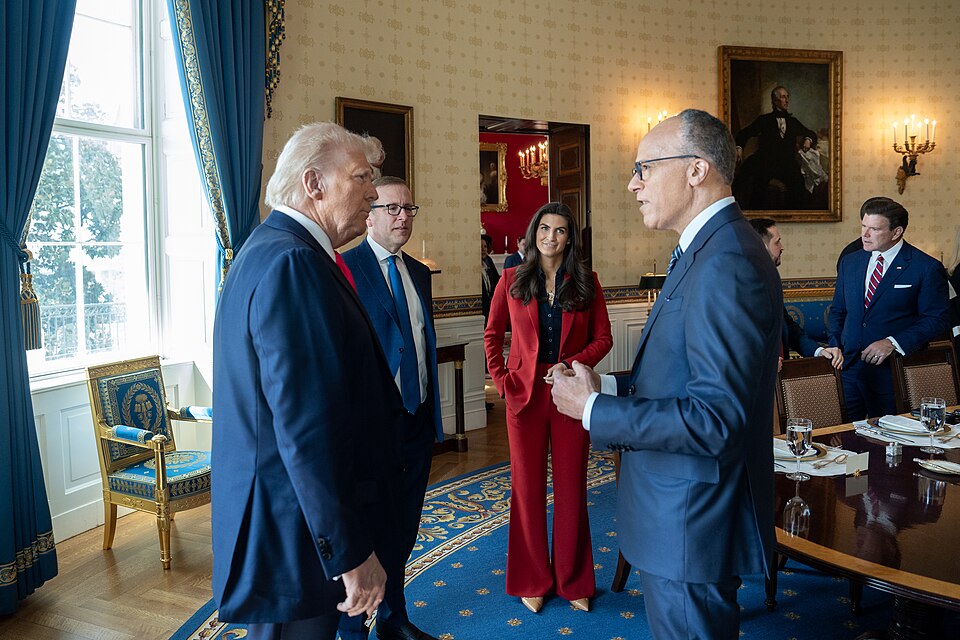
CNN anchor Kaitlan Collins and New York Times White House correspondent Maggie Haberman criticized President Donald Trump after he commented on rising oil prices during the ongoing conflict with Iran.
The remarks come as global energy markets remain volatile following attacks on oil tankers in the Strait of Hormuz—one of the world’s most important oil shipping routes. The disruptions have pushed fuel prices higher and triggered concerns about inflation and economic uncertainty.
Amid the growing tension overseas, Trump pointed to what he described as an overlooked economic reality: the United States is now the world’s leading oil producer.
Trump Highlights America’s Oil Production Advantage
In a post on social media Thursday, the president emphasized the country’s dominant role in global energy production.
“The United States is the largest Oil Producer in the World, by far, so when oil prices go up, we make a lot of money,” Trump wrote.
Supporters of the president argue that America’s massive domestic energy output has strengthened the nation’s economic position and reduced dependence on foreign oil.
However, critics quickly seized on the comment, suggesting it could be politically risky while Americans are seeing fuel costs climb.
CNN Segment Targets Trump’s Comments
Later that night, Collins addressed Trump’s remarks during an episode of CNN’s The Source.
After reading the president’s statement aloud, Collins responded with a brief comment suggesting that higher oil prices may benefit investors more than ordinary Americans.
“Maybe wealthy oil investors will,” Collins said on the broadcast.
The CNN host then turned to Haberman to discuss how Trump’s message might be received politically.
Collins noted that she had received several messages from acquaintances reacting to the president’s post about rising oil prices.
Gas Prices Become a Political Flashpoint
During the discussion, Collins pointed out that Trump had previously highlighted lower gas prices earlier in the year.
In his State of the Union address just weeks ago, Trump mentioned that gasoline had been around $2.30 per gallon in parts of the country.
Since then, energy prices have increased as geopolitical tensions escalated in the Middle East.
Collins suggested that portraying higher oil prices as a positive development could prove challenging politically, particularly as Americans begin noticing higher costs at the pump.
White House Messaging Challenges
Haberman agreed that the issue could present a messaging challenge for the administration.
According to her, members of Trump’s political circle are still working to address the economic concerns tied to rising fuel prices while also defending the administration’s broader foreign policy strategy.
Energy prices have historically played a major role in American politics, particularly during times of international conflict.
When oil prices rise sharply, it can quickly become a key issue for voters across the country.
Republican Voters Still View Iran as a Threat
Despite concerns about fuel prices, Haberman acknowledged that many Republican voters have long viewed Iran as a major threat to U.S. national security.
That view has been reinforced by years of tensions between Washington and Tehran, including disputes over nuclear programs, regional proxy conflicts, and attacks on international shipping lanes.
Because of this history, many conservative voters support strong actions aimed at countering Iranian aggression.
However, Haberman noted that voters may still grow frustrated if gasoline prices remain elevated for an extended period.
Energy Markets Remain Unstable
The situation in the Strait of Hormuz continues to affect global oil markets.
Roughly 20 percent of the world’s oil supply passes through the narrow shipping channel, making it one of the most strategically important waterways in global energy trade.
Any disruption in that region can quickly push prices higher worldwide.
Analysts say continued instability could keep oil prices elevated in the coming weeks, especially if tanker attacks or military escalation continues.
Energy Policy Debate Intensifies
The debate surrounding Trump’s remarks highlights a broader discussion about American energy policy.
Supporters argue that record domestic oil production gives the United States a strategic advantage during global energy shocks.
Critics, however, say rising gasoline prices can still hurt American households regardless of where the oil is produced.
As tensions with Iran continue to shape global markets, energy prices—and their political impact—are likely to remain a major topic in Washington.