Here’s what was said.
President Donald Trump is facing new questions about one of the biggest issues affecting American families: the price of gasoline.
This time, the pressure came from Fox News.
Senior White House correspondent Peter Doocy challenged National Economic Council Director Kevin Hassett on Sunday over Trump’s promise that gas prices will eventually come crashing down after soaring during the ongoing conflict with Iran.
Doocy’s question was simple.
When?
The exchange put renewed attention on the Trump administration’s economic message at a time when millions of Americans are paying substantially more to fill their vehicles.
Peter Doocy Challenges Trump’s Gas Price Promise
During Fox News’ Sunday coverage, Doocy highlighted Trump’s recent comments about rising fuel costs.
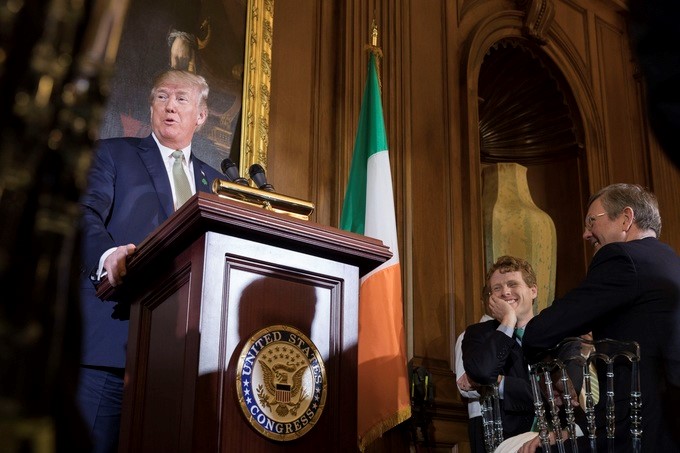
Trump told supporters at a rally in North Carolina that higher prices were an “inexpensive price to pay” for what his administration says it has accomplished in the conflict with Iran.
The president then predicted prices would eventually come down rapidly, comparing the expected decline to a “rocket ship in reverse.”
Doocy immediately focused on the unanswered question.
When would that happen?
Hassett did not provide a specific date or timetable for Americans to expect lower prices. Instead, he defended Trump’s handling of the conflict and argued that the economic consequences could have been considerably worse without U.S. intervention.
Gas Prices Put Pressure on American Families
The exchange comes as gasoline prices remain a major concern across the country.
The national average has climbed to approximately $4.48 per gallon, according to Associated Press reporting published Sunday. Rising energy costs have become another financial burden for households already dealing with higher prices in other parts of the economy.
Gas prices can have an especially broad effect because consumers do not only feel them at the pump.
Higher fuel costs can increase transportation expenses for businesses, farmers and trucking companies. Those costs can eventually affect the prices consumers pay for groceries and other everyday products.
For retirees and Americans living on fixed incomes, even relatively small increases in monthly expenses can become noticeable.
Trump Defends Higher Prices Amid Iran Conflict
Trump has argued that the current economic pain must be considered alongside his administration’s national-security objectives.
The president has defended U.S. military action against Iran and said preventing Tehran from obtaining a nuclear weapon justifies temporary higher energy costs.
Iran has long maintained that its nuclear program is intended for peaceful purposes, while U.S. officials have disputed Tehran’s claims and expressed concerns about its nuclear capabilities.
The larger conflict has severely disrupted international energy markets.
The Strait of Hormuz remains particularly important because it has historically carried roughly one-fifth of global oil and liquefied natural gas shipments. Recent disruptions have sharply reduced normal shipping activity through the waterway.
Hassett Says Situation Could Have Been Worse
Hassett defended the administration by arguing that U.S. actions have prevented an even larger increase in oil prices.
He said the U.S. Navy has helped escort energy shipments through threatened waterways and claimed the administration has worked to keep global supplies moving despite the fighting.
Hassett also pointed to earlier warnings that crude oil could climb to $150 or even $200 per barrel.
Those worst-case predictions have not materialized.
Oil nevertheless remains expensive. Brent crude was trading above $104 per barrel following fresh regional tensions this weekend, while U.S. West Texas Intermediate crude was above $101.
Fox News Presses White House on the Economy
Doocy’s questioning comes as Fox News has devoted increasing attention to voter concerns about inflation and affordability.
Fox recently reported polling showing that 61 percent of registered voters viewed gas prices as a major problem, while 62 percent said the same about grocery prices.
Fox News also featured Hassett on Sunday discussing economic polling, rising inflation, mortgage rates, grocery costs and financial anxiety among voters.
That puts the administration in a difficult position.
Trump can argue that his foreign-policy strategy is necessary for national security, while voters can simultaneously question how long they will have to absorb the economic consequences.
When Will Gas Prices Actually Come Down?
That remains the central unanswered question.
Trump has repeatedly predicted that gasoline prices will eventually fall.
Earlier this year, the president said Americans could see lower prices once the Iran conflict ends, rejecting a suggestion from Energy Secretary Chris Wright that gasoline below $3 per gallon might not return until 2027.
But predicting energy prices is difficult.
Oil prices can change rapidly based on global supply, military developments, refinery capacity, shipping disruptions and expectations about future demand.
As long as instability continues around major Middle Eastern energy routes, uncertainty is likely to remain.
Americans Are Watching Their Wallets
The political debate surrounding Iran may involve military strategy and national security, but for many Americans the most immediate impact is much closer to home.
It is visible every time they pull into a gas station.
Doocy’s confrontation with Hassett highlighted the gap between Trump’s promise that prices will eventually tumble and the question consumers want answered now: exactly when will that happen?
Hassett offered a detailed defense of the administration’s strategy.
He did not offer a date.
With the November midterm elections approaching and Americans continuing to focus heavily on affordability, gasoline prices, inflation and the broader economy are likely to remain major subjects of debate in Washington.
For the Trump administration, the challenge is increasingly clear: persuading Americans that today’s higher costs will eventually lead to the lower prices the president has promised.