Trump Considering Military Base Where?
President Donald Trump said Monday that his administration is willing to consider establishing a permanent U.S. military base in Lithuania, a move that could significantly strengthen America’s military presence on NATO’s eastern border.
Asked about Lithuania’s interest in hosting American forces, Trump spoke warmly about the Baltic nation and indicated that the proposal deserves serious consideration.
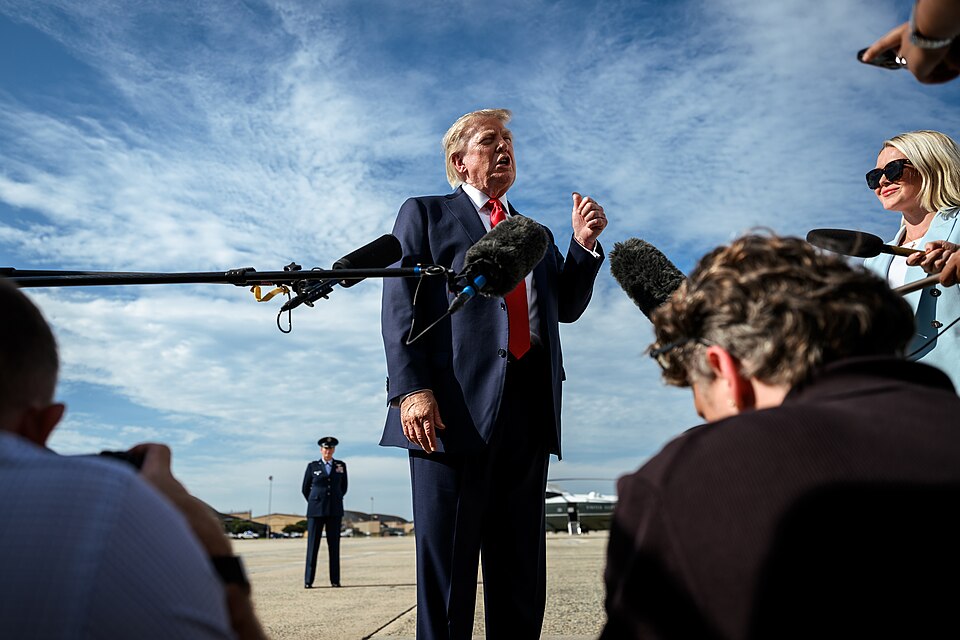
“They’re friends of mine; they’re great people, so we’ll certainly look at it,” Trump told reporters Monday.
The president’s comments come after Lithuanian Prime Minister Mindaugas Sinkevičius publicly said his government would welcome a permanent American military presence and would even be prepared to help cover the cost.
“We are ready to pay the bill,” Sinkevičius said while discussing the possibility of permanently stationing U.S. forces in Lithuania.
That financial commitment could make the proposal particularly noteworthy for Americans concerned about European allies relying too heavily on U.S. taxpayers for their defense.
Lithuania Offers to Help Pay for U.S. Base
Trump has repeatedly pushed NATO members to take greater responsibility for their own security rather than expecting Washington to carry a disproportionate share of the financial burden.
Lithuania appears eager to demonstrate that it is willing to invest heavily in its relationship with the United States.
Sinkevičius has said his country would provide favorable conditions for American troops and infrastructure if Washington ultimately agrees to establish a permanent base. Lithuania has also sought a long-term U.S. troop presence as part of its effort to deter potential Russian aggression.
For taxpayers in the United States, the question of who pays could become an important part of any future negotiations.
A military installation financed in significant part by the host country would be different from an arrangement in which American taxpayers were expected to shoulder virtually every expense.
Strategic Location Along Russia’s Border
Lithuania occupies one of the most strategically sensitive locations in Europe.
The NATO member borders Belarus, a close Russian ally, as well as Russia’s heavily militarized Kaliningrad territory. That geography places Lithuania directly on NATO’s eastern frontier.
Supporters of a stronger American military presence argue that permanently stationing U.S. forces there could make Moscow think twice before threatening NATO territory.
Lithuania has already been pressing Washington for a more durable American presence. Its government has identified long-term U.S. deployments as an important part of its national defense strategy amid continued concerns about Russia.
Roughly 1,000 U.S. service members are also expected to return to Lithuania as part of a rotational deployment, including armored and engineering forces. Reports indicate that Abrams tanks are expected to accompany the deployment.
A permanent base, however, would represent a considerably larger strategic commitment.
Trump Has Also Discussed a U.S. Base in Poland
Lithuania is not the only Eastern European ally seeking a stronger American military footprint.
Trump has also promoted discussions surrounding a possible permanent U.S. Army base in Poland.
The president recently said that progress was being made with Polish President Karol Nawrocki toward establishing such a facility.
Trump described a potential agreement as a major step for the alliance between Washington and Warsaw.
Poland has long been one of NATO’s most outspoken supporters of a strong military posture against Russia, and the possibility of American bases in both Poland and Lithuania could dramatically increase U.S. deterrence capabilities in Eastern Europe.
America First Meets NATO Deterrence
The Lithuania proposal highlights an important question facing the Trump administration: how can the United States maintain enough military strength overseas to protect American interests without allowing wealthy allies to shift the cost of their defense onto U.S. taxpayers?
Trump has long argued that America’s allies should contribute substantially more toward their own security.
Lithuania’s willingness to help finance a permanent American military presence could potentially fit that approach.
Instead of simply requesting additional American protection, Lithuanian leaders are openly signaling that they are prepared to invest money and resources in securing a long-term U.S. presence.
No final agreement has been announced, and Trump’s comments indicate that the proposal remains under consideration rather than approved.
Still, Lithuania’s location, its willingness to contribute financially and growing security concerns along NATO’s eastern frontier could make the proposal increasingly attractive to Washington.
For an administration focused on military strength while demanding greater burden-sharing from U.S. allies, Lithuania may be offering exactly the type of arrangement Trump has encouraged for years.