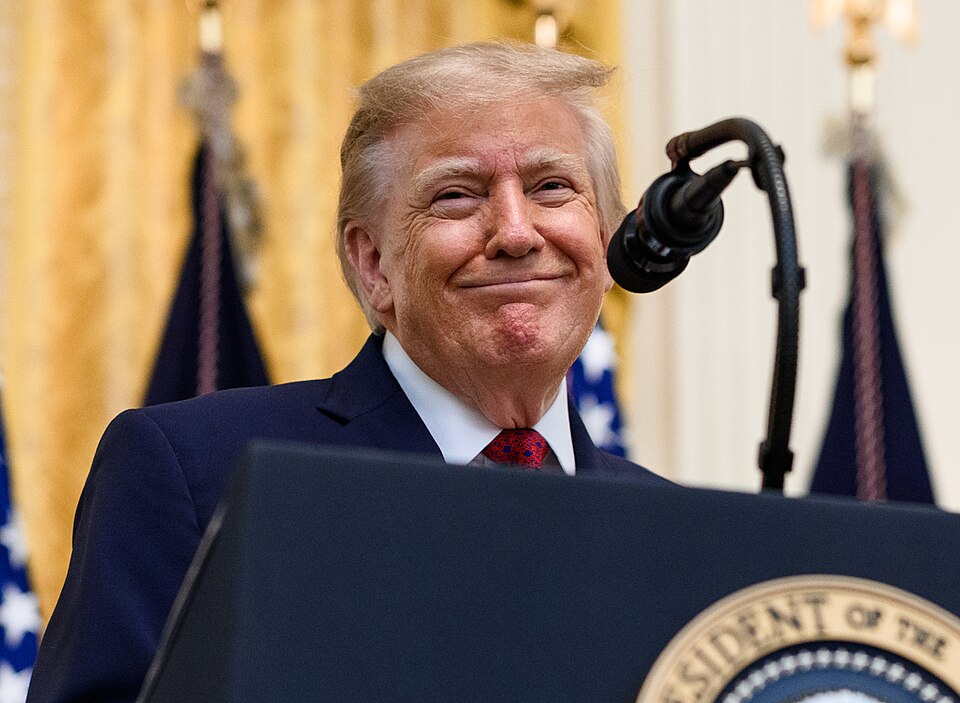
President Donald Trump is facing fresh political trouble, and a new national poll suggests some of the uncertainty about his political future is coming from within Republican ranks.
Following the GOP’s disappointing performance in the 2026 midterm elections, a Reuters/Ipsos survey has revealed a significant divide over whether the Republican Party should continue following Trump’s approach to governing.
The findings raise important questions about Trump’s influence, the future of the Republican Party, and who could emerge as the GOP’s next presidential nominee in 2028.
For a president who has reshaped American politics and maintained a loyal Republican following for years, the results present another challenge at a difficult political moment.
New Poll Delivers Troubling News For Trump
According to the Reuters/Ipsos survey, 52 percent of Republicans and Republican-leaning independents said they would prefer the party’s next presidential nominee to take a different approach to governing than Trump.
Meanwhile, 46 percent preferred a candidate who would govern in a similar manner, while 2 percent did not provide an answer.
However, the numbers tell a more complicated story when Republican identifiers are examined separately.
Among respondents who identified as Republicans, 53 percent preferred a candidate with an approach similar to Trump’s, compared with 45 percent who wanted something different.
The results suggest Trump’s governing approach retains considerable support among Republicans, even as Republican-leaning independent voters express greater interest in a change.
That distinction could prove important as potential candidates begin positioning themselves for the next presidential election.
Republican Midterm Losses Raise New Questions
The poll comes shortly after the November 3 midterm elections, when Democrats made substantial gains and delivered a major political setback to Republicans.
The election results have intensified discussions about the Republican Party’s direction and whether its current political strategy can continue attracting voters.
Trump’s national approval ratings have also faced considerable pressure.
The same Reuters/Ipsos survey found that 32 percent of American adults approved of Trump’s performance as president, while 65 percent disapproved.
Those figures present an increasingly difficult political environment for Republicans attempting to rebuild momentum following the midterms.
However, national approval ratings and support within the Republican Party are not necessarily the same thing.
Trump continues to command substantial loyalty among Republican voters, particularly those who approve of his positions on immigration, border enforcement, and other major policy issues.
The challenge for the GOP may be determining how to maintain that support while appealing to independent voters who could decide future elections.
JD Vance And Marco Rubio Gain Attention
With the 2028 presidential election approaching, Republicans are already considering who might eventually succeed Trump as the party’s standard-bearer.
Vice President JD Vance and Secretary of State Marco Rubio appear to be among the most prominent potential contenders.
According to the Reuters/Ipsos survey, 45 percent of Republican voters rated Rubio as an excellent potential presidential candidate.
Vance received a similar rating from 43 percent of Republican voters.
Florida Governor Ron DeSantis also attracted interest, with 32 percent describing him as an excellent candidate.
The results suggest Republicans have several recognizable political figures who could compete for the party’s nomination.
However, no early polling result guarantees success in a presidential primary, especially with the election still two years away.
Voters could change their preferences considerably as candidates announce their intentions, begin campaigning, and outline their plans for the country.
Are Republicans Really Turning Against Trump?
Despite the headlines surrounding the new poll, the findings do not necessarily demonstrate that Republican voters are rejecting Trump’s political agenda.
The survey asked respondents whether they wanted a similar or different governing approach from the next Republican presidential nominee.
It did not ask voters to choose between supporting and opposing Trump’s individual policy positions.
That difference is significant.
A voter might agree with Trump’s priorities on illegal immigration, border security, taxes, or federal spending while preferring a presidential candidate with a different leadership style.
Others may believe the GOP should continue following Trump’s political approach because they consider his policies essential to the party’s identity.
The survey also revealed a particularly noticeable difference between Republican identifiers and Republican-leaning independents.
Among the latter group, 65 percent preferred a different governing approach, compared with 35 percent who wanted something similar to Trump.
Those findings could become particularly important in future elections, when attracting independent voters may be crucial to winning competitive states.
Economy And Cost Of Living Remain Major Concerns
Beyond disagreements over political leadership, Republicans are facing pressure over economic issues affecting millions of American households.
The Reuters/Ipsos survey found substantial public dissatisfaction with Trump’s handling of inflation and everyday living expenses.
Only 21 percent of American adults approved of his handling of the cost of living, while 72 percent disapproved.
Approval of his handling of inflation and rising prices was even lower, at 19 percent.
For Americans living on fixed incomes, retirees managing household budgets, and working families facing higher expenses, economic conditions remain an important political concern.
The prices of groceries, gasoline, housing, and other necessities can influence how voters evaluate both political parties.
Republicans hoping to recover from their midterm losses may need to demonstrate how their policies can improve household finances and strengthen the broader economy.
At the same time, the party must decide whether its next presidential candidate should continue Trump’s governing approach or adopt a different strategy.
Trump’s Political Influence Faces Another Test
Trump has remained a dominant figure in Republican politics since his first successful presidential campaign in 2016.
His influence has shaped the party’s positions on immigration, trade, national security, and the federal government’s role in American life.
That political legacy is unlikely to disappear simply because some voters favor a different approach in 2028.
The survey’s findings also show that a substantial portion of Republicans continue to support a candidate who would govern in a manner similar to Trump.
Nevertheless, the midterm results and the growing attention surrounding potential successors suggest the GOP is entering an important period of political uncertainty.
The question is no longer simply who will become the next Republican presidential nominee.
It is also whether that candidate will attempt to preserve Trump’s political approach or introduce a different direction for the party.
What Happens Next For The Republican Party?
The 2028 presidential election remains two years away, leaving Republicans considerable time to evaluate potential candidates and reconsider their political strategy.
For Trump supporters, preserving the administration’s priorities could remain a major consideration in choosing the next Republican nominee.
Other voters may place greater emphasis on economic performance, electability, leadership style, or the ability to win back independents.
The Reuters/Ipsos survey, conducted November 6 through November 9 among 1,705 American adults, provides an early look at those competing preferences.
But with margins of error of approximately five percentage points for party-specific groups, the findings should not be treated as a definitive prediction of the Republican presidential primary.
For now, Trump’s influence remains substantial, but the debate over the party’s future is becoming increasingly visible.
Whether Republicans ultimately embrace Trump’s political legacy or choose a different governing approach could become one of the defining questions of the 2028 presidential election.