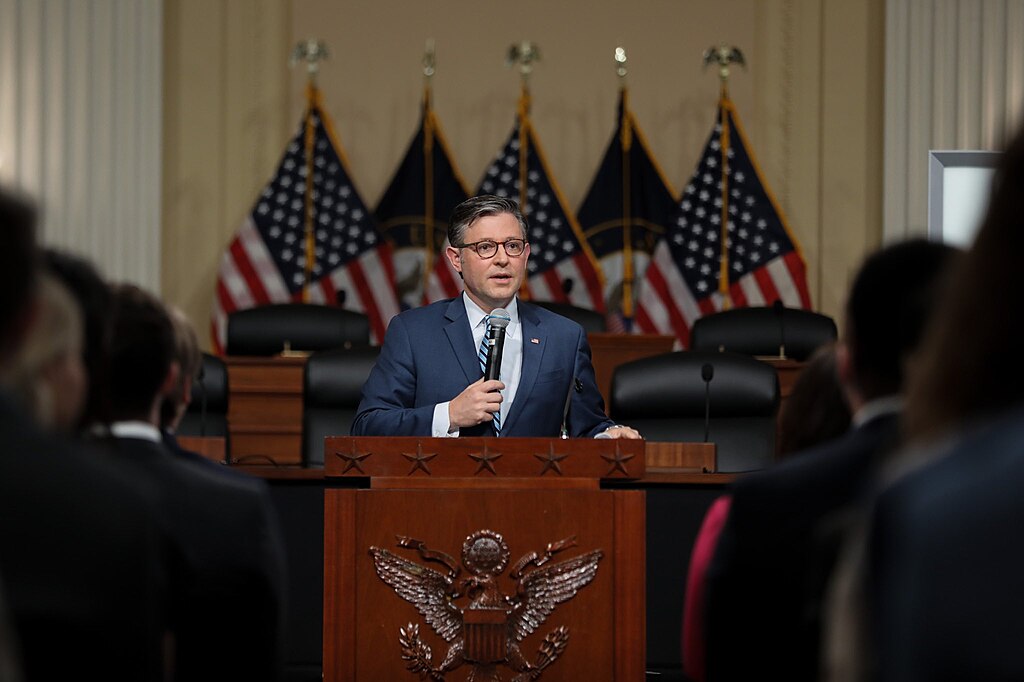
Speaker Johnson had some interesting words for Democrat leadership!
House Speaker Mike Johnson delivered a sharp rebuke to Democrats on Tuesday, openly mocking what he described as a growing internal power struggle between two of the party’s most prominent leaders.
Johnson pointed to visible tension between House Minority Leader Hakeem Jeffries and Senate Minority Leader Chuck Schumer, both of New York, as Democrats struggle to present a united front during the ongoing government funding fight.
The disagreement stems from a compromise spending deal negotiated between Schumer and President Trump. While Schumer agreed to the framework, Jeffries has not mobilized House Democrats to support it, leaving the party fractured as a partial government shutdown enters its fourth day.
Asked about the situation at a press conference, Johnson said it was not his role to intervene in what he called a “family squabble,” noting that Jeffries appears upset that Schumer spoke on behalf of House Democrats without consultation.
According to Johnson, the breakdown in Democratic leadership is becoming increasingly visible to the public — especially as Republicans remain united behind President Trump’s push to reopen the government.
Jeffries and Schumer were scheduled to meet later Tuesday in an attempt to align their messaging before the House considers the funding package intended to end the shutdown.
The dispute follows last month’s bipartisan agreement to advance the remaining appropriations bills needed to fully fund the federal government for the rest of the fiscal year. That agreement passed the House but collapsed in the Senate after progressive Democrats revolted, demanding changes to federal immigration enforcement following the shooting of Alex Pretti.
Facing pressure from his party’s left flank, Schumer proposed passing five of the remaining bills while approving a two-week temporary spending extension to continue negotiations over Department of Homeland Security funding. That proposal now faces resistance in the House.
Schumer has outlined a series of conditions tied to immigration enforcement, including mandatory body cameras, stricter warrant rules, limits on protective gear for agents, and an end to certain patrol practices. Jeffries has floated additional demands, including language barring the deportation of American citizens — deepening questions about whether Democratic leadership is operating in sync.
Johnson highlighted that both men represent the same state yet appear locked in a quiet power struggle, while Republicans are moving forward with a unified strategy.
The tension is not new. During a previous shutdown battle last year, Schumer supported a Republican-backed funding patch that Jeffries opposed, revealing similar divisions within the Democratic Party.
President Trump has publicly urged Republicans to stand firm behind the current compromise and has encouraged negotiations to bring the shutdown to an end. Still, Johnson has already rejected several Democratic demands, particularly proposals that would restrict immigration officers or add new regulatory hurdles.
Senate Majority Leader John Thune echoed Johnson’s concerns, warning that the two-week negotiating window demanded by Democrats leaves little room for progress. Thune questioned the logic of such a tight timeline, noting that anyone familiar with Washington understands how difficult it is to resolve major funding disputes quickly.
Despite the looming fight over Homeland Security funding, Republicans argue Democrats have little leverage on immigration policy, pointing out that Immigration and Customs Enforcement was already funded through the One Big Beautiful Bill Act.
Johnson issued a final warning that continued obstruction could have serious consequences beyond politics. He said blocking DHS funding could disrupt disaster response operations, airport security, Coast Guard missions, and other critical government functions at a time when Americans expect stability and leadership.