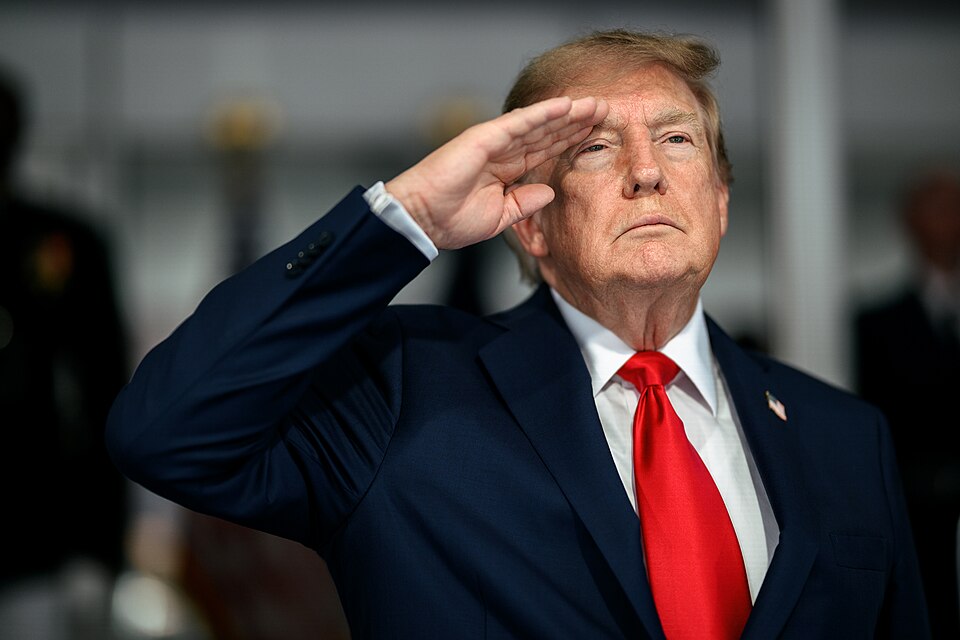
President Trump has delivered so much for the American people yet people are quick to turn on him. Such a shame!
Pittsburgh Steelers quarterback Aaron Rodgers is making headlines after delivering surprisingly sharp criticism of President Donald Trump and questioning the future of the MAGA movement.
Rodgers, who has attracted support from some conservatives over the years because of his outspoken views on government, pandemic-era policies and individual freedom, made the comments during an appearance on teammate Cam Heyward’s “Not Just Football” podcast.
The veteran NFL quarterback argued that Trump has failed to deliver on several promises that helped define his political movement.
“There’s no MAGA movement,” Rodgers said during the discussion.
He went on to argue that the president has not followed through on important campaign commitments.
The comments immediately stood out because Rodgers has frequently been associated with political views popular among parts of Trump’s coalition. But Rodgers made it clear that he doesn’t consider himself a loyal supporter of Trump—or virtually anyone else in Washington.
Aaron Rodgers Takes Aim at Trump’s Record
Rodgers’ criticism centered on what he sees as a gap between campaign promises and what has happened since Trump returned to the White House.
He pointed to Trump’s promises to challenge Washington’s political establishment, avoid additional foreign conflicts and increase government transparency.
Rodgers also raised questions about the administration’s handling of records connected to Jeffrey Epstein, an issue that has generated considerable political debate.
In Rodgers’ assessment, Americans were promised greater transparency but haven’t received enough of it.
His broader argument was that voters repeatedly hear ambitious promises during campaigns, only to become frustrated when Washington doesn’t change as dramatically as they expected.
For Rodgers, that frustration isn’t limited to one president or one political party.
Rodgers Rejects Being Called a Trump Supporter
Rodgers also addressed the perception that his controversial political and cultural views automatically make him a Trump supporter.
The quarterback became one of professional sports’ most prominent critics of pandemic-era policies and government restrictions. Those positions earned him considerable attention from conservative audiences.
But Rodgers said people shouldn’t assume those views translate into automatic loyalty to Trump.
“I don’t trust anybody in politics,” Rodgers said, while mentioning former congressman Ron Paul as a possible exception.
Rodgers’ comments suggest his political outlook is driven more by distrust of established institutions than allegiance to either Republicans or Democrats.
That distinction became even clearer as the conversation continued.
Rodgers Criticizes Washington Across Party Lines
Trump wasn’t the only political leader to face criticism.
Rodgers also discussed former Presidents Barack Obama and Joe Biden while questioning whether either political party has produced the sweeping changes Americans have repeatedly been promised.
He recalled the enormous expectations surrounding Obama’s message of “hope and change” and questioned whether those expectations ultimately translated into substantial improvements for ordinary Americans.
Rodgers also raised healthcare as an example.
He questioned whether the Affordable Care Act fundamentally improved America’s healthcare system and used the issue to support his larger argument about political promises.
Then he turned back to Trump.
Trump famously campaigned on promises to “drain the swamp” and transform Washington. Rodgers argued that many voters who expected major institutional change have instead been left disappointed.
Rodgers expressed deep frustration with the political system, arguing that politics has become largely meaningless.
It was a sweeping criticism—not merely of Trump, but of America’s political establishment more broadly.
Why Rodgers’ MAGA Comments Are Getting Attention
The criticism is especially notable because Rodgers has frequently found himself on the same side as conservatives in major cultural debates.
His opposition to pandemic-era requirements became national news. He has repeatedly challenged government institutions and mainstream narratives, and he has had a relationship with Robert F. Kennedy Jr.
Those positions have sometimes resulted in Rodgers being characterized as part of the broader political right.
Rodgers, however, rejected such simple labels during the podcast.
His comments indicate that while he may agree with conservatives on certain issues, that doesn’t mean he believes Republican leaders—or Trump himself—should be immune from criticism.
Rodgers Questions Whether MAGA Still Delivers on Its Promise
Perhaps the most consequential part of Rodgers’ comments was his challenge to the MAGA movement itself.
“MAGA” became the defining slogan of Trump’s political rise and eventually developed into a political movement extending far beyond a single presidential campaign.
Rodgers’ argument is that a movement built around changing Washington must ultimately be judged by whether those changes actually happen.
His criticism reflects his own assessment of Trump’s record, rather than an objective determination about the movement’s strength or accomplishments.
Trump’s supporters may strongly disagree with that assessment and point to administration policies they believe demonstrate progress on immigration, regulation, government reform, trade and other priorities.
Rodgers clearly sees things differently.
This Wasn’t an Endorsement of Democrats
One important part of Rodgers’ remarks could easily get lost amid the attention surrounding his criticism of Trump.
He wasn’t endorsing Democrats.
Instead, Rodgers expressed broad skepticism toward America’s political establishment and questioned whether either major party has delivered the fundamental changes voters have repeatedly been promised.
That context significantly changes the meaning of his remarks.
Rather than presenting himself as a Republican who has switched sides, Rodgers portrayed himself as someone deeply distrustful of the entire political system.
His criticism of Obama, Biden and Trump reinforced that position.
From NFL Superstar to Political Lightning Rod
Rodgers has spent much of his career making headlines for what happens on the football field.
The Super Bowl XLV champion and four-time NFL Most Valuable Player has also increasingly become part of America’s larger cultural conversation.
His willingness to discuss government power, media coverage and politics has made him a polarizing figure far beyond professional football.
His latest comments are likely to continue that trend.
Rodgers is now publicly challenging a political movement with which many people have associated him, while insisting that his actual beliefs don’t fit comfortably within traditional partisan categories.
What Happens Next?
Whether Rodgers’ criticism has any broader political significance remains to be seen.
What is clear is that the Pittsburgh Steelers quarterback has rejected the assumption that his previous positions make him an automatic Trump supporter.
Rodgers believes politicians should be judged on whether they deliver what they promise—and he made clear that, by his own standards, he is dissatisfied with what he has seen from Washington.
For Trump supporters, Rodgers’ comments may spark disagreement. For Trump’s critics, they may provide an unexpected source of validation.
Either way, one of the NFL’s most outspoken stars has once again placed himself in the middle of a national political conversation—and this time, President Trump and the MAGA movement are at the center of it.