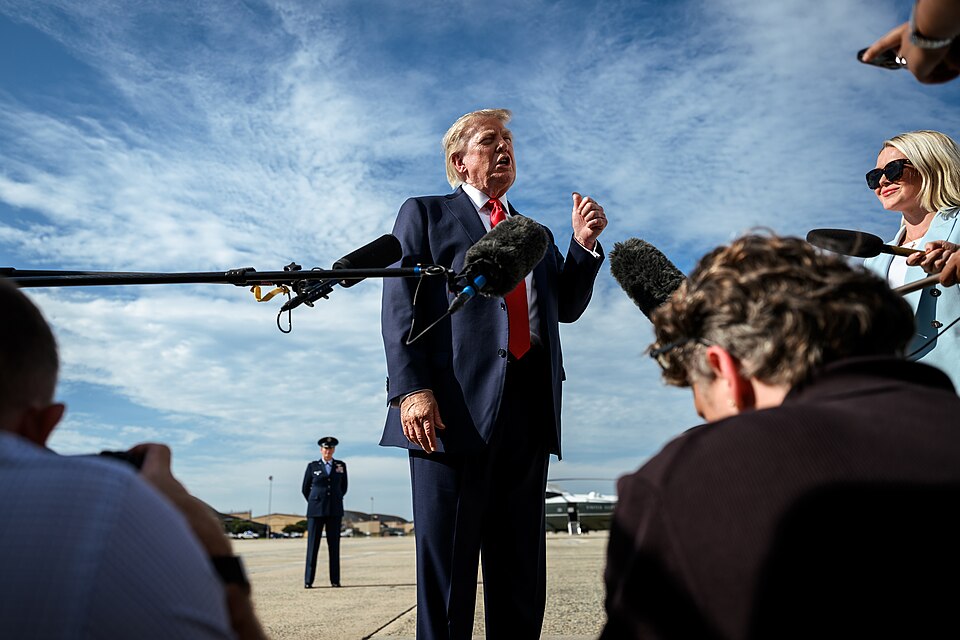
Here’s what President Trump had to say.
President Donald Trump delivered a powerful message on the 25th anniversary of the September 11 terrorist attacks, using his remarks at the Pentagon to connect America’s remembrance of 9/11 with the country’s current military conflict with Iran.
Speaking Friday at the Pentagon, where 184 people were killed when American Airlines Flight 77 struck the building on September 11, 2001, Trump honored the victims, first responders and military personnel whose lives were forever changed by the attacks.
But the president also used the historic occasion to address a modern national-security challenge.
Trump said the nation was once again honoring the commitment made to the victims of September 11 nearly 25 years ago: their sacrifice would always be remembered. He then tied that pledge to America’s current military challenges, arguing that the country must remain determined in battle and pursue nothing short of victory.
The remarks immediately stood out because Trump was commemorating one of the darkest days in American history while simultaneously discussing the ongoing conflict with Iran.
Trump Links 9/11 Remembrance to Iran Conflict
Trump has made preventing Iran from obtaining a nuclear weapon a major national-security objective of his administration.
During Friday’s ceremony, he presented the current confrontation with Tehran as part of a broader American struggle against terrorism and hostile forces overseas.
Trump honored the American service members who have spent the past quarter-century protecting the country, paying tribute to everyone who served in the fight against terrorism.
The president also praised America’s first responders and law enforcement officers before turning directly to Iran.
Trump said American service members are currently working to ensure that the Islamic Republic of Iran never obtains a nuclear weapon.
That distinction is important. Trump was drawing a broader connection between the post-9/11 fight against terrorism and his administration’s current policies toward Iran. He was not saying that Iran carried out the September 11 attacks.
Iran Has Been a U.S. Security Concern for Decades
Iran has occupied a prominent place in American national-security policy for decades.
Just months after the September 11 attacks, President George W. Bush identified Iran, Iraq and North Korea as an “axis of evil” during his January 2002 State of the Union address.
The declaration reflected concerns at the time about terrorism, hostile governments and the potential proliferation of weapons of mass destruction.
Despite years of tension between Washington and Tehran, however, the United States did not enter a direct war with Iran during the Bush administration.
The relationship remained contentious through subsequent administrations as disputes continued over Iran’s nuclear program, regional influence, sanctions and its support for armed groups across the Middle East.
Those longstanding tensions have taken on new significance under Trump in 2026.
Trump Says America Must Remain Strong
Trump used the anniversary ceremony to argue that the lessons of September 11 remain relevant a quarter-century later.
“On days like 9/11,” Trump said, Americans learn what their country is truly made of.
The president said the United States must remain both strong and smart when confronting threats to national security.
His comments reflected one of the central themes of the ceremony: remembering those who died while recognizing the sacrifices made by military personnel, first responders and their families during the decades that followed.
For millions of Americans who remember exactly where they were on September 11, 2001, the anniversary remains deeply personal.
Nearly 3,000 victims were killed in the attacks in New York City, at the Pentagon and aboard Flight 93 in Pennsylvania.
The events transformed American foreign policy, airport security, intelligence operations and military strategy for decades to come.
Hegseth Addresses Iran During Pentagon Ceremony
Secretary of War Pete Hegseth also discussed Iran while commemorating the anniversary.
Hegseth accused the Iranian government of supporting terrorism and contributing to attacks that have killed Americans over several decades, including U.S. military personnel serving in Iraq and Afghanistan.
He also reiterated the administration’s position that Iran must not be permitted to develop a nuclear weapon.
The comments demonstrated how prominently the current conflict has become intertwined with the administration’s broader national-security message.
For Trump and his senior officials, the argument is that America cannot simply remember previous attacks. They contend the country must also remain prepared to confront emerging threats.
Critics and supporters may disagree over how that principle should be applied, particularly when military action is involved.
Twenty-Five Years After September 11
A quarter-century has now passed since the attacks that changed America.
For younger Americans, September 11 is increasingly an event learned about through history books, documentaries and stories passed down by parents and grandparents.
For those who lived through that morning, however, the memories remain vivid.
Images of firefighters rushing toward danger, civilians helping strangers and Americans gathering together in the days afterward became defining symbols of the country’s response to tragedy.
The anniversary also provides an opportunity to remember the military personnel who served during the wars and counterterrorism operations that followed.
Trump made that legacy a central part of his remarks Friday.
Trump’s Message Draws Attention
The most consequential part of Trump’s address may be his decision to connect the lessons of September 11 with the challenges America faces today.
Rather than treating the anniversary exclusively as a reflection on the past, Trump used it to make an argument about the future of American national security.
His message was that remembering September 11 means remaining vigilant against terrorism and preventing governments considered hostile to the United States from obtaining weapons capable of threatening Americans.
The connection is certain to generate discussion over how the lessons of 9/11 should influence American foreign policy 25 years later.
Some Americans may see Trump’s message as an argument for maintaining military strength and confronting threats before they become more dangerous. Others may question whether the legacy of September 11 should be connected to current military operations.
Either way, Trump made his own position clear.
Twenty-five years after the attacks, the president believes “never forget” should represent more than remembrance. In his view, it should also influence how America responds to the national-security threats it faces today.
As Americans honor the victims of September 11 and the first responders who rushed into danger, Trump’s remarks have opened a broader conversation about what the lessons of that historic day should mean for the United States in 2026 and beyond.