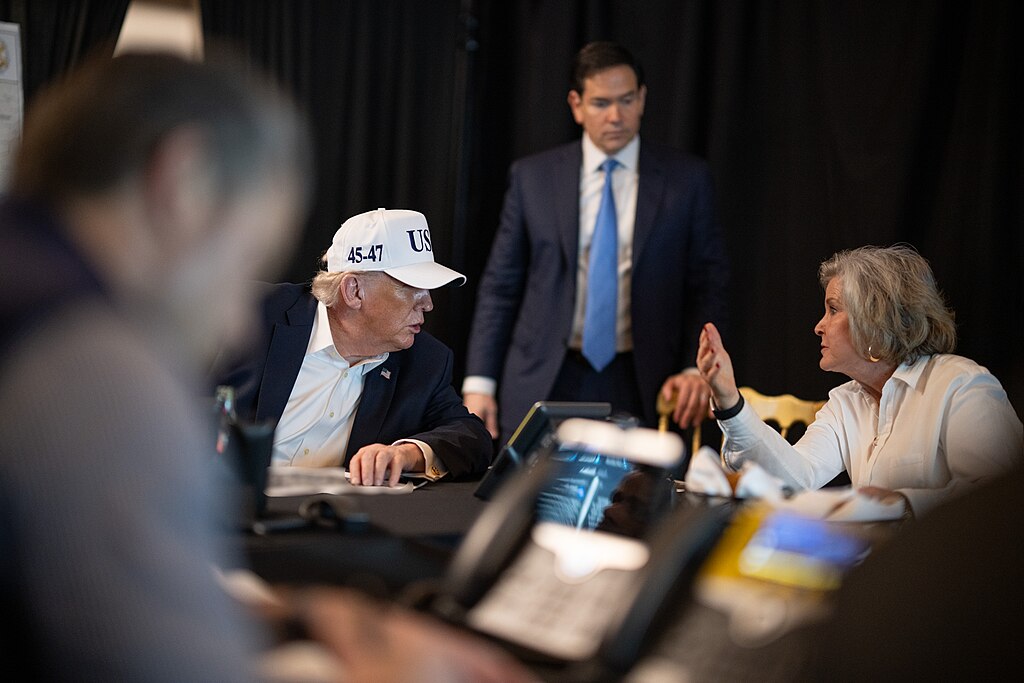
A single image set off a wave of online speculation — and once again, critics rushed to judgment before knowing the full story.
When a photo surfaced showing White House Chief of Staff Susie Wiles wearing a small black device on her wrist, social media lit up with accusations. Some online commentators immediately suggested the wearable could violate strict federal security protocols.
But within hours, the truth came directly from the source.
Social Media Claims Spark Security Questions
In today’s digital age, Americans are rightly concerned about cybersecurity — especially inside the White House.
Sensitive government environments typically prohibit or strictly limit electronic devices capable of transmitting data. Smartwatches, in particular, often raise red flags because many models include:
- Microphones
- GPS tracking
- Cellular connectivity
- Data transmission capabilities
Given those realities, critics quickly speculated that Wiles may have been wearing a restricted device.
However, those claims turned out to be premature.
CEO Of Whoop Steps Forward To Clarify
Will Ahmed, founder and CEO of the wearable fitness company Whoop, addressed the situation directly on X.
“It’s called a Whoop,” Ahmed wrote, identifying the device seen in the viral photo.
Whoop is a high-performance health tracking company valued at approximately $3.6 billion. Unlike popular consumer smartwatches, Whoop devices are built specifically for:
- Sleep tracking
- Recovery monitoring
- Heart rate variability analysis
- Physical strain measurement
Importantly, according to Ahmed, the device does not contain:
- A microphone
- GPS tracking
- Cellular service capability
In other words, it does not function as a communication device.
Approved For Secure Government Use
Ahmed also stated that the device is approved by the National Security Agency (NSA) — an agency known for maintaining some of the most stringent security standards in the federal government.
That distinction matters.
In secure government facilities, electronic devices that can transmit data externally are heavily scrutinized. The absence of those features in the Whoop device significantly reduces cybersecurity concerns.
A Familiar Pattern: Headlines First, Facts Later
For many Americans who prioritize national security — especially voters who strongly support President Donald Trump’s law-and-order leadership — the initial reaction was understandable.
But this episode also highlights a broader trend: viral outrage often spreads faster than verification.
Before the company even had a chance to respond, online critics were already implying security breaches.
The facts, however, told a different story.
Technology, Transparency, And Political Optics
Wearable technology is increasingly common, even among high-level officials. Fitness tracking has become part of many leaders’ routines, particularly those managing high-pressure roles.
According to Ahmed, the device measures heart rate variability and recovery metrics — data that can help monitor stress levels and physical readiness during demanding operations.
In today’s high-stakes political climate, even routine health devices can quickly become the subject of controversy.
The Bottom Line
What began as speculation about a potential security lapse ultimately turned out to involve a fitness tracker without communication capabilities.
For Americans who care deeply about cybersecurity, transparency, and accountability inside the White House, clarity matters.
And in this case, the clarification came quickly.
As wearable technology becomes more common in professional environments, including government settings, conversations about privacy and security will continue. But facts — not viral assumptions — should always lead the discussion.