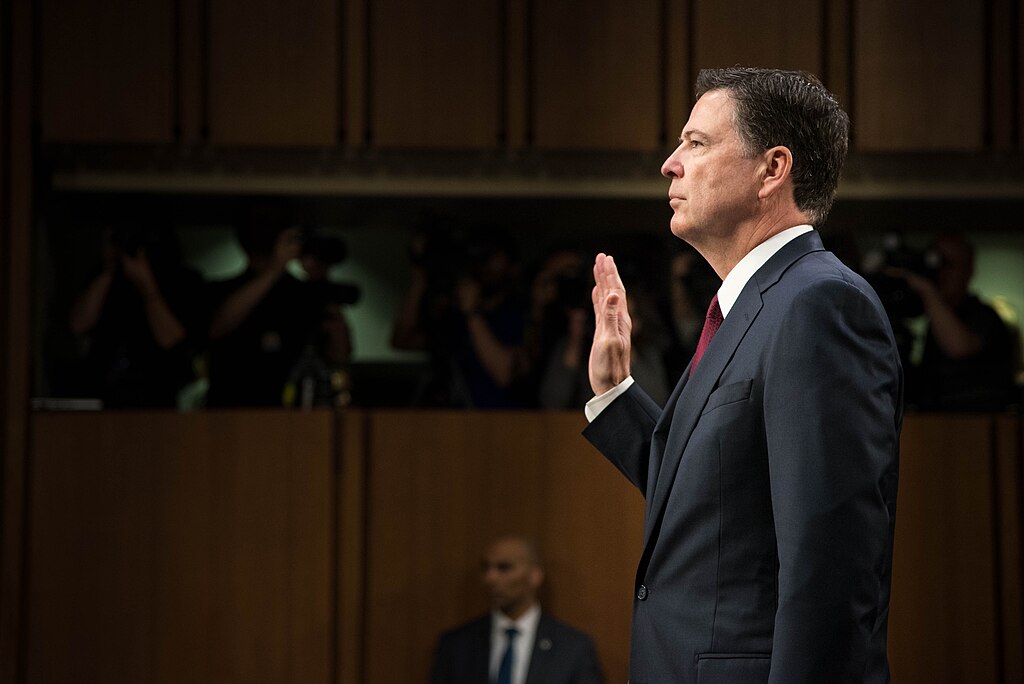
Former FBI Director James Comey is once again making headlines — and not in the way he hoped.
The controversial ex-official is now pleading with a federal judge to throw out the criminal case against him, claiming prosecutors made “fundamental errors” while securing his indictment for allegedly lying to Congress and obstructing justice.
Comey’s 29-page filing, submitted Friday in federal court in Alexandria, Virginia, portrays him as a victim of supposed government mistakes. His lawyers argue the indictment should be dismissed entirely because, they claim, interim U.S. Attorney Lindsey Halligan — appointed during President Donald Trump’s second administration — rushed the process before the statute of limitations expired.
According to Comey’s defense team, Halligan violated grand jury rules and trampled over Comey’s Fifth Amendment rights while pushing the case forward. They argue the entire prosecution was “reckless,” “ill-conceived,” and motivated by a White House determined to hold Comey accountable before time ran out.
But the most explosive allegation centers on the grand jury itself.
Comey’s lawyers insist the grand jury never properly approved the operative two-count indictment. They claim at least 12 jurors did not concur with the charges — and that one of the earlier versions of the indictment was outright rejected. If true, they argue, the government’s attempt to prosecute Comey would violate the Constitution.
However, prosecutors say Comey is simply trying to muddy the waters.
In a sharply worded response filed Thursday, Halligan’s team submitted the official grand jury transcript. They argue the transcript proves the defense claims are false and that the grand jury did, in fact, approve the two-count indictment now on the court’s docket.
The foreperson, according to the transcript, affirmed the vote under questioning from the supervising judge. Prosecutors say this “eliminates any doubt.” They note the court recognized the vote, recorded the true bill, and clearly marked the indictment as valid. Only the first count from the original three-count proposal failed; the remaining two counts were approved by the required number of jurors.
Comey’s team fired back in their filing, insisting the transcript is being misread. They argue there is “no record whatsoever” showing the full grand jury reviewed or voted on the revised indictment. They accuse the government of relying on an “ambiguous exchange” and offering a “late-breaking explanation” to cover up missteps.
The defense also accuses the government of broader misconduct — including relying on materials they say were obtained in violation of the Fourth Amendment and attorney-client privilege. These claims, they argue, are additional grounds for tossing the case.
Despite the heated back-and-forth, Comey’s legal battle is moving forward.
His trial is scheduled for January 5, 2026, where he faces up to five years in federal prison if convicted. For millions of Americans who watched Comey navigate the Clinton email scandal, the Russia investigation, and years of political turmoil, the case represents long-awaited accountability inside the FBI.
And for supporters of President Donald Trump, this moment underscores a broader shift: Washington’s most powerful insiders can finally be held responsible for decisions that once seemed untouchable.