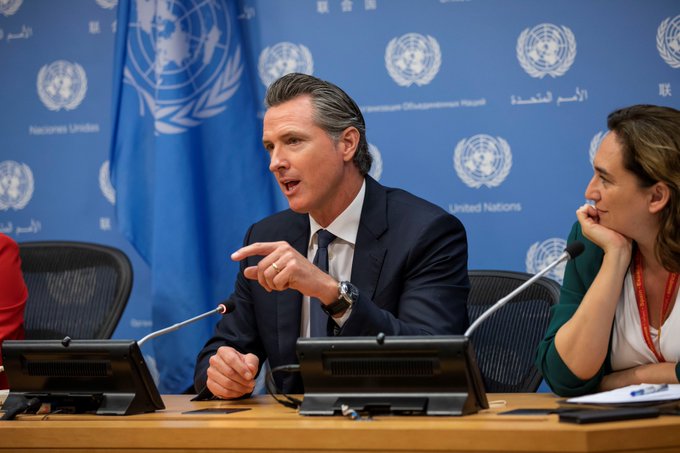
And Newsom wants to be president.
California’s latest minimum wage increase is now facing serious backlash, as new research reveals the policy may be doing more harm than good—especially for workers and everyday consumers already struggling with rising costs.
New Study Reveals Troubling Economic Impact
A report from researchers at the University of California, Santa Cruz has found that California’s $20 fast-food minimum wage is producing widespread negative consequences across the industry.
Instead of boosting financial stability, the study points to:
- Reduced employee hours
- Loss of overtime and workplace benefits
- Rising menu prices for customers
- Increased reliance on automation replacing workers
Economics lecturer Stephen Owen warned the policy is creating a “cascade of unintended consequences,” hitting both workers and small businesses at the same time.
Higher Wages, But Fewer Opportunities
Before the law took effect in April 2024, fast-food workers earned $16 per hour. Governor Gavin Newsom argued the increase would help workers keep pace with inflation and the high cost of living.
But in reality, many workers are now seeing fewer hours and fewer opportunities, making it harder—not easier—to get ahead.
Even more concerning, businesses are turning to self-service kiosks, AI systems, and automation to cut costs—permanently eliminating entry-level jobs that many Americans rely on.
Job Losses And Price Surges Hit Consumers
The economic fallout is already measurable.
A separate analysis by the Berkeley Research Group found:
- 10,700 fast-food jobs lost between June 2023 and June 2024
- Menu prices jumped 14.5% after the wage hike
For families on fixed incomes—especially seniors—these price increases are hitting hard at a time when inflation is already stretching budgets thin.
Los Angeles Doubles Down Despite Warning Signs
Despite the troubling data, California leaders are pushing forward with even more aggressive wage mandates.
In Los Angeles, a new law will raise wages for hotel and airport workers to $30 per hour by 2028, with steady yearly increases.
However, early warning signs are already emerging.
A study commissioned by the Hotel Association of Los Angeles found:
- Hotels have cut or plan to cut 6% of their workforce
- Roughly 650 jobs are already at risk
Business owners warn that continued increases could force layoffs, reduced services, and even closures.
Push For $30 Minimum Wage Expands Nationwide
The movement isn’t stopping in California.
In Oakland, activists are pushing for a $30 minimum wage, while New York City lawmakers are considering similar proposals.
The New York plan would:
- Raise wages to $25 per hour with benefits
- Increase to $30 per hour without benefits
- Gradually phase in increases through 2030 and beyond
Not surprisingly, business leaders are raising red flags.
“We’re at a tipping point,” said Melissa Fleischut of the New York State Restaurant Association, warning that many businesses may not survive additional cost pressures.
A Warning For The Rest Of America
What was sold as a solution to rising costs is now creating new economic pressure across the board.
For many Americans—especially those nearing retirement or living on fixed incomes—the real-world impact is clear:
- Higher prices
- Fewer jobs
- Less opportunity
California’s experience may serve as a cautionary example for other states considering similar policies.
As the debate continues, one question remains:
Are these policies truly helping workers—or making everyday life even more expensive?