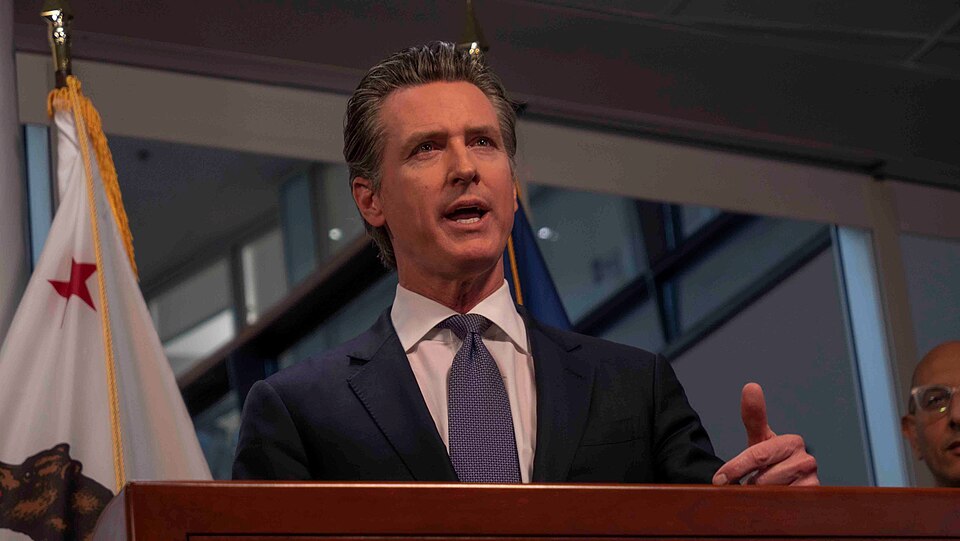
Here’s what Newsom just did.
California Gov. Gavin Newsom is facing a growing showdown with Fresno County after signing legislation that requires local officials to put a controversial transportation tax proposal before voters this November.
What began as a dispute over a local ballot measure has now turned into a much larger fight involving California taxes, voting rules, local government authority and Sacramento’s power over individual counties.
At the center of the controversy is Assembly Bill 1923, which Newsom signed Thursday. The legislation requires Fresno County to place the Better Roads, Safe Streets initiative on the November ballot.
If voters approve the proposal, it would establish a half-cent sales tax to help fund roads and other transportation projects.
Supporters say Fresno County needs reliable funding to maintain and improve its transportation infrastructure. Opponents and skeptical county officials, however, are raising concerns about both the proposed tax and the state government’s intervention in a local election dispute.
For Fresno County taxpayers, the controversy ultimately comes down to two major questions: Should residents approve another transportation tax, and how much power should Sacramento have over the way local governments handle ballot measures?
Fresno County Battles Sacramento Over Local Control
The confrontation intensified after three Fresno County supervisors ordered a 30-day review of the citizen-backed initiative.
Those supervisors argued that the review was permitted under California election law.
Critics saw things differently, accusing the board majority of using the review process to delay the measure and potentially prevent it from reaching voters in November.
Fresno County Board Chairman Garry Bredefeld says the dispute has become about much more than whether residents should pay another tax.
He argues that Sacramento’s intervention threatens the ability of locally elected officials to make decisions for their own communities.
Bredefeld argued Thursday that the controversy ultimately comes down to Fresno County’s right to govern its own affairs. He said state political influence should not be used to override decisions made by local voters and their elected representatives simply because they disagree with Sacramento.
He also sharply criticized the legislation itself, warning that it strips authority away from Fresno County and gives the state greater control over decisions that he believes should remain in the hands of the local community.
The dispute highlights a familiar political tension in California: the balance between decisions made by state leaders in Sacramento and the authority of elected county governments.
Why Fresno’s Tax Fight Matters to Residents
The financial stakes are significant.
Fresno County’s existing Measure C transportation sales tax is scheduled to expire in June 2027.
Measure C has provided funding for transportation projects across the county, meaning officials must determine what happens when the existing tax reaches its expiration date.
The Better Roads, Safe Streets initiative offers one potential replacement funding mechanism.
If approved, consumers would pay an additional half cent in sales tax for every taxable dollar spent.
For example, a $100 taxable purchase would result in an additional 50 cents in sales tax from the measure.
Individually, that may appear relatively small. Across thousands of purchases made by households and businesses over time, however, sales taxes can represent a meaningful expense — particularly for retirees, working families and residents living on fixed incomes.
Supporters counter that roads and transportation systems require substantial long-term funding and that residents benefit from maintaining local infrastructure.
That leaves Fresno County voters with a straightforward policy decision: whether the transportation improvements promised by the initiative justify the additional tax burden.
A Voting Rule Could Make All the Difference
There is another major reason the timing of the November election matters.
The Better Roads, Safe Streets proposal was submitted by citizens rather than being placed directly on the ballot by Fresno County government.
Under existing California court rulings, that distinction can dramatically affect the number of votes necessary for a special tax to pass.
A citizen-sponsored special tax can currently win approval with a simple majority.
A special tax proposed by a local government generally requires support from two-thirds of voters.
That difference could determine whether Fresno’s transportation proposal ultimately succeeds.
And another measure appearing before California voters this November could change the rules in the future.
Proposition 43 Adds Another Twist
California voters will also consider Proposition 43 in November.
If approved, Proposition 43 would require citizen-sponsored special taxes to receive two-thirds voter approval beginning in 2027.
That makes the timing of Fresno County’s measure especially important.
If the transportation tax appears on the ballot under the current rules, supporters may need only a simple majority to prevail.
If the proposal were delayed until a later election after the new requirement took effect, reaching the necessary threshold could become substantially more difficult.
That difference helps explain why the battle over a seemingly routine 30-day review has escalated into a major political and legal confrontation.
For taxpayers, it also demonstrates how election rules can have a direct impact on whether new taxes are ultimately approved.
Democratic Lawmakers Defend Newsom’s Move
Supporters of AB 1923 argue that Sacramento’s intervention was necessary to ensure Fresno County residents actually get an opportunity to vote on the proposal.
State Sen. Anna Caballero and Assemblymember Esmeralda Soria supported the bill, arguing that Fresno County supervisors were using the review period to postpone a vote on the proposal.
Supporters have characterized the legislation as a victory for democracy and voting rights.
From their perspective, voters — rather than county supervisors — should ultimately decide whether the tax becomes law.
That argument creates an unusual divide in the controversy.
One side says the state is protecting the ability of citizens to vote on an initiative they successfully placed before government officials.
The other says Sacramento is undermining local control by changing the rules during an ongoing county election dispute.
AB 1923’s Unusual Journey Through Sacramento
The way AB 1923 moved through the California Legislature is also attracting attention.
The bill did not originally concern Fresno County’s transportation tax.
Instead, AB 1923 initially dealt with California’s Distressed Hospital Loan Program.
Lawmakers later removed that language and replaced it with provisions addressing the Fresno County election controversy.
Newsom then signed the legislation as an urgency measure.
That maneuver allowed the new requirements to take effect quickly enough to affect the upcoming election.
For critics, the unusual legislative path has become another part of the controversy surrounding Sacramento’s involvement.
Supporters, meanwhile, maintain that swift action was necessary because election deadlines were approaching.
Could Fresno County Take Newsom to Court?
The next chapter of the dispute could unfold in a courtroom.
Bredefeld says Fresno County is considering legal action against the state.
The county has hired an election-law specialist who is expected to brief supervisors Tuesday about their options.
One potential constitutional issue involves restrictions on legislation specifically targeting a particular locality.
AB 1923 defends its provisions aimed specifically at Fresno County by pointing to the area’s unusual financial situation, particularly the approaching expiration of Measure C.
Whether that reasoning is legally sufficient could become an important issue if Fresno County formally challenges the legislation.
A court battle could also determine whether the transportation tax remains on the November ballot.
What Happens Next?
Unless a judge intervenes, Fresno County residents will get the opportunity to vote on the Better Roads, Safe Streets initiative this November.
The election could determine whether residents pay a half-cent sales tax to finance future road and transportation projects.
But the controversy surrounding the proposal is now about much more than transportation funding.
It has become a broader debate over taxes, California election law, taxpayer representation and the division of power between Sacramento and local governments.
Supporters of the measure say voters deserve the opportunity to decide whether Fresno County needs the additional transportation funding.
Critics of Sacramento’s intervention argue that state politicians should not be able to override locally elected officials whenever disagreements arise over how an election should proceed.
Bredefeld has signaled that Fresno County’s challenge is far from finished.
“The fight has just begun,” he said.
For California taxpayers, the outcome is worth watching.
What happens in Fresno could provide another test of how much authority California’s state government can exercise over local election decisions — and how easily citizen-backed tax proposals can reach voters.
Ultimately, Fresno County residents may have the final word at the ballot box. But before Election Day arrives, a judge could first be asked to decide whether Sacramento went too far.