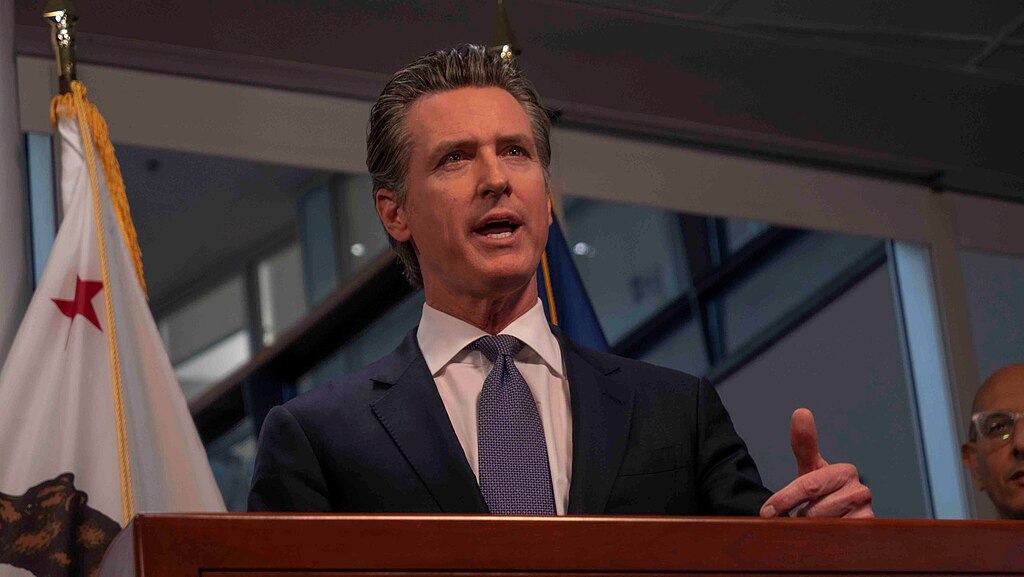
Newsom loses again!
After months of resistance, California Governor Gavin Newsom has officially begun enforcing federal English language requirements for commercial truck drivers — following a major funding freeze imposed by the U.S. Department of Transportation (USDOT).
The move comes after the federal government withheld more than $40 million in transportation funds last October when California failed to comply with longstanding federal safety regulations.
Now, the state is reversing course.
Why the English Proficiency Rule Matters
Federal law requires commercial truck drivers to demonstrate English language proficiency (ELP). That means drivers must be able to:
- Read and understand road signs
- Communicate with law enforcement
- Respond to official safety instructions
- Complete required documentation
Supporters argue this is not a political issue — it is a public safety issue.
Transportation Secretary Sean Duffy stated that California had been the only state failing to enforce the federal rule.
“I shouldn’t have had to threaten to withhold millions in funding for California to come to their senses and enforce the law,” Duffy said. “For those who claimed this was political, the results speak for themselves.”
Trump’s Executive Order Reinforces Federal Law
In April, President Donald Trump signed an executive order strengthening enforcement of English language proficiency standards for commercial drivers.
Under the order:
- Drivers who fail the ELP assessment can be removed from service
- States are expected to conduct proper roadside testing
- Federal transportation funds may be withheld for noncompliance
The administration framed the order as part of a broader effort to restore consistent enforcement of existing federal transportation laws.
For many Americans — especially older voters who prioritize rule of law and roadway safety — the message was straightforward: federal standards must be enforced uniformly.
Fatal Crash Raised National Concern
The debate intensified after a deadly crash on the Florida Turnpike last August.
According to federal officials, the commercial driver involved failed an English assessment, correctly answering only 2 out of 12 verbal questions and identifying just 1 of 4 traffic signs.
At the time the commercial license was issued in 2024, stricter federal enforcement had not yet been reinstated.
“If states had followed the rules, this driver would never have been behind the wheel and three precious lives would still be with us,” Duffy said following the incident.
The tragedy brought renewed attention to the importance of uniform enforcement across all 50 states.
California Quietly Begins Enforcement
Reports indicate that the California Highway Patrol began conducting English proficiency testing during routine traffic stops earlier this year.
In one recorded stop, a driver admitted limited English proficiency. While no citation was issued, the driver was not permitted to continue operating the vehicle. A passenger who demonstrated adequate proficiency took over driving duties.
Nick Chiappe of the California Trucking Association confirmed that enforcement of the ELP requirement is now active statewide for commercial drivers.
With California now in compliance, the Department of Transportation has confirmed it is processing the release of the previously frozen $40 million.
A Broader Question: Federal Standards and Public Safety
For many Americans, this development highlights a larger debate:
- Should federal transportation safety standards be optional?
- Should states risk federal funding by ignoring enforcement requirements?
- How should commercial driver qualifications be monitored nationwide?
Regardless of politics, the central issue remains road safety.
Large commercial trucks share highways with families, retirees, and working Americans every day. Ensuring drivers can read signs, understand instructions, and communicate clearly is widely viewed as a fundamental safety standard.
With funding restored and enforcement underway, California has aligned with federal law — closing a chapter in a dispute that centered on compliance, accountability, and public safety.