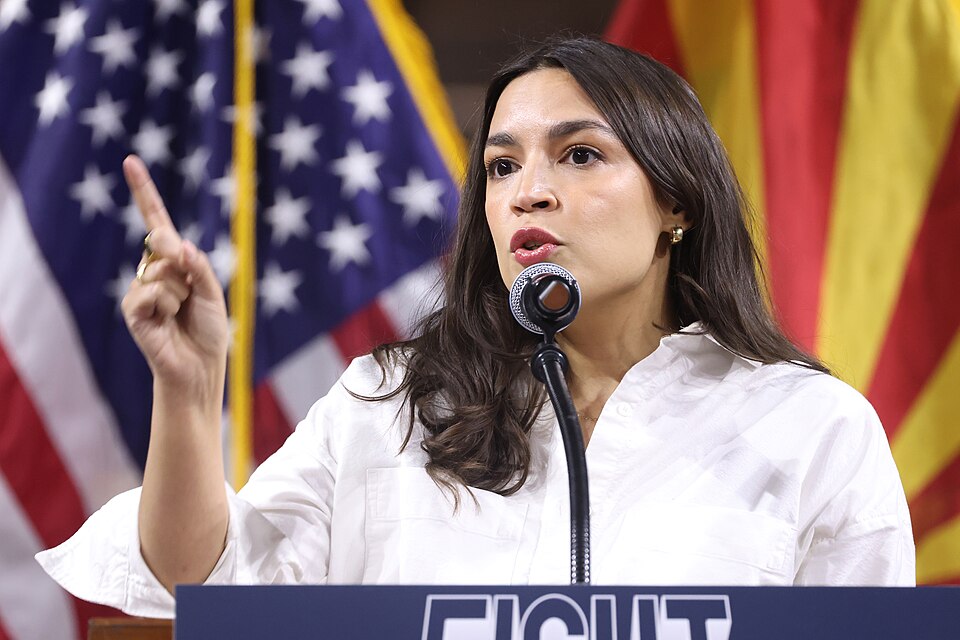
Here’s what the left is planning.
A major political shakeup could be coming to the Democratic Party as an influential socialist organization moves forward with plans to elevate Rep. Alexandria Ocasio-Cortez to the White House while challenging some of New York’s most powerful Democratic politicians.
The developing strategy could have significant consequences for the 2028 presidential election, the future of the Democratic Party, and the direction of American economic policy.
According to a November 14 report from the New York Post, the New York City chapter of the Democratic Socialists of America (DSA) approved resolutions encouraging Ocasio-Cortez to seek the presidency in 2028 and preparing the organization to challenge established Democratic leaders in upcoming elections.
The decisions were made during a convention involving hundreds of delegates representing approximately 15,000 members.
While Ocasio-Cortez has not announced a presidential campaign, the organization’s actions suggest that a coordinated effort to encourage her candidacy is gaining momentum.
Socialists Unveil Plans for the 2028 Presidential Election
The New York City DSA held its convention on November 14, bringing together 438 delegates to determine the organization’s future political priorities.
Among the most significant developments was the approval of a resolution urging Ocasio-Cortez to consider a presidential campaign in 2028.
The congresswoman has become one of the most recognizable progressive figures in Washington since entering the House of Representatives in 2019.
Her political platform has included support for Medicare for All, expanded federal spending on social programs, higher taxes on wealthy Americans, and greater government involvement in addressing economic inequality.
These positions have helped her attract a dedicated following among progressive activists while making her a frequent target of criticism from Republican lawmakers.
The socialist organization reportedly believes Ocasio-Cortez has the national recognition and political support necessary to compete for the Democratic presidential nomination.
However, the resolution represents an effort to encourage her to run, not an official announcement from the congresswoman herself.
Ocasio-Cortez has not confirmed that she intends to seek the presidency in 2028.
That distinction remains important as speculation surrounding the next presidential election continues.
Powerful Democrats Find Themselves in the Crosshairs
The organization’s political ambitions extend well beyond the White House.
Delegates also approved plans to build political infrastructure that could eventually support challenges against prominent Democratic officials in New York.
Among the politicians identified as obstacles to the organization’s agenda were Democratic Gov. Kathy Hochul and Sen. Kirsten Gillibrand.
The strategy includes preparing for presidential and Senate contests in 2028, followed by gubernatorial and lieutenant gubernatorial elections in 2030.
The approach could create new political challenges for establishment Democrats who have traditionally maintained considerable influence within the party.
Rather than focusing exclusively on influencing existing Democratic leaders, socialist organizers are exploring ways to elect politicians more closely aligned with their priorities.
For Democrats, the developments raise a difficult question: Can the party accommodate its growing progressive wing without creating deeper divisions among its own voters?
Those tensions could play an important role in determining future candidates, campaign platforms, and election strategies.
New York’s Socialist Movement Seeks Greater Influence
The organization’s growing ambitions follow a period of political success for progressive candidates in New York.
Mayor Zohran Mamdani’s rise to prominence has helped demonstrate the electoral potential of democratic socialist candidates in one of America’s largest cities.
His success has also given activists an example of how grassroots organizing, volunteer networks, and economic messaging can help an unconventional candidate build political support.
The New York City DSA appears interested in expanding those strategies to statewide and national elections.
The organization has emphasized the importance of building campaign operations, recruiting political workers, and strengthening its ability to mobilize voters.
These efforts could eventually support candidates running for Congress, statewide office, or the presidency.
Similar resolutions encouraging Ocasio-Cortez to run for president have already emerged from socialist chapters in cities including Los Angeles, Chicago, Atlanta, and Washington, D.C.
That growing interest indicates that the movement behind a potential presidential campaign extends beyond New York City.
Whether those efforts translate into a successful national campaign remains uncertain.
Major Economic Changes Could Be Ahead
Alongside its electoral strategy, the socialist organization approved several policy proposals that could become central issues in future political debates.
One proposal involves increasing New York City’s minimum wage from $17 per hour to $30 per hour by 2030.
The organization also supported pursuing a publicly owned municipal bank, opposing the expansion of artificial intelligence, and developing stronger recruitment networks for political campaigns.
These proposals reflect the group’s broader interest in increasing government involvement in economic and financial matters.
Supporters believe a higher minimum wage could help workers manage rising living expenses and improve financial stability.
Critics, however, question whether such a substantial increase could create additional challenges for small businesses, employers, and consumers.
Businesses facing higher payroll costs could be forced to reconsider hiring, pricing, or other operating decisions, although the actual economic consequences would depend on how any policy was implemented.
The proposed public bank also raises questions about the government’s appropriate role in financial services.
Advocates believe public banking could expand access to financial resources, while opponents may question the financial risks and oversight responsibilities associated with government-operated banking institutions.
These competing perspectives could become increasingly relevant if socialist-backed candidates gain greater influence within the Democratic Party.
What Could This Mean for President Trump?
The emerging political strategy could also influence the national debate surrounding President Donald Trump’s administration and the next presidential election.
Trump and Republican leaders have consistently criticized socialist economic proposals, arguing that expansive government programs and increased regulation can undermine private enterprise and economic opportunity.
If Ocasio-Cortez enters the 2028 presidential race, economic policy could become one of the defining issues of the election.
Disagreements over taxes, federal spending, healthcare, government regulation, and the role of private businesses would likely receive substantial attention.
The congresswoman’s progressive record could provide Republicans with opportunities to contrast their economic priorities with those favored by democratic socialists.
At the same time, Ocasio-Cortez’s supporters argue that her proposals address longstanding concerns about healthcare expenses, housing affordability, and financial inequality.
Both parties would have to consider how those competing messages resonate with voters, particularly independents and working families concerned about their financial futures.
The political outcome would depend on far more than ideology alone, including candidate popularity, economic conditions, and the priorities of voters in competitive states.
Democratic Party Leadership Faces Growing Pressure
The effort to promote Ocasio-Cortez comes as Democrats continue debating the political direction of their party.
Some Democratic leaders believe the party should focus on appealing to moderate and independent voters, especially in competitive elections.
Others argue that embracing more ambitious progressive policies could energize younger voters, strengthen grassroots participation, and improve turnout.
The Democratic Socialists of America’s latest decisions suggest that progressive organizers are not content to wait for establishment politicians to embrace their priorities.
Instead, they are developing plans to support candidates who already share their political philosophy.
That strategy could result in additional Democratic primary challenges and greater competition over the party’s leadership.
It could also influence how candidates approach major issues such as inflation, retirement security, healthcare costs, housing, and federal spending.
For older Americans and retirees, these discussions may be especially relevant when they involve Medicare, taxation, and the long-term financial condition of federal programs.
However, the New York DSA’s resolutions do not themselves establish new federal policies or commit Ocasio-Cortez to any particular presidential platform.
Could Ocasio-Cortez Actually Win the White House?
Despite the organization’s enthusiasm, considerable obstacles would remain between Ocasio-Cortez and the presidency.
First, she would have to decide whether to run.
If she entered the Democratic presidential primary, she would then have to compete against other potential candidates for the party’s nomination.
Winning a national election would present additional challenges, including appealing to voters outside her existing political base and establishing a competitive campaign operation across the country.
Her national profile and ability to attract grassroots support could be important assets.
However, her outspoken progressive positions could also become major points of disagreement during a general election.
The Democratic Party’s eventual nominee would need to compete in a country where voters hold widely differing views about government spending, economic regulation, immigration, healthcare, and other important issues.
For now, there is no guarantee that Ocasio-Cortez will run, receive the Democratic nomination, or become the party’s presidential standard-bearer.
The socialist organization’s decision is an indication of its political ambitions rather than evidence of a completed presidential campaign.
The Battle for the Democratic Party’s Future Is Taking Shape
The November 14 convention offers an early look at how one influential progressive organization hopes to shape American politics over the coming years.
By encouraging Ocasio-Cortez to pursue the White House and preparing to challenge prominent establishment Democrats, the New York City DSA is signaling that it intends to play a larger role in determining the party’s future.
The organization’s plans also underscore the growing competition between traditional Democratic leadership and activists seeking a more progressive political agenda.
For Republicans, the developments could provide an opportunity to sharpen their arguments about the role of government, economic freedom, and federal spending.
For Democrats, they raise questions about political unity and which candidates are best positioned to win national elections.
The central question now is whether Ocasio-Cortez will embrace the presidential ambitions being promoted by socialist organizers or pursue a different political path.
With the 2028 presidential election approaching, the answer could have significant implications for both major political parties and the future direction of the country.