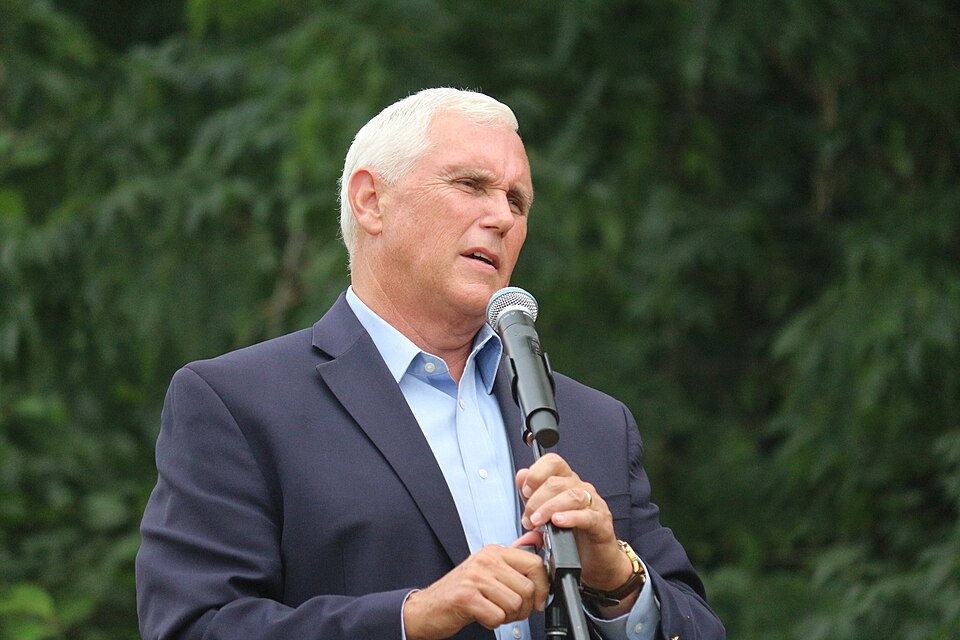
Pence is back with more criticism.
Former Vice President Mike Pence is once again taking aim at President Donald Trump, delivering some of his harshest criticism yet while blaming the president’s policies for the Republican Party’s disappointing performance in the 2026 midterm elections.
During a Sunday appearance on NBC’s Meet the Press, Pence argued that Republican voters had grown frustrated with the direction of the Trump administration and expressed serious concerns about several of the president’s signature policies.
But his criticism went beyond disagreements over government spending and international trade. Pence also raised questions about the administration’s conduct, further exposing the deep political divide between the two former running mates.
The remarks come at a particularly difficult moment for Republicans, who are attempting to understand what went wrong in November and how the party can regain the confidence of American voters.
Pence Delivers Harsh Verdict On Trump
Speaking with NBC moderator Kristen Welker on November 15, Pence was asked whether Trump should accept responsibility for Republican losses in the midterm elections.
Pence acknowledged that Democrats had run successful campaigns but argued that the outcome revealed more significant problems within the Republican Party.
“It wasn’t just a rout, it was a reckoning,” Pence declared.
The former vice president suggested that Republican voters were sending a message about the direction of the country and the priorities being pursued in Washington.
Rather than attributing the election results to individual candidates or local political circumstances, Pence placed much of the responsibility on the administration’s broader policy agenda.
His remarks represent another public confrontation between two Republicans who once stood together at the highest levels of American government.
Pence Takes Aim At Trump’s Economic Agenda
One of Pence’s central criticisms involved Trump’s approach to international trade.
The former vice president argued that the president’s tariff policies had contributed to dissatisfaction among Republican voters.
Trump has consistently defended tariffs as an important tool for protecting American businesses, encouraging domestic manufacturing, and negotiating better trade agreements with foreign governments.
Supporters of the administration’s approach believe stronger trade protections can help American workers compete against overseas manufacturers.
Critics, however, argue that tariffs can increase costs for businesses and consumers, particularly when companies pass additional expenses along to shoppers.
For American families already concerned about grocery bills, utility expenses, and the overall cost of living, the debate has considerable financial implications.
Pence also raised concerns about the growing national debt, citing a figure of approximately $41 trillion.
The former vice president has repeatedly emphasized fiscal responsibility as a fundamental conservative priority.
His latest remarks suggest that he believes Republicans must return to a greater focus on controlling federal spending and limiting the expansion of government debt.
These disagreements reflect a larger debate within the GOP over how best to strengthen the American economy while maintaining fiscal discipline.
Former Vice President Raises Controversial Allegations
Pence’s criticism became particularly pointed when he turned to questions about the administration’s conduct.
During the interview, he suggested that concerns about self-dealing and corruption surrounding the administration had negatively influenced Republican voters.
Those were serious allegations, although Pence’s comments did not establish that Trump or members of his administration had committed wrongdoing.
The former vice president argued that perceptions about ethical conduct in Washington had become another political problem for Republicans.
His decision to publicly raise those concerns demonstrates just how far his relationship with Trump has deteriorated since their years together in the White House.
The two men served together from 2017 through January 2021, but their political partnership fractured following the 2020 presidential election.
Since leaving office, Pence has increasingly criticized Trump’s policies and advocated a different vision for the Republican Party.
The latest interview indicates that those disagreements remain unresolved.
Pence Criticizes Trump’s Foreign Policy
The former vice president also challenged Trump’s approach to international affairs.
He accused the administration of being too accommodating toward Russia and Iran, arguing that Republicans should pursue a more traditional approach to American foreign policy.
Pence has long supported a strong American military and an assertive national security strategy.
Trump, meanwhile, has frequently emphasized negotiating directly with foreign governments and pursuing agreements designed to advance American interests.
The disagreement illustrates competing Republican views about how the United States should exercise its influence abroad.
Some conservatives favor a more active American role in confronting international adversaries, while others emphasize avoiding prolonged overseas military commitments.
These questions have taken on renewed importance as Americans consider the financial and national security consequences of international conflicts.
The debate also affects broader concerns about energy prices, federal spending, and the resources available for domestic priorities.
Pence Makes Surprising Claim About Republican Voters
Despite his sweeping criticism of Trump, Pence insisted that the midterm results did not necessarily mean Americans had embraced a more liberal political agenda.
Instead, he suggested that disappointed Republican voters had become dissatisfied with their own party’s leadership.
“Our voters didn’t turn left,” Pence said, arguing that they were instead “turned off.”
That distinction was central to his message.
Pence maintained that Republicans could regain political support by returning to longstanding conservative principles rather than abandoning them.
His comments suggest he believes the party’s problems are connected more closely to its current direction than to a fundamental change in the political beliefs of its supporters.
However, identifying the reasons behind an election defeat is rarely straightforward.
Economic conditions, candidate quality, voter turnout, national events, and local concerns can all influence election outcomes.
Whether Republican voters share Pence’s assessment remains an important question as party leaders evaluate the results.
Growing Republican Divisions Could Shape The Party’s Future
Pence’s comments arrive as Republicans confront difficult decisions about their political future.
Democrats made substantial gains in the November 3 midterm elections, winning control of both chambers of Congress and creating significant challenges for the remainder of Trump’s second term.
The setbacks have prompted disagreements among prominent Republicans about what the party should do next.
Some believe the GOP needs to reconsider elements of the administration’s agenda, particularly policies affecting household expenses and international relations.
Others continue to support Trump’s America First approach and argue that Republicans should focus on communicating their accomplishments more effectively while addressing voters’ economic concerns.
The debate extends beyond political strategy.
For millions of Americans, important issues include protecting Social Security and Medicare, controlling inflation, maintaining affordable energy, strengthening national security, and preventing unnecessary increases in federal spending.
Those concerns will remain important regardless of which Republican leaders ultimately shape the party’s future.
What Comes Next For Trump And Republicans?
Pence’s latest criticism illustrates how disagreements within the Republican Party could become more pronounced ahead of the 2028 presidential election.
The former vice president appears determined to make the case for a return to traditional conservative policies, while Trump’s supporters continue to view his political agenda as an important foundation for the GOP.
The challenge for Republicans will be determining how to respond to their midterm losses without creating further divisions that could weaken the party in future elections.
Pence believes the results represent a warning about the direction Republicans have taken.
But his interpretation is not the only explanation being offered for the GOP’s setbacks.
Ultimately, the party’s ability to recover will depend on whether its leaders can address voter concerns, produce meaningful policy results, and present a convincing vision for the country’s future.
For now, Pence’s latest attack on his former running mate has added another contentious chapter to an already complicated political relationship.
And with the battle over the Republican Party’s future intensifying, the disagreement between Trump and Pence appears unlikely to disappear anytime soon.