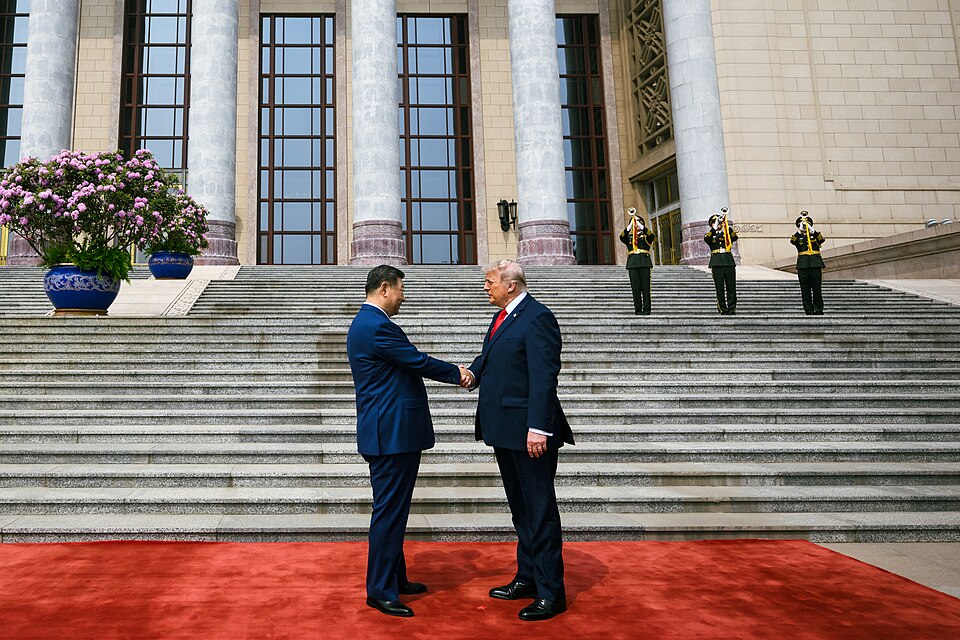
Here’s the issue both leaders are struggling to find a solution on.
President Donald Trump and Chinese President Xi Jinping may have appeared cordial in front of cameras during their closely watched summit in Beijing, but new details suggest serious tensions emerged behind closed doors over one of the most dangerous issues in the world: Taiwan.
While both leaders exchanged compliments publicly, the private discussions reportedly became far more intense as Xi pushed President Trump on China’s demands regarding the self-governing island. The encounter highlighted just how fragile relations remain between the United States and communist China.
Friendly Smiles in Public, Tough Talks in Private
The summit began with optimistic remarks and positive headlines, but diplomatic observers quickly noticed a shift after the private meeting.
The one-on-one discussion lasted about 40 minutes longer than planned, fueling speculation that difficult topics dominated the conversation.
Later, during a joint appearance at Beijing’s historic Temple of Heaven, President Trump was noticeably quieter and did not respond to reporters’ questions. Both leaders appeared more formal, and the relaxed atmosphere seen earlier had clearly changed.
China Issues a Direct Warning to Trump
Shortly after the meeting, Chinese Foreign Ministry spokesperson Mao Ning released an unusually blunt statement.
According to Beijing, Xi told President Trump that Taiwan is the most important issue in U.S.-China relations and warned that mishandling the matter could lead to direct conflict between the two nations.
China’s communist government views Taiwan as part of its territory, despite the island operating as a free and democratic society with its own elected government and military.
The Chinese statement underscored how aggressively Beijing continues to press its claim.
White House Leaves Taiwan Out of Official Summary
The The White House did not release its official summary until several hours later.
When the statement was finally published, it made no mention of Taiwan.
That omission drew immediate attention, especially after Chinese officials emphasized the issue so strongly.
White House Communications Director Steven Cheung declined to provide additional details, directing reporters to the official readout.
Secretary of State Marco Rubio Sends a Strong Message
Secretary of State Marco Rubio made clear that U.S. policy has not changed.
Speaking with NBC News, Rubio said China always raises Taiwan and the United States consistently reaffirms its position.
He also warned that any attempt by Beijing to seize Taiwan by force would be a grave mistake with severe global consequences.
Rubio emphasized that the repercussions would extend far beyond the United States and could destabilize economies and security around the world.
Trump Continues Historic Support for Taiwan
President Trump has maintained a strong stance against communist aggression.
Although the United States follows the long-standing “One China” policy, America remains one of Taiwan’s most important security partners.
In December, the Trump administration approved an $11 billion weapons package for Taiwan, reportedly the largest military support package ever provided to the island.
The move sent a clear signal that the United States intends to help Taiwan defend its freedom.
Taiwan Responds Forcefully
Taiwan’s Ministry of Foreign Affairs accused China of being the true threat to peace in the Indo-Pacific region.
Officials noted that while Trump and Xi were meeting, Chinese military aircraft and naval vessels continued operating near Taiwan in what Taipei described as intimidation and harassment.
The statement reinforced growing concerns that Beijing is increasing pressure on the democratic island.
Why This Matters to American Families
Taiwan sits at the center of one of the world’s most dangerous geopolitical flashpoints.
A military confrontation in the region could disrupt global trade, affect retirement accounts, raise consumer prices, and threaten America’s national security.
For many conservatives, Taiwan represents a critical test of whether the free world will stand up to communist expansion.
The Bottom Line
Despite the public smiles and formal praise, the Trump-Xi summit exposed deep divisions that remain unresolved.
China’s warning over Taiwan served as a reminder that Beijing continues to challenge American leadership and regional stability.
President Trump’s firm support for Taiwan demonstrates that the United States will not back down in the face of pressure from the Chinese Communist Party.
As tensions rise, the outcome of this dispute could shape the future of global security for years to come.