Here’s what happened.
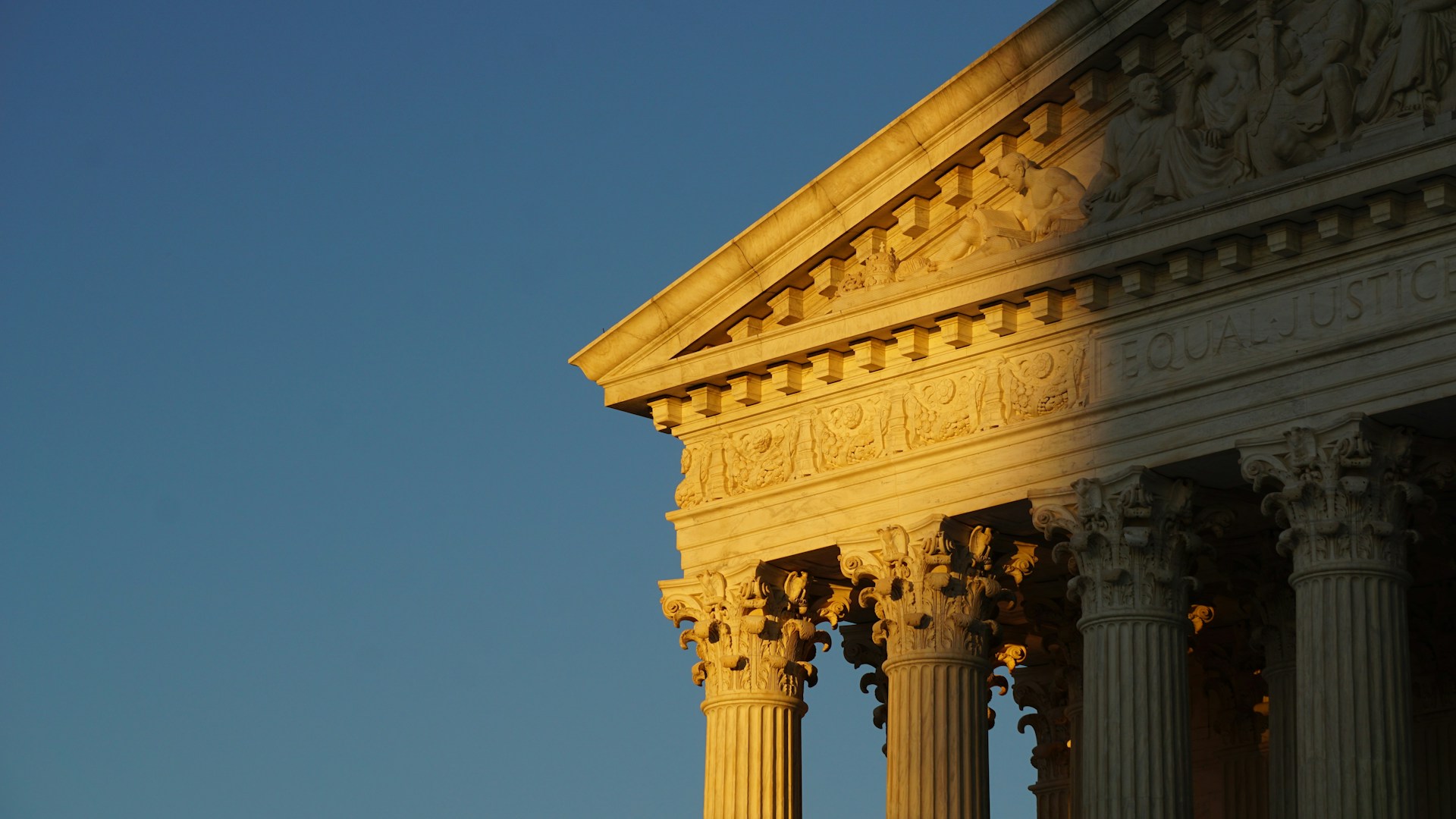
The Supreme Court has declined to hear a major First Amendment dispute involving two Michigan students who were prohibited from wearing “Let’s Go Brandon” sweatshirts at their public middle school.
The Court’s decision leaves intact a federal appeals court ruling that sided with school administrators, handing a setback to the students and the free-speech advocates who supported their case.
Although the Supreme Court did not issue a ruling on whether the slogan itself is protected in every school, its refusal to take the case means the lower-court decision will remain in place.
For conservatives who have increasingly raised concerns about political expression in America’s schools, the case could become another flashpoint in the national debate over free speech, parental rights and the limits of government authority.
Supreme Court Declines To Hear Michigan Student Speech Case
The controversy began after two students at Tri County Middle School in Howard City, Michigan, wore sweatshirts displaying the phrase “Let’s Go Brandon.”
School administrators determined that the message violated the district’s dress-code rules because the slogan is widely understood as a substitute for a profane expression aimed at former President Joe Biden.
The students were instructed to remove the clothing.
Their mother later filed a lawsuit challenging the school’s decision, arguing that her sons were expressing a political opinion protected by the First Amendment.
The legal fight eventually reached the Sixth U.S. Circuit Court of Appeals.
In October 2025, a divided appellate panel ruled that the school could prohibit the sweatshirts because administrators reasonably viewed the slogan as vulgar speech.
The family then asked the Supreme Court to review the case.
On Monday, the justices declined.
What The Supreme Court Decision Actually Means
The Supreme Court’s action is important, but it should not be confused with a full ruling on the merits of the dispute.
The justices did not issue an opinion declaring that the phrase “Let’s Go Brandon” is unprotected speech.
They also did not create a new nationwide rule requiring schools to prohibit the slogan.
Instead, the Court simply declined to review the Sixth Circuit’s ruling.
The Supreme Court routinely rejects thousands of petitions each year without explaining why, and a denial of review does not necessarily mean the justices agree with every part of the lower court’s reasoning.
Still, the practical result is significant for the students involved: the appellate court’s decision remains in effect.
Appeals Court Sided With School Administrators
The Sixth Circuit ruled 2-1 that school officials could reasonably classify the slogan as vulgar even though it also carries an unmistakable political message.
The majority concluded that public schools have authority to place certain limits on student speech that would receive broader constitutional protection outside a school environment.
Judge John Nalbandian, who was appointed to the federal bench by President Donald Trump, wrote for the majority.
His opinion concluded that the school did not violate the First or Fourteenth Amendments by asking the students to remove the clothing.
Nalbandian summarized the court’s reasoning with a striking phrase: inside the schoolhouse, concerns about vulgarity can outweigh the political character of a message.
That conclusion immediately became a key point of disagreement in the case.
Trump-Appointed Judge Warned About Political Censorship
Judge John Bush, another Trump appointee, issued a forceful dissent.
Bush warned that allowing schools to reclassify political expression as vulgar could give administrators too much power to suppress viewpoints they dislike.
His argument centered on a fundamental First Amendment concern.
If officials can restrict a political slogan because of an implied meaning rather than the actual words printed on a shirt, critics say schools could gain broad discretion to determine which political messages students are permitted to express.
That question reaches well beyond one conservative slogan.
It could potentially affect political messages from across the ideological spectrum.
Why “Let’s Go Brandon” Became A Political Slogan
“Let’s Go Brandon” became nationally recognized during Joe Biden’s presidency.
The phrase originated after an October 2021 NASCAR event in which a crowd could be heard chanting a profane criticism of Biden while NBC reporter Kelli Stavast interviewed driver Brandon Brown.
During the broadcast, Stavast suggested that the crowd was chanting “Let’s Go Brandon.”
The phrase quickly spread through conservative political culture and became a popular indirect way of criticizing the Biden administration.
It later appeared on bumper stickers, flags, hats, shirts and other political merchandise.
Supporters viewed it as political satire and criticism of the president.
Critics argued that its well-known connection to profanity made it inappropriate in some settings, particularly schools.
That distinction became central to the Michigan lawsuit.
Mother Sued Over Her Sons’ First Amendment Rights
The students’ mother filed suit against the school district in 2023.
According to the lawsuit, school employees treated the slogan as equivalent to displaying the profanity it was intended to replace.
The family argued that this interpretation went too far.
Their position was straightforward: the sweatshirts did not contain an explicit curse word, and the message clearly represented political criticism of the president.
The case was supported by the Foundation for Individual Rights and Expression, commonly known as FIRE, a national organization focused on free-speech protections.
FIRE argued that criticizing a president is among the most important forms of political speech protected by the Constitution.
The organization also emphasized that free-speech rules should apply consistently regardless of which political party or viewpoint is involved.
School District Says Politics Wasn’t The Issue
The school district defended its decision by arguing that administrators did not prohibit the clothing because it criticized Biden.
Instead, the district maintained that the slogan violated existing rules concerning inappropriate language.
That distinction mattered legally.
Public schools have historically been granted greater authority than other government institutions to regulate certain categories of student expression, especially when the speech is considered disruptive, vulgar or inconsistent with legitimate educational objectives.
However, students still retain constitutional protections.
That has created decades of legal disputes over exactly where school authority ends and First Amendment rights begin.
Student Free Speech Has A Long Supreme Court History
The Supreme Court has previously ruled that students do not automatically surrender their constitutional rights when they enter a public school.
At the same time, the Court has recognized that schools may impose greater restrictions on student expression than the government could impose on adults speaking in a public setting.
Those competing principles make cases involving political clothing especially difficult.
Schools have an interest in maintaining an orderly educational environment.
Students, meanwhile, have an interest in being able to express political views without government officials deciding which opinions are acceptable.
The Michigan case presented an additional complication because the message was simultaneously political and connected to an implied profanity.
That combination placed the dispute directly at the intersection of school discipline and political speech.
Conservatives See A Broader First Amendment Concern
For many conservatives, the case raises a larger issue than whether one slogan belongs on a middle-school sweatshirt.
The central question is whether public institutions can suppress controversial political expression by describing it as offensive or inappropriate.
That concern has become increasingly prominent in national debates involving schools, universities, social media, public demonstrations and government institutions.
Conservatives who supported the students argue that constitutional protections matter most when a message is unpopular or provocative.
If only widely accepted political views receive protection, they argue, the First Amendment offers little meaningful protection at all.
At the same time, defenders of the school district contend that administrators need reasonable discretion to establish age-appropriate rules for students.
The tension between those two principles is unlikely to disappear.
The Case Also Raises Questions About Political Neutrality
Another major issue is consistency.
Would a school apply the same standard to a slogan targeting a Republican president?
Would administrators permit other political shirts involving controversial messages?
Those questions can become important when courts evaluate whether restrictions are truly based on neutral school policies or whether officials are discriminating against a particular viewpoint.
In this case, the district maintained that the students were disciplined because of the vulgar meaning associated with the phrase, not because their shirts opposed Biden.
Free-speech advocates remain concerned, however, that allowing administrators to focus on implied meanings could create opportunities for inconsistent enforcement.
Why The Supreme Court May Have Stayed Out
The Supreme Court did not explain why it declined to hear the case.
That is normal.
A decision not to hear a case can result from many considerations and should not automatically be interpreted as agreement with the lower court.
The justices may also choose to wait for additional cases involving similar legal questions before stepping in.
If federal appeals courts eventually reach conflicting conclusions over similar student-speech controversies, the Supreme Court could face greater pressure to establish a nationwide standard.
For now, however, the Sixth Circuit ruling remains the controlling decision in this particular dispute.
What Parents Should Know
The case is also worth watching for parents with children in public schools.
School dress codes frequently regulate clothing containing profanity, sexual references, violent imagery or messages administrators believe could interfere with the educational environment.
Political clothing creates more complicated constitutional questions.
A shirt supporting or opposing a candidate generally involves protected political expression.
But when the political message includes language that administrators consider vulgar or disruptive, courts may give schools additional authority to intervene.
Parents who disagree with a school restriction can typically review the district’s written dress code, disciplinary policies and procedures for appealing administrative decisions.
Could Similar Cases Reach The Supreme Court Again?
Yes.
The Supreme Court’s refusal to hear this particular case does not prevent another student-speech controversy from eventually reaching the justices.
Future cases could involve different slogans, different school policies or different decisions from federal appeals courts.
If lower courts begin issuing conflicting rulings on when political speech can be classified as vulgar, the Supreme Court may eventually decide that nationwide guidance is necessary.
That makes the Michigan dispute important even though the justices did not formally rule on its underlying constitutional arguments.
A Victory For School Authority — And A Setback For Free-Speech Advocates
For school administrators, the outcome preserves their ability to enforce dress-code rules when a political slogan is reasonably interpreted as vulgar.
For the family and its supporters, the result is a disappointment.
They had hoped the Supreme Court would clarify that political criticism cannot lose constitutional protection simply because listeners associate it with an offensive expression.
The justices chose not to enter that debate.
For now, the lower court gets the final word in this case.
The Bottom Line
Two Michigan middle-school students were told they could not wear “Let’s Go Brandon” sweatshirts because administrators considered the slogan equivalent to vulgar language.
Their family argued that the shirts represented constitutionally protected criticism of a sitting president.
A divided federal appeals court sided with the school district, concluding that administrators could reasonably prohibit the message.
One Trump-appointed judge joined the majority, while another Trump-appointed judge warned that the ruling could create dangerous possibilities for censorship of political expression.
The Supreme Court has now declined to review the case, leaving that ruling intact.
The decision does not establish a nationwide ban on “Let’s Go Brandon” clothing, nor does it mean the Supreme Court formally endorsed every part of the appeals court’s reasoning.