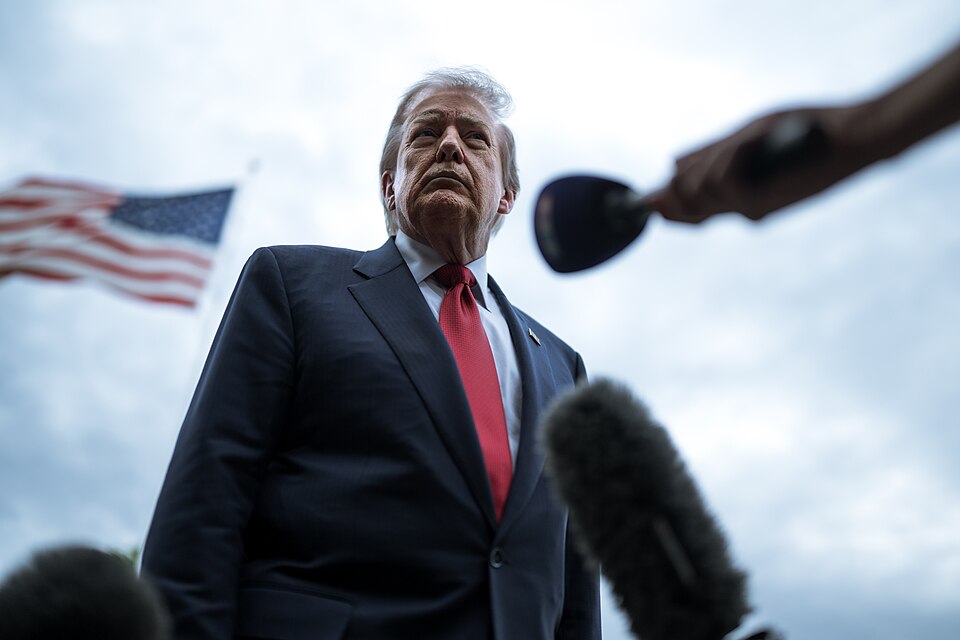
Cracks are beginning to show inside the Republican Party as President Donald Trump faces growing resistance from some members of Congress ahead of the crucial 2026 midterm elections.
While Trump remains the undisputed leader of the GOP, a growing number of Republican lawmakers are openly breaking with the White House on several high-profile issues.
The disagreements are raising new questions about party unity as Republicans work to maintain control of Congress.
Republicans Break Ranks
In recent weeks, multiple Republicans have joined Democrats on key votes that directly challenged Trump-backed policies.
Four House Republicans voted for a war powers resolution designed to limit the president’s authority regarding military action involving Iran.
Several Republican senators also sided with Democrats on measures involving a proposed White House ballroom project and a controversial federal funding program that critics have labeled a political slush fund.
The votes represent some of the most visible signs of Republican resistance since Trump’s return to the White House.
Senate Opposition Growing
A number of GOP senators have become increasingly vocal in opposing parts of the administration’s agenda.
Some Republicans have questioned Trump’s decision to appoint Bill Pulte as acting director of national intelligence, while others have raised concerns about the future of a proposed $1.8 billion anti-weaponization fund.
The disagreements have created unexpected challenges for Republican leadership in the Senate.
Former Trump legislative affairs director Marc Short warned that divisions inside the conference could make it more difficult to move major legislation through Congress.
With Republicans holding only a narrow margin, even a handful of defections can have a significant impact.
Familiar Critics Return
Several of the lawmakers challenging the administration are figures who have previously clashed with Trump.
Sen. Bill Cassidy of Louisiana has emerged as one of the most outspoken Republican critics on Capitol Hill.
Rep. Thomas Massie of Kentucky has also continued his long-standing willingness to oppose leadership when he disagrees with policy decisions.
Meanwhile, Sens. Thom Tillis and John Cornyn have shown greater independence after facing political setbacks and battles within their own party.
Their willingness to break ranks has created new uncertainty for the White House.
Todd Blanche Nomination Faces Questions
Another potential flashpoint is the nomination of acting Attorney General Todd Blanche.
Several Republican senators have indicated they may use the confirmation process to pressure the administration on other issues.
Some lawmakers have warned that the nomination could face delays if concerns about federal spending programs are not addressed.
Senate Majority Leader John Thune recently acknowledged that no nomination can be considered a sure thing in today’s political environment.
White House Pushes Back
The Trump administration rejects claims that major divisions exist within the Republican Party.
White House officials point to a series of legislative victories as evidence that Republicans remain largely united behind the president’s agenda.
Administration officials have highlighted successes on immigration, government spending, economic policy, and other conservative priorities.
A White House spokesperson dismissed reports of growing conflict as media-driven speculation designed to create the appearance of Republican disunity.
According to the administration, Trump continues to work closely with congressional Republicans to advance key policy goals.
Midterm Politics Changing The Equation
Political reality may explain much of the recent tension.
Several Republicans who voted against Trump-backed positions are facing competitive reelection races this November.
Others are retiring and no longer face pressure from primary voters.
That combination has given some lawmakers greater freedom to take positions that differ from the White House.
For Republicans running in swing districts or battleground states, demonstrating independence can sometimes be politically beneficial.
What Happens Next?
Despite recent disagreements, Trump remains the most influential figure in the Republican Party.
However, the growing number of public disputes suggests that some lawmakers are becoming more willing to challenge the administration when they believe their political futures or policy priorities are at stake.
With the midterm elections approaching and major legislative battles still ahead, the relationship between Trump and congressional Republicans could become one of the biggest political stories to watch in Washington.
The question now is whether these disagreements are temporary policy disputes—or the beginning of a larger struggle over the future direction of the Republican Party.