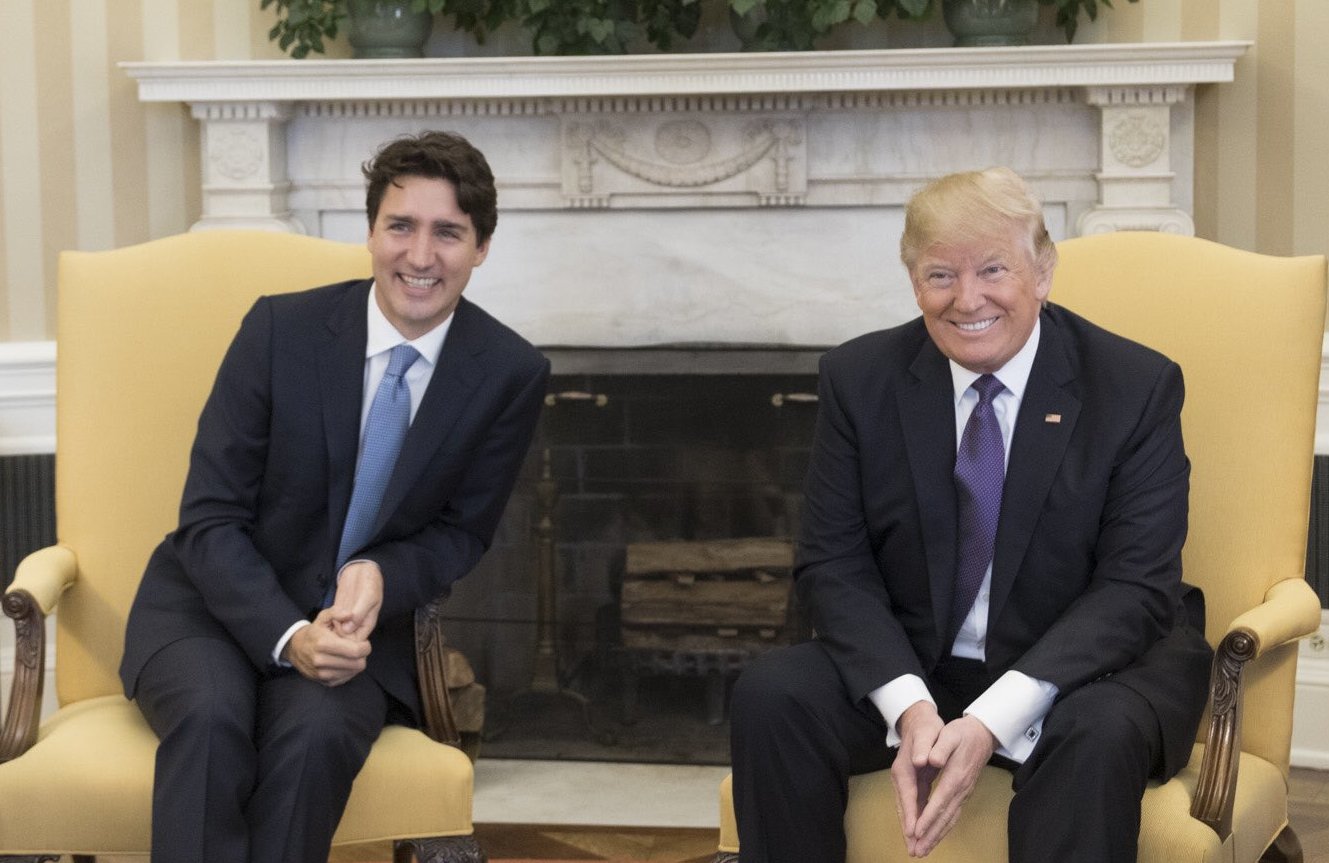
Trudeau seems very nervous right now.
For weeks, President Donald Trump has floated the idea of making Canada the 51st state of the United States. While some believe the proposal is just a political stunt or playful banter, others, including Canadian Prime Minister Justin Trudeau, have signaled that Trump’s ambitions are serious.
In a closed-door meeting with Canadian business and labor leaders, Trudeau reportedly acknowledged that Trump’s notion of annexing Canada is “a real thing.” According to reports, Trudeau conveyed that Trump sees absorbing Canada as the most straightforward way to achieve his goals. The Canadian prime minister also noted that the Trump administration is keenly aware of Canada’s vast natural resources, which include critical minerals that are highly valuable for industries like electric car production and technology.
Trudeau added that Trump’s interest in Canada is not simply about trade imbalances, but rather about the strategic advantage of having access to Canada’s natural wealth, including its energy resources. This perspective is shared by Gil McGowan, president of the Alberta Federation of Labor, who confirmed that Trudeau believes Trump’s real intentions lie in dominating or outright taking control of Canada.
Trump first introduced this idea during a private dinner with Trudeau in late November, even hinting at annexing Greenland. The U.S. and Canada share strong ties, but Trump has long criticized Canada, as well as Mexico, for not doing enough to curb illegal immigration and drug trafficking into the U.S., especially fentanyl. Trump has also asserted that the U.S. has been subsidizing Canada to the tune of $200 billion annually, an imbalance he argues undermines American interests.
On social media, Trump reiterated his stance, questioning why the U.S. continues to subsidize Canada when it already has abundant natural resources. He proposed that Canada should join the U.S. as the 51st state, pointing to the benefits of lower taxes, enhanced military protection, and the elimination of tariffs.
Despite the bold rhetoric, Trump paused the threat of tariffs following a call with Trudeau. In exchange for the temporary reprieve, Trudeau announced a $1.3 billion border security initiative, which includes appointing a fentanyl czar, reinforcing the Canadian border with advanced technology, and bolstering personnel to tackle organized crime and drug trafficking.
Canada’s importance to the U.S. is undeniable, with the U.S. importing a significant portion of its energy from Canada, including nearly 60% of its crude oil. Moreover, Canada serves as a vital supplier of critical minerals, such as lithium, cobalt, and nickel, which are essential for the future of green technologies like electric vehicles.
While Trump’s proposal may seem bold, it underscores the growing geopolitical and economic realities that shape U.S.-Canada relations. With issues like national security, trade imbalances, and resource management at the forefront, it’s clear that the conversation surrounding Canada’s role in the U.S. will continue to evolve.