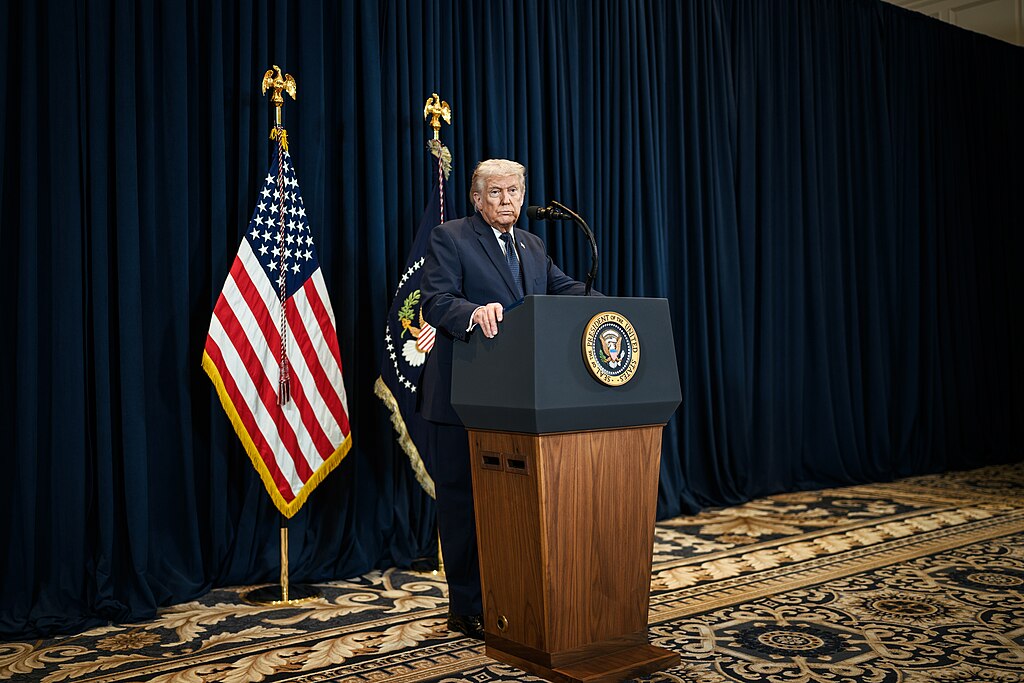
With gas prices rising across the United States, President Donald Trump is considering using a 100-year-old federal law to help increase oil supply and ease pressure on American families.
The White House confirmed that the administration is reviewing a temporary waiver of the Jones Act, a maritime law that restricts which ships can transport goods between U.S. ports.
Officials say the move could speed up oil deliveries, stabilize energy markets, and help lower gas prices for drivers nationwide.
White House Considers Temporary Jones Act Waiver
White House Press Secretary Karoline Leavitt said the administration is exploring the option as part of broader efforts to protect America’s energy supply during rising global tensions.
“In the interest of national defense, the White House is considering waiving the Jones Act for a limited period of time to ensure vital energy products and agricultural necessities are flowing freely to U.S. ports,” Leavitt said.
She emphasized that the decision has not yet been finalized, but officials are actively reviewing the policy.
A temporary waiver would allow foreign-built and foreign-crewed tankers to transport oil between U.S. ports — something normally prohibited under federal law.
What Is the Jones Act?
The Jones Act, part of the Merchant Marine Act of 1920, requires goods shipped between U.S. ports to travel on vessels that are:
- Built in the United States
- Owned by American companies
- Crewed primarily by U.S. citizens
The law was designed to protect the American shipping industry and maintain a strong domestic maritime fleet.
However, critics argue the policy can sometimes slow the movement of energy products, especially during emergencies when shipping capacity is limited.
Because of this, temporary waivers have been granted in the past, particularly during major hurricanes or national crises.
Gas Prices Climb as Oil Markets Surge
The policy discussion comes as oil prices spike and gas prices begin rising again across the country.
Global benchmark Brent crude oil briefly climbed above $100 per barrel, reflecting growing fears about disruptions to global oil supplies.
At the same time, the national average gas price reached $3.60 per gallon, according to AAA — the highest level seen since May 2024.
Energy analysts say allowing foreign tankers to temporarily move oil inside the U.S. could increase supply flexibility and help reduce fuel costs for consumers.
The Global Oil Crisis Behind the Price Spike
Much of the current energy market volatility stems from tensions surrounding the Strait of Hormuz, a critical oil shipping route located off Iran’s coast.
Roughly 20% of the world’s oil supply passes through this narrow waterway every day, making it one of the most important energy chokepoints on the planet.
Recent fighting tied to Operation Epic Fury and Iranian retaliation has disrupted shipping traffic in the region.
Several commercial vessels attempting to travel through the strait have reportedly come under attack, forcing many oil tankers to reroute or delay shipments.
These disruptions have pushed oil prices higher worldwide.
Alternative Oil Routes Being Considered
Another option being discussed involves a Saudi Arabian pipeline that bypasses the Strait of Hormuz entirely.
The 1,200-kilometer pipeline, built decades ago, allows oil to move across the Arabian Peninsula by land.
Energy analyst Javier Blas explained that the pipeline was designed specifically to handle situations like the current crisis.
“The Saudis built it 45 years ago anticipating that one day shipments through the Strait of Hormuz could be interrupted,” Blas said in comments reported by Bloomberg.
If used more heavily, the pipeline could help keep oil flowing even if maritime routes remain unstable.
Trump Releases Emergency Oil Supply
To stabilize markets and prevent even higher fuel prices, President Trump has already taken several major steps.
The administration announced plans to release 172 million barrels of oil from the Strategic Petroleum Reserve (SPR) — one of the largest emergency oil stockpiles in the world.
In addition, member nations of the International Energy Agency (IEA) have pledged to release a combined 400 million barrels of oil to help stabilize global supply.
The goal is to flood the market with additional oil and ease price pressures.
Possible U.S. Military Protection for Oil Tankers
The Trump administration is also considering additional measures to protect shipping routes in the Persian Gulf.
President Trump has suggested that U.S. military forces may eventually escort commercial oil tankers traveling through the Strait of Hormuz.
Energy Secretary Chris Wright said the Navy could be ready to provide protection later this month, though military resources are currently focused on countering Iranian capabilities.
“It’ll happen relatively soon but it can’t happen now,” Wright said during an interview with CNBC.
“At the moment our military assets are focused on destroying Iran’s offensive capabilities and the infrastructure that supports them.”
Iran Signals It Will Continue Blocking the Strait
Complicating matters further, Iran’s new leader Mojtaba Khamenei has signaled that his regime intends to continue restricting passage through the Strait of Hormuz.
That stance has raised concerns that global energy markets could remain unstable in the weeks ahead.
What It Means for American Drivers
For American families already feeling the pressure of rising prices, the White House says its strategy is focused on short-term relief and long-term energy security.
Potential actions now under consideration include:
- Waiving the Jones Act to speed oil shipments
- Releasing Strategic Petroleum Reserve supplies
- Coordinating global oil releases with allies
- Protecting energy shipping routes with U.S. forces
Administration officials say the current price surge appears to be a temporary spike tied to geopolitical tensions, not a permanent shift in the energy market.
If additional supply reaches the market in the coming weeks, analysts believe gas prices could stabilize — and potentially begin falling again.