Democrats are pushing some insane new claims.
As gas prices remain elevated and tensions continue in the Middle East, a prominent Democratic senator is arguing that Iran may have emerged in a stronger position despite months of U.S. military pressure and diplomatic efforts.
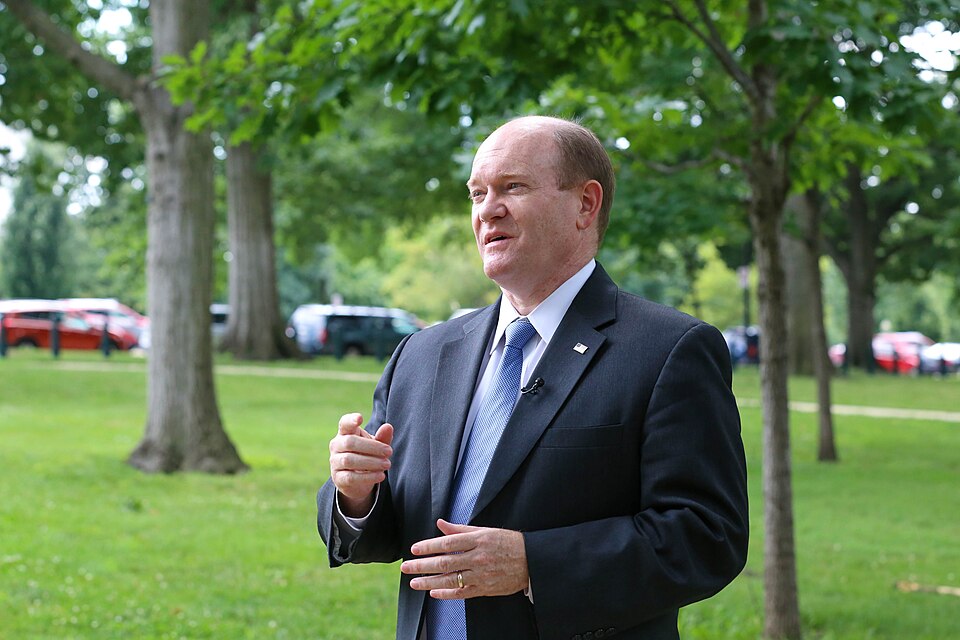
Sen. Chris Coons (D-Del.) made the remarks during an appearance on Fox News Sunday, where he raised concerns about Iran’s growing influence and its ability to disrupt critical energy routes that impact both global markets and American consumers.
According to Coons, Iran has demonstrated an ability to adapt and maintain pressure on U.S. allies through the use of relatively inexpensive but highly effective drone technology.
“Frankly, Iran is stronger than they were 90 days ago before this war,” Coons said during the interview.
The senator pointed to attacks targeting energy infrastructure, regional allies, and strategic assets throughout the Middle East. He argued that Iran has continued to project power despite extensive efforts aimed at limiting its capabilities.
National security experts have long viewed the Strait of Hormuz as one of the world’s most important shipping corridors. A significant share of global oil exports passes through the narrow waterway, making any disruption a concern for energy markets worldwide.
Coons warned that the United States needs a more effective strategy to counter Iran’s ability to threaten shipping traffic through the region.
He argued that the United States needs a more effective strategy to prevent Iran from disrupting traffic through the Strait of Hormuz.
His comments come as U.S. and Iranian officials continue negotiations surrounding a tentative agreement announced last week. While details remain under discussion, reports suggest the framework could extend a temporary ceasefire, reopen commercial traffic through the Strait of Hormuz, and launch additional talks regarding Iran’s nuclear ambitions.
The negotiations arrive at a critical time for American families.
Energy prices have become a growing concern as instability in the Middle East continues to impact global supply chains. Rising fuel costs affect everything from household budgets to transportation expenses and food prices.
According to AAA, the national average price of regular gasoline stood at approximately $4.34 per gallon on Sunday, significantly higher than the roughly $3.15 average recorded one year earlier.
Meanwhile, military operations in the region remain active.
On Saturday, U.S. Central Command (CENTCOM) announced that American forces intercepted another vessel attempting to reach an Iranian port during ongoing enforcement operations connected to the maritime blockade near the Strait of Hormuz.
According to military officials, the vessel, identified as the M/V Lian Star and sailing under a Gambian flag, ignored repeated warnings while traveling toward an Iranian port on the Gulf of Oman.
CENTCOM stated that more than 20 warnings were issued before the vessel was ultimately disabled.
In a statement released on social media, the command said American forces observed the ship moving toward Iranian territory and informed its operators that they were violating the blockade.
The incident underscores the continuing challenges facing policymakers as they attempt to balance military pressure, diplomatic negotiations, and global economic concerns.
For many Americans, the biggest question remains whether current policies are making the United States and its allies safer—or whether adversaries such as Iran are finding new ways to expand their influence despite international pressure.
With energy prices remaining a major concern and negotiations still ongoing, the debate over America’s strategy in the Middle East is likely to remain at the center of political discussions in Washington for months to come.