These comments drew backlash but here are the facts.
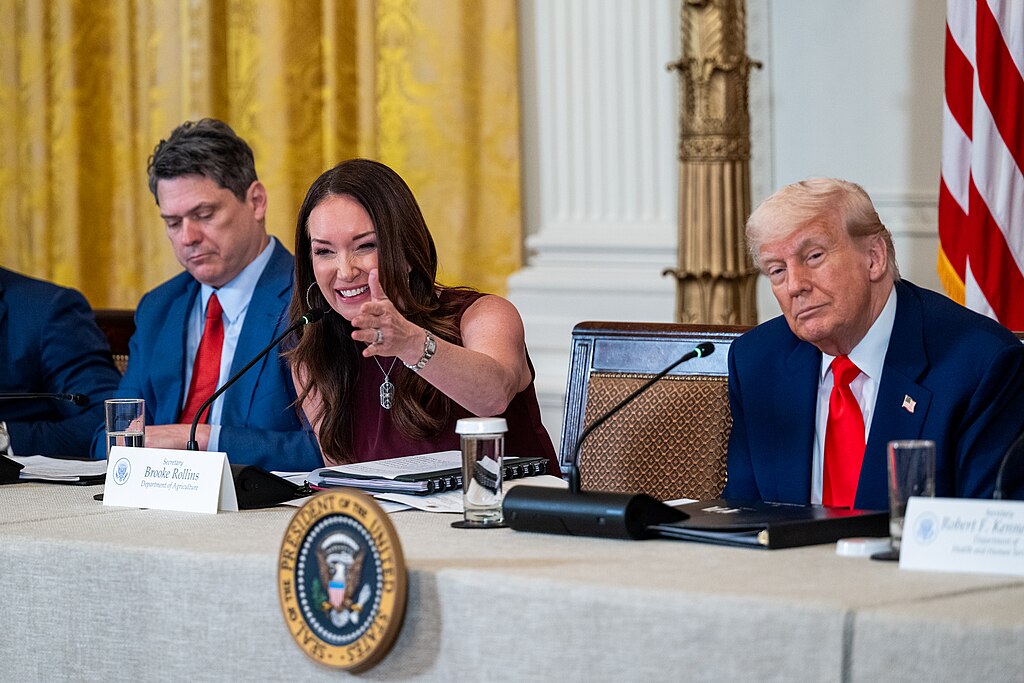
Democrats are attacking the Trump administration after Agriculture Secretary Brooke Rollins suggested that Americans can still afford healthy meals by focusing on simple, unprocessed foods.
The criticism erupted after Rollins appeared on NewsNation to discuss the administration’s updated dietary guidelines, which emphasize protein, healthy fats, and fewer ultra-processed foods and added sugars.
During the interview, Rollins addressed concerns that healthier eating automatically means higher grocery bills—especially for families already struggling with rising costs.
She said that isn’t the case.
According to Rollins, the Department of Agriculture ran more than 1,000 pricing simulations to test affordability. The results, she explained, showed that a basic meal—such as a serving of chicken, broccoli, a corn tortilla, and an additional side—can cost roughly $3 per meal.
Rollins stressed that the goal is not to force Americans to eat less, but to help them rely less on expensive processed foods that often cost more while offering less nutrition.
Her remarks, however, were quickly clipped and circulated online, where Democrats mocked the idea and accused the administration of being disconnected from everyday grocery shopping.
A Democratic House committee account shared an AI-generated image of a cafeteria tray holding a small piece of chicken, a broccoli floret, and a tiny corn tortilla. The final compartment was labeled “MYSTERY ITEM?” in an attempt to ridicule the guidance.
The post referenced “MAHA,” a slogan associated with Health and Human Services Secretary Robert F. Kennedy Jr., who has supported the administration’s effort to reduce reliance on ultra-processed foods.
Democratic strategist Jennifer Holdsworth, who has worked for Hillary Clinton and Pete Buttigieg, joined the pile-on with sarcastic comments questioning whether Americans could be satisfied with such a meal.
Buttigieg’s husband, Chasten Buttigieg, also criticized the administration, tying the dietary guidance to broader attacks on Trump-era economic policies.
More pointed criticism came from Rep. Ted Lieu, who blamed recent grocery price increases on tariffs and shared an image of a small plate containing the foods Rollins mentioned, along with a single piece of candy for emphasis.
Sen. Ed Markey echoed the sentiment, claiming the administration does not understand how difficult it has become for families to afford groceries.
Supporters of the Trump administration argue the outrage is misplaced. They say Rollins was highlighting a long-standing reality: whole foods like meat and vegetables often cost less per meal than packaged snacks, sugary drinks, and processed convenience foods.
The controversy reflects a broader political divide—not just over food prices, but over personal responsibility, nutrition, and whether Washington should encourage Americans to rethink what ends up on their dinner plates.