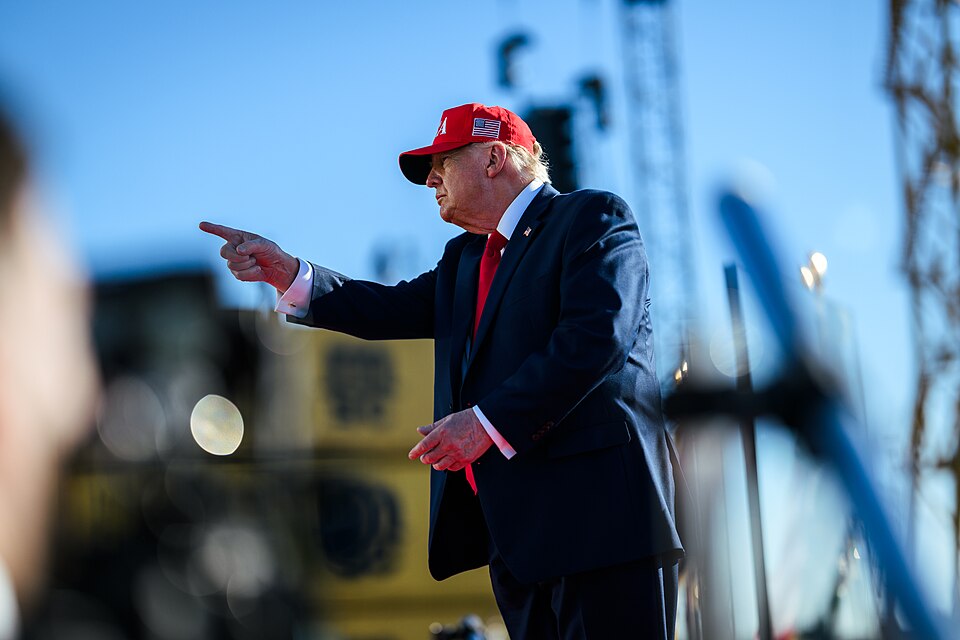
Here’s what Trump is doing.
President Donald Trump is taking a major step to address rising fuel prices, with new diesel supplies expected to reach American markets just weeks before the November midterm elections.
The White House is hoping the agreement will provide much-needed relief to American families, farmers, truck drivers, and businesses struggling with expensive energy costs.
The development follows an agreement between Trump and Russian President Vladimir Putin that would allow substantial amounts of Russian diesel fuel to enter the United States and global markets.
The first shipments are expected to begin arriving in October, potentially offering some relief before Americans head to the polls on November 3.
However, energy analysts caution that the actual impact on diesel prices remains uncertain.
With fuel costs affecting nearly every corner of the economy, the administration’s latest move could have implications well beyond gas stations.
Trump Announces Major Agreement To Lower Diesel Prices
President Trump announced the agreement on October 9 following discussions with Russian President Vladimir Putin.
Under the arrangement, Russia agreed to make more than 300,000 metric tons of diesel fuel available to American and international markets.
An additional 500,000 metric tons are expected during November, followed by another 1 million metric tons.
Trump also indicated that Russia could eventually provide another 3 million metric tons, depending on the condition and availability of its refining facilities.
The agreement marks a significant development in the administration’s efforts to address high energy prices.
To facilitate the shipments, the Treasury Department temporarily eased certain restrictions on Russian diesel exports.
Those restrictions were originally part of broader American sanctions intended to pressure Moscow over its ongoing war in Ukraine.
The policy change reflects the administration’s decision to prioritize additional energy supplies as American consumers continue facing elevated transportation costs.
Trump has repeatedly emphasized the importance of affordable energy for American workers and businesses.
His latest agreement is intended to increase diesel availability and help ease pressure on prices.
Diesel Prices Have Become A Major Problem For Americans
The agreement comes at a time when diesel prices remain unusually high across the United States.
The national average reached approximately $6.53 per gallon in September, setting a record and creating substantial financial challenges for businesses that depend on diesel-powered vehicles and equipment.
By mid-October, prices remained around $6.30 per gallon.
While many Americans pay closer attention to regular gasoline prices, diesel is essential to the country’s transportation network.
Large commercial trucks use diesel to move food, clothing, household goods, construction materials, and other products across the United States.
When diesel becomes more expensive, transportation companies face higher operating costs.
Those additional expenses can eventually affect consumers through increased prices for groceries and everyday necessities.
Farmers face similar challenges.
Many agricultural operations depend on diesel-powered tractors, harvesting equipment, irrigation systems, and delivery trucks.
Higher fuel costs can reduce profit margins and make it more expensive to produce and distribute food.
For consumers already dealing with inflation, the consequences can be difficult to ignore.
Why Trump’s Fuel Deal Could Help Household Budgets
Although the agreement focuses on diesel rather than regular gasoline, its potential benefits could extend to millions of Americans.
Transportation expenses are built into the cost of many products sold in stores.
When those expenses increase, businesses must decide whether to absorb the costs or pass some of them along to customers.
Additional diesel supplies could help reduce that pressure if they successfully bring down wholesale fuel prices.
For families managing tight budgets, even modest improvements in transportation costs could be beneficial over time.
The potential impact is also important for retirees and Americans living on fixed incomes.
Social Security recipients and other households with limited monthly income often have less flexibility when essential expenses increase.
Higher grocery bills, utility costs, insurance premiums, and transportation expenses can quickly consume money that would otherwise go toward savings or other necessities.
Lower diesel prices would not immediately guarantee cheaper groceries or household products.
Nevertheless, reducing one of the major expenses associated with moving goods across the country could help moderate future price increases.
That possibility is one reason the administration is placing considerable emphasis on expanding available fuel supplies.
American Farmers And Truckers Could See Important Benefits
Two industries stand to benefit particularly directly from lower diesel prices: agriculture and commercial transportation.
American farmers already face significant financial pressures from equipment costs, fertilizer prices, interest rates, and changing market conditions.
Diesel represents another major operating expense.
During planting and harvesting seasons, agricultural equipment can consume substantial quantities of fuel.
Reducing that expense could help farmers manage operating budgets and protect already narrow profit margins.
Truck drivers and transportation companies face a similar situation.
For businesses operating large commercial fleets, changes in diesel prices can translate into significant differences in monthly expenses.
Independent truckers may be especially vulnerable because they often operate with limited financial reserves and have less negotiating power over shipping rates.
Lower fuel costs could provide additional breathing room for these businesses.
However, any meaningful improvement will depend on whether the new Russian supplies are delivered as planned and whether those shipments influence domestic fuel prices.
Trump’s Agreement Sparks International Controversy
Despite its potential economic benefits, the agreement has drawn criticism from Ukraine and several American allies.
Ukrainian President Volodymyr Zelensky has raised concerns that allowing Russia to expand diesel exports could generate additional revenue for Moscow while the war in Ukraine continues.
Italian Prime Minister Giorgia Meloni has also criticized the arrangement, warning that easing restrictions could weaken international efforts to pressure Russia into peace negotiations.
The disagreement illustrates the difficult balance between domestic economic concerns and international security priorities.
The United States has maintained substantial restrictions on Russian energy trade since Russia invaded Ukraine in 2022.
Those restrictions were designed to limit Moscow’s ability to generate revenue from energy exports.
The Trump administration’s decision to temporarily ease certain restrictions represents a departure from that approach.
The administration maintains that increasing fuel supplies is important for protecting American consumers from high energy prices.
Critics question whether the potential economic benefits justify the diplomatic and strategic consequences.
Will Fuel Prices Actually Fall Before The Midterms?
The most important question for American consumers is whether the agreement will produce noticeable savings.
Energy analysts remain cautious.
Although the announced shipments involve substantial quantities of diesel, the global fuel market consumes considerably larger amounts every day.
The initial Russian supply represents only a limited portion of overall demand.
There are also practical challenges involving shipping capacity, refinery operations, and existing international restrictions.
Russian refining facilities have experienced disruptions, creating uncertainty about how quickly additional diesel can reach buyers.
Furthermore, global fuel prices are influenced by several factors beyond Russian exports.
International conflicts, refinery shortages, transportation disruptions, and energy demand all contribute to changing prices.
The new agreement could help improve supply conditions, but it may not be sufficient to reverse the broader diesel shortage.
Consumers should therefore view the arrangement as an effort to lower prices rather than a guarantee of immediate savings.
Midterm Elections Increase Pressure On Washington
The timing of the announcement adds another dimension to the agreement.
Americans will vote in the November 3 midterm elections, with control of Congress and the direction of federal policy at stake.
Economic concerns are expected to remain an important part of the political debate.
Inflation reached an annual rate of 3.7% in September, leaving many households concerned about the cost of essential goods and services.
High diesel prices have contributed to those concerns by increasing operating costs throughout the economy.
For the Trump administration, successfully lowering energy prices could demonstrate progress on one of the country’s most pressing economic challenges.
Republicans are seeking to maintain congressional control, while Democrats continue raising questions about the administration’s handling of affordability and foreign policy.
The Russian diesel agreement has consequently become both an economic initiative and a point of political controversy.
Whether it ultimately helps Republican candidates will depend on several factors, including fuel prices, voter perceptions, and broader economic conditions.
What Happens Next For American Consumers?
The coming weeks will be critical in determining whether the agreement produces its intended results.
The first diesel shipments are expected to reach American and international markets in October, with additional supplies scheduled for November and beyond.
Energy markets will be watching whether the promised shipments arrive and whether they contribute to lower wholesale prices.
Businesses will also be paying attention.
For trucking companies, farmers, manufacturers, and distributors, diesel remains an essential expense that can significantly influence operating costs.
For ordinary Americans, the issue ultimately comes down to affordability.
Families want to know whether groceries, household supplies, and other necessities will become less expensive.
Retirees and fixed-income households are especially concerned about maintaining their purchasing power as living expenses remain elevated.
Although the agreement cannot guarantee immediate improvements, additional fuel supplies could offer some relief if they help stabilize the market.
The Bottom Line
President Trump’s agreement with Russia represents a significant attempt to address high diesel prices before the November midterm elections.
The administration expects additional fuel shipments to begin reaching markets in October, potentially helping farmers, truckers, businesses, and consumers.
However, questions remain about the size of the shipments, their effect on fuel prices, and the international consequences of relaxing certain sanctions on Russia.
For millions of Americans dealing with high living costs, the most important issue will be whether the agreement produces meaningful economic relief.
With Election Day approaching, the administration faces a crucial test: turning its latest energy agreement into measurable improvements for American consumers.