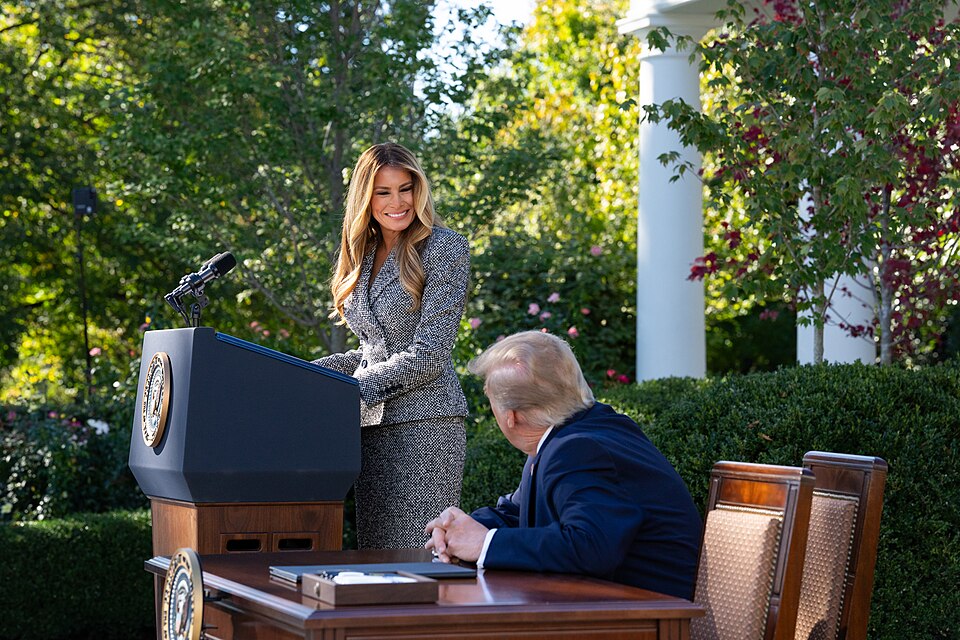
Here’s what happened.
President Donald Trump’s administration is facing renewed scrutiny over its immigration policies after new figures revealed a significant decline in approvals for the same immigration program that once helped First Lady Melania Trump become an American citizen.
While Melania’s citizenship is not being revoked, the development has opened a broader debate about America’s legal immigration system, employment opportunities and the requirements foreign nationals must meet to obtain permanent residency.
Trump Administration Tightens Immigration Approvals
According to recent reporting, approvals for the EB-1A immigration classification, commonly referred to as the “Einstein visa,” have declined considerably during Trump’s second administration.
Approximately 5,200 applicants received approval during the first three quarters of fiscal year 2026, compared with nearly 8,900 during the corresponding period in 2024.
The approval rate reportedly dropped to around 32 percent by the middle of 2026, highlighting a substantial shift in how federal immigration authorities evaluate applications.
The specialized immigration program provides a pathway to permanent residency for individuals who demonstrate exceptional professional achievements in fields such as science, business, education, athletics and the arts.
Unlike certain employment-based immigration programs, qualifying applicants can petition without securing sponsorship from an American employer.
Why Melania Trump Is Being Mentioned
The first lady obtained permanent residency through the EB-1 immigration program in 2001 while pursuing her professional modeling career.
Born in Slovenia, Melania eventually became a naturalized American citizen and later sponsored her parents for permanent residency.
Her immigration history has attracted renewed media attention because of the federal government’s increasingly restrictive approach to approving applications under the program.
However, there is an important distinction between reviewing new immigration applications and canceling an existing American citizen’s legal status.
There is no indication that President Trump has canceled Melania’s immigration status or that her American citizenship is in jeopardy.
The controversy instead centers on whether the immigration standards being applied today are consistent with those used in previous decades.
Immigration Experts Raise Economic Concerns
Some immigration attorneys have expressed concern that the declining approval rate could create challenges for American businesses seeking highly qualified professionals.
Industries such as healthcare, technology, engineering, scientific research and financial services frequently compete internationally for individuals with specialized professional expertise.
Restricting access to qualified international professionals could potentially affect business expansion, technological innovation and America’s ability to compete with other major economies.
At the same time, maintaining rigorous eligibility requirements can help protect the integrity of employment-based immigration programs.
The central question is whether federal immigration officials are successfully distinguishing genuinely exceptional applicants from individuals who fail to satisfy the necessary legal requirements.
A transparent application process could benefit American employers, domestic workers and legitimate immigration applicants alike.
Balancing American Jobs With Legal Immigration
Trump has consistently emphasized immigration enforcement and the importance of protecting American economic interests.
The latest visa figures illustrate the complexities involved in administering a merit-based immigration system while maintaining America’s competitive advantage in the global marketplace.
For American workers and business owners, immigration policy can have consequences extending well beyond border security.
Employment opportunities, wage growth, workforce development and long-term economic investment are all important considerations when evaluating changes to federal immigration policy.
Businesses also benefit from predictable regulations that allow them to make informed hiring decisions without facing unnecessary administrative uncertainty.
Ensuring that immigration laws are enforced consistently remains an important part of maintaining public confidence in the system.
What Happens Next?
As the Trump administration continues reshaping federal immigration policies, employers and immigration professionals will be closely monitoring future visa approval figures.
Applicants seeking employment-based green cards may also face greater scrutiny when submitting documentation of their professional qualifications.
The White House, Department of Homeland Security and the first lady’s office reportedly did not respond to requests for comment from The Washington Post.
Ultimately, the debate surrounding the EB-1A program raises an important question about how the United States can maintain high immigration standards while remaining an attractive destination for exceptional talent.
Despite the renewed attention surrounding Melania Trump’s immigration history, the first lady remains an American citizen, and the declining approval rate applies to immigration applicants rather than her personal citizenship status.