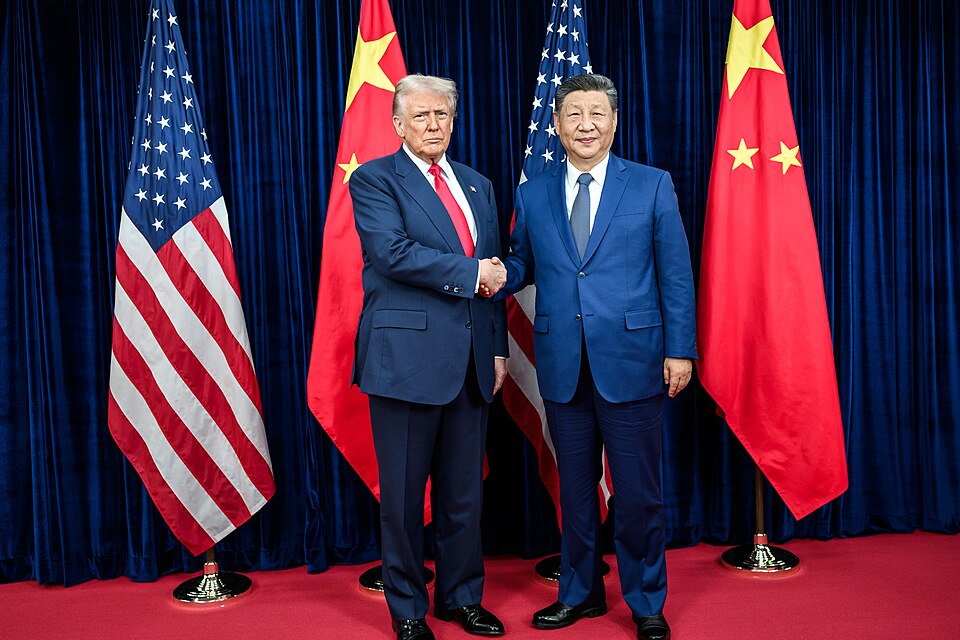
Her’es what Trump is thinking.
President Donald Trump says he would be open to Chinese automakers building vehicles in the United States — even as American auto companies and lawmakers push for tougher restrictions on China’s growing influence in the industry.
Trump made his position clear during an interview with Fox News host Laura Ingraham, saying Chinese companies could potentially establish factories in America as long as they manufacture their vehicles here and employ American workers.
“If China wanted to come in and open a plant to build their cars here, I’d be OK with it,” Trump said.
The president compared the idea to foreign automakers from countries such as Japan that have spent decades operating factories across the United States.
“Japan does it, but they hire our people,” Trump said. “The big thing is they hire our people.”
The comments highlight Trump’s continued emphasis on bringing manufacturing jobs and investment onto American soil. But they also come at a time when China’s automotive industry is facing intense scrutiny in Washington over trade, technology and national security.
Trump Opens Door to Chinese Auto Plants
Trump’s remarks do not mean Chinese automakers have suddenly received unrestricted access to the U.S. market.
Instead, the president indicated that he could support Chinese-owned companies establishing manufacturing operations inside the United States under the right circumstances.
That distinction could become increasingly important as Chinese automakers seek opportunities outside their domestic market.
Trump has repeatedly promoted the idea that companies wanting access to American consumers should manufacture more of their products in the United States.
His latest comments suggest he could apply that same philosophy to Chinese automakers: Build the vehicles in America, invest in American facilities and hire American workers.
However, that position could put the White House at odds with parts of the domestic auto industry.
American Automakers Want Tougher Restrictions
The Alliance for Automotive Innovation, which represents major automakers operating in the United States, has urged Congress to take stronger action against Chinese vehicles and technology.
The organization recently called for a permanent prohibition on Chinese vehicles along with certain high-risk hardware and software connected to China.
Industry representatives argue that the issue isn’t simply about competition.
They have also raised concerns involving connected-vehicle technology, sensitive information, supply chains and national security.
Alliance President and CEO John Bozzella argued that Congress should make clear that China’s efforts to expand its position in global automobile manufacturing will receive a national-security response from the United States.
That puts Trump in an interesting position.
While the president has long promoted tariffs, domestic manufacturing and tougher trade policies toward China, he is also signaling that Chinese investment could potentially be welcome if it results in factories and jobs being created inside America.
Congress Is Considering New China Restrictions
Congress is already examining additional measures aimed at limiting Chinese involvement in the American automobile market.
In July, the Senate Commerce, Science and Transportation Committee advanced legislation targeting connected vehicles associated with certain foreign adversaries.
One provision focuses on companies with significant levels of Chinese ownership.
A separate House proposal would impose restrictions involving the importation, manufacturing and sale of connected vehicles and vehicle software linked to foreign adversaries.
Supporters argue such restrictions are necessary to protect American technology, consumers and national security.
The broader question is whether Chinese-owned companies should be permitted to manufacture vehicles inside the United States if those operations employ American workers.
Trump appears willing to consider that possibility.
Some lawmakers and auto-industry representatives are taking a more restrictive approach.
Chinese Cars Already Face Major U.S. Barriers
Chinese automakers currently face significant obstacles in the American market.
The Biden administration finalized rules in 2025 restricting connected vehicles and certain automotive technology linked to China and Russia over national-security concerns.
Chinese electric vehicles have also faced tariffs exceeding 100 percent.
Those barriers mean Trump’s comments should not be interpreted as an immediate policy change or blanket authorization for Chinese automakers.
Existing regulations remain in place unless they are changed, repealed or replaced.
What Trump’s remarks do reveal is his broader approach to foreign manufacturing.
Rather than automatically rejecting a company because its parent organization is based overseas, Trump indicated that the location of production — and who receives the jobs — matters considerably.
American Jobs Could Become the Center of the Debate
For many Americans, particularly those living in manufacturing states, the most important question may be what such investments would mean for domestic employment.
Foreign automakers already operate numerous manufacturing facilities across the United States, employing American workers and supporting extensive networks of suppliers.
Chinese-owned factories could theoretically produce similar economic benefits.
But opponents argue China presents different concerns because of the country’s economic system, government influence over businesses and competition with the United States in strategically important industries.
Those competing considerations could make Chinese auto manufacturing a significant policy debate in Washington.
Xi Jinping Visit Adds to the Timing
Trump’s comments also come ahead of an expected visit by Chinese President Xi Jinping to Washington.
Trump has described his relationship with Xi positively while acknowledging the intense competition between the world’s two largest economies.
Trade, manufacturing, technology and national security remain major areas of disagreement between Washington and Beijing.
The possibility of Chinese companies investing directly in American manufacturing could therefore become another important issue in the relationship.
What Trump’s Comments Actually Mean
For now, Trump has expressed a willingness to allow Chinese automakers to build factories in the United States.
He has not announced a blanket removal of existing restrictions on Chinese vehicles, and substantial regulatory and legislative barriers remain.
That distinction matters.
Trump’s position appears centered on a straightforward economic argument: If foreign companies want access to America’s enormous consumer market, having them invest money in the United States and employ American workers could benefit the country.
Critics counter that Chinese involvement in connected vehicles creates economic and national-security concerns that cannot be addressed simply by moving production onto American soil.
That disagreement is now setting up a larger debate involving the White House, Congress and America’s auto industry.
And with U.S.-China economic competition showing few signs of disappearing, the question of whether Chinese companies should be allowed to build cars in America could become increasingly important.