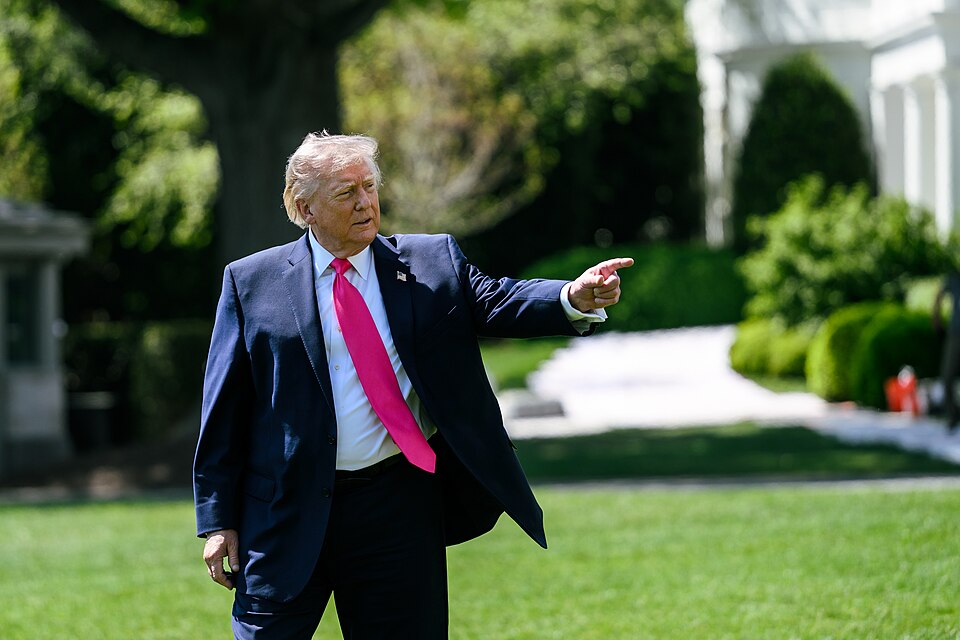
Here’s what the President said.
President Donald Trump reignited the national debate over birthright citizenship on Thursday, warning that a major upcoming Supreme Court decision could have long-term economic and immigration consequences for the United States.
Speaking from the Oval Office during remarks aired on Newsmax, Trump criticized the current interpretation of birthright citizenship laws and argued that America’s immigration system has been taken advantage of for decades.
“We’re the only country in the world that has it,” Trump told reporters. “People come into our country, and suddenly their children are automatically citizens.”
The president argued that the 14th Amendment was originally intended to protect the rights of freed slaves after the Civil War — not to create incentives for illegal immigration or what critics describe as “birth tourism.”
Trump also pointed to cases involving wealthy foreign nationals traveling to the United States specifically to give birth, saying the system was never intended for that purpose.
The comments come as the Supreme Court of the United States prepares to issue a highly anticipated ruling tied to Trump’s executive order seeking to end automatic citizenship for children born to illegal immigrants and certain temporary visa holders.
The case focuses on how the 14th Amendment should be interpreted, particularly the section declaring that people born or naturalized in the United States and under its jurisdiction are citizens. Backers of President Trump’s argument say courts have expanded the meaning of the phrase “subject to the jurisdiction thereof” far beyond what the amendment’s original authors intended.
Trump warned that maintaining the current system could place additional pressure on taxpayers, public services, and border enforcement efforts.
“If this stays the way it is, it could become a serious economic problem for our country,” Trump said. “More people will continue coming because they believe citizenship is automatically guaranteed for their children.”
The president also criticized the lawsuits challenging his executive order, accusing activist groups and political opponents of resisting efforts to strengthen border security and immigration enforcement.
Even so, Trump admitted he is uncertain how the Supreme Court will ultimately rule.
“They may rule against us,” he said. “We’ll see what happens.”
The court’s decision is expected later this year and could become one of the most significant immigration rulings in decades. Legal experts say the outcome may reshape future debates over border policy, citizenship rights, and the interpretation of the Constitution under President Trump’s administration.
For millions of Americans concerned about border security, immigration enforcement, and the future of the country’s legal system, the ruling could mark a major turning point.