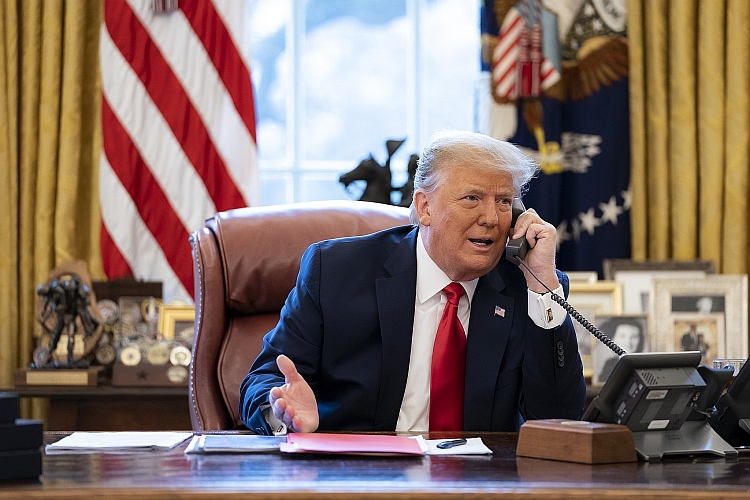
Here’s what President Trump is dealing with now.
President Donald Trump has received another round of disappointing political news, as a new national poll shows his approval rating remaining near its lowest level, just weeks after Republicans suffered major losses in the 2026 midterm elections.
The latest Reuters/Ipsos survey found that only 32 percent of Americans approve of Trump’s job performance, while 66 percent disapprove.
The findings present another challenge for the White House as Trump works to address economic concerns, rising household expenses, and the continuing conflict with Iran.
However, the numbers also reveal an important distinction: While the president is struggling with the broader electorate, he continues to enjoy considerable support among Republican voters.
With Democrats preparing to take control of Congress, the latest results raise serious questions about how much political momentum Trump can regain during the remainder of his presidency.
Trump’s Approval Rating Stuck Near Record Low
According to the Reuters/Ipsos poll released November 16, Trump’s approval rating remains at 32 percent, marking the fourth consecutive survey from the polling organization showing that figure.
The president’s approval had fallen to 31 percent in October, the lowest reading of his political career in Reuters/Ipsos polling.
Although the latest results represent a slight improvement from that low point, they suggest Trump has been unable to generate a significant rebound in public support.
The survey was conducted November 13 through November 16 among 1,521 American adults, with a margin of error of approximately 3 percentage points.
These results are particularly noteworthy because they follow the November 3 midterm elections, when Republicans lost control of Congress.
For the Trump administration, the challenge now extends beyond maintaining support among loyal Republicans. The president must also consider how to regain the confidence of independent voters and Americans frustrated with the direction of the country.
Economic Frustration Creates Major Problems For White House
One of the biggest factors weighing on Trump’s approval rating appears to be the economy.
The president returned to the White House promising stronger economic growth, lower prices, and greater financial security for American families.
Yet many voters remain dissatisfied with the cost of everyday necessities.
The latest Reuters/Ipsos survey found that just 25 percent of Americans approve of Trump’s handling of the economy.
The numbers were even lower when respondents were asked about specific financial concerns.
Only 19 percent approved of his handling of their cost of living, while 18 percent approved of his handling of inflation and rising prices.
Those results suggest that financial pressures remain a significant political obstacle for the administration.
For millions of Americans, economic conditions are measured by the cost of groceries, gasoline, utility bills, insurance, and housing.
Retirees living on fixed incomes can be particularly sensitive to rising expenses, while working families must balance household budgets against changing prices.
Even when broader economic indicators show improvement, voters may remain dissatisfied if they do not see meaningful relief in their personal finances.
That presents a difficult challenge for Trump as he attempts to convince Americans that his economic policies are delivering results.
Iran Conflict Adds To Trump’s Political Troubles
The ongoing conflict with Iran has created another source of political pressure for the president.
Military operations in the Middle East have contributed to higher energy costs, creating additional financial uncertainty for American consumers.
Gasoline prices are especially important because increases can affect household transportation expenses and the cost of goods delivered across the country.
The latest Reuters/Ipsos poll found that only 31 percent of Americans support the war with Iran.
Additionally, just 24 percent approved of Trump’s handling of the situation involving Iran.
These figures demonstrate the difficulty the administration faces in maintaining public support for its foreign policy decisions.
Trump has emphasized national security throughout his political career, frequently arguing that American strength is essential to protecting the country.
However, the current conflict has also raised concerns about military spending, energy prices, and the possibility of prolonged involvement overseas.
For voters who prioritized economic stability during the last presidential election, those concerns could influence their assessment of the administration.
The White House now faces the challenge of balancing its national security objectives with the public’s desire for lower costs and greater financial predictability.
Republicans Face Political Challenges After Midterm Losses
Trump’s disappointing approval numbers come at a particularly sensitive time for the Republican Party.
The November 3 midterm elections resulted in Democrats winning control of both chambers of Congress, significantly changing the political landscape in Washington.
Those results threaten to complicate the president’s legislative agenda during the final two years of his term.
A Democratic-controlled Congress could create obstacles for major policy initiatives, spending proposals, and other administration priorities.
Republican lawmakers must also consider what the election results mean for their political future.
While Trump’s core supporters remain an influential force within the GOP, the midterm results demonstrated the importance of reaching voters beyond the party’s traditional base.
Independent voters and Americans concerned about economic conditions often play decisive roles in competitive congressional elections.
For Republicans hoping to regain ground in future elections, addressing affordability and restoring public confidence may become increasingly important.
The latest polling suggests those challenges are unlikely to disappear without noticeable improvements in Americans’ daily lives.
Trump Still Maintains Strong Republican Support
Despite the unfavorable national numbers, the Reuters/Ipsos survey contains some encouraging findings for the president.
Approximately 70 percent of Republican respondents approved of Trump’s job performance.
That level of support shows that Trump continues to maintain a strong connection with a substantial portion of the Republican electorate.
The poll also found that 75 percent of Republicans held a favorable opinion of the president, while 77 percent viewed Vice President JD Vance favorably.
These findings suggest that the administration retains a significant base of support even as its national approval numbers remain weak.
That distinction matters because presidential approval ratings measure the opinions of Americans across the political spectrum, including Democrats, Republicans, and independents.
Trump’s overall standing can therefore decline even while he maintains considerable loyalty among Republican voters.
Nevertheless, broadening that support could prove essential if the administration hopes to rebuild political momentum.
Democrats Have Their Own Political Problems
Although the survey delivered disappointing news for Trump, it also revealed challenges facing Democratic leadership.
Senate Democratic leader Chuck Schumer received unfavorable ratings from a larger share of Democrats than those who viewed him positively.
According to the poll, 34 percent of Democratic respondents held a favorable opinion of Schumer, compared with 43 percent who viewed him unfavorably.
The findings emerged as Schumer faced a leadership challenge from Democratic Senator Chris Van Hollen of Maryland.
Meanwhile, House Democratic leader Hakeem Jeffries received comparatively stronger ratings within his party.
Those results indicate that dissatisfaction with political leadership is not limited to Republicans.
Even after their midterm victories, Democrats face questions about their leadership, priorities, and ability to respond to voter concerns.
For both parties, the results underscore an important political reality: Winning elections does not automatically guarantee lasting public confidence.
What Trump’s Latest Poll Numbers Mean For 2028
With the 2028 presidential election approaching, Trump’s approval rating could have consequences that extend beyond his own administration.
The president is constitutionally barred from seeking another elected term, but his political influence could play an important role in determining the Republican Party’s next presidential nominee.
Vice President JD Vance and other potential Republican contenders may find themselves navigating the political environment shaped by Trump’s remaining years in office.
If economic conditions improve and Americans become more satisfied with the country’s direction, Republicans could enter the next presidential election with renewed confidence.
However, continued public dissatisfaction could create additional challenges for the party’s future candidates.
Much will depend on the administration’s ability to demonstrate progress on issues that matter most to voters.
Lower household expenses, economic stability, national security, and effective government leadership could all influence whether public opinion improves.
It is also important to remember that approval ratings represent a snapshot of public sentiment rather than a prediction of future election results.
Political circumstances can change substantially over time, particularly when major economic or international developments affect voters’ priorities.
Can Trump Reverse The Trend?
Trump has faced difficult political circumstances before and has repeatedly demonstrated an ability to maintain support among Republican voters despite criticism from political opponents.
His latest approval numbers do not necessarily mean that support has disappeared.
However, the Reuters/Ipsos findings highlight the challenges confronting the White House following the midterm elections.
With only 32 percent of Americans approving of his overall performance, Trump faces considerable pressure to improve public confidence.
The administration’s next steps on economic policy, inflation, energy prices, and foreign affairs could play an important role in determining whether those numbers recover.
For American voters, the debate ultimately comes down to results.
Can Trump deliver enough economic relief and political stability to rebuild public support, or will continued frustration shape the remainder of his presidency?
That question could become increasingly important as Republicans and Democrats prepare for the political battles ahead.
For now, the latest poll serves as another reminder that the White House faces significant challenges, even as Trump maintains the backing of many of his most loyal Republican supporters.