Here’s what Americans need to know.
In a stunning escalation, Russia launched a massive drone assault on Poland Wednesday night—just one week after President Donald Trump hosted Polish President Karol Nawrocki at the White House to discuss regional security and peace talks.
The attack sent shockwaves through Europe, forcing NATO into its most serious military response since World War II and pushing Poland to the brink of direct conflict with Moscow.
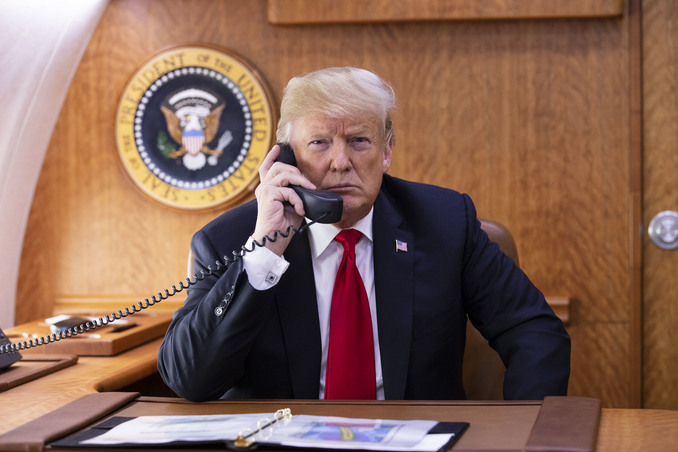
President Trump reacted swiftly, posting a chilling message on social media:
“What’s with Russia violating Poland’s airspace with drones? Here we go!”
Kremlin Scrambles to Deny Involvement
Moscow immediately rejected claims that it was behind the attack. Russian Ambassador to Poland Andrei Ordash told state-run media the accusations were “groundless,” arguing instead that the drones originated from Ukraine.
“We know one thing – these drones were flying from the direction of Ukraine,” Ordash said, according to a DW translation.
But Ukrainian President Volodymyr Zelenskyy directly contradicted Russia’s claim, revealing that the drones traveled through Belarusian airspace before striking Poland.
“At least two Russian drones entered Polish territory using Belarusian airspace,” Zelenskyy said. “Several dozen Russian drones were moving near the Ukraine-Belarus border, approaching targets inside both Ukraine and, apparently, Poland.”
NATO Scrambles Fighter Jets
Polish Prime Minister Donald Tusk told lawmakers that at least 19 Russian drones breached Poland’s airspace, with eight confirmed crash sites where NATO forces shot them down.
Calling the strike a “large-scale provocation,” Tusk warned,
“The situation is serious, and no one doubts we must prepare for every possible scenario.”
NATO immediately launched a full-scale defense operation:
- Dutch F-35 fighter jets scrambled
- Italian airborne radar systems activated
- German Patriot missile defenses deployed
- NATO refueling aircraft launched for continuous operations
“This is the first time NATO planes have engaged potential threats inside Allied airspace,” said U.S. Army Col. Martin L. O’Donnell. “We are committed to defending every single kilometer of NATO territory.”
Article 4 Invoked – War on the Horizon?
Poland invoked Article 4 of the NATO treaty, triggering emergency consultations among alliance members. This is the final step before Article 5, which would require all NATO countries—including the United States—to respond militarily to any attack.
NATO Secretary-General Mark Rutte said a “full assessment” of the incident is underway but warned this was “not an isolated event.” Russian drones have been repeatedly crossing NATO borders, signaling a growing threat of war.
“Whether intentional or not, this is reckless and dangerous behavior by Russia,” Rutte declared.
Trump Faces Tough Decision
A senior White House official confirmed to Fox News Digital that President Trump is “closely monitoring the situation” and plans to speak directly with President Nawrocki.
Trump has been working behind the scenes to prevent a full-scale war in Eastern Europe, but Wednesday night’s events raise serious questions about whether Moscow is willing to negotiate at all.
With NATO preparing for all-out defense and Poland on high alert, some fear this could mark the end of Trump’s peace talks with Russia—and the beginning of a much larger conflict.
Why This Matters
- High Stakes for America: If Article 5 is invoked, U.S. troops could be sent into direct conflict with Russia.
- Global Economic Impact: A European war would disrupt global markets and drive up costs for American families and retirees.
- Election-Year Pressure: Trump must navigate a delicate balance between deterring Russian aggression and avoiding a new world war.
This is a developing story. Stay tuned for updates on Trump’s next move, NATO’s response, and what this means for America’s future.