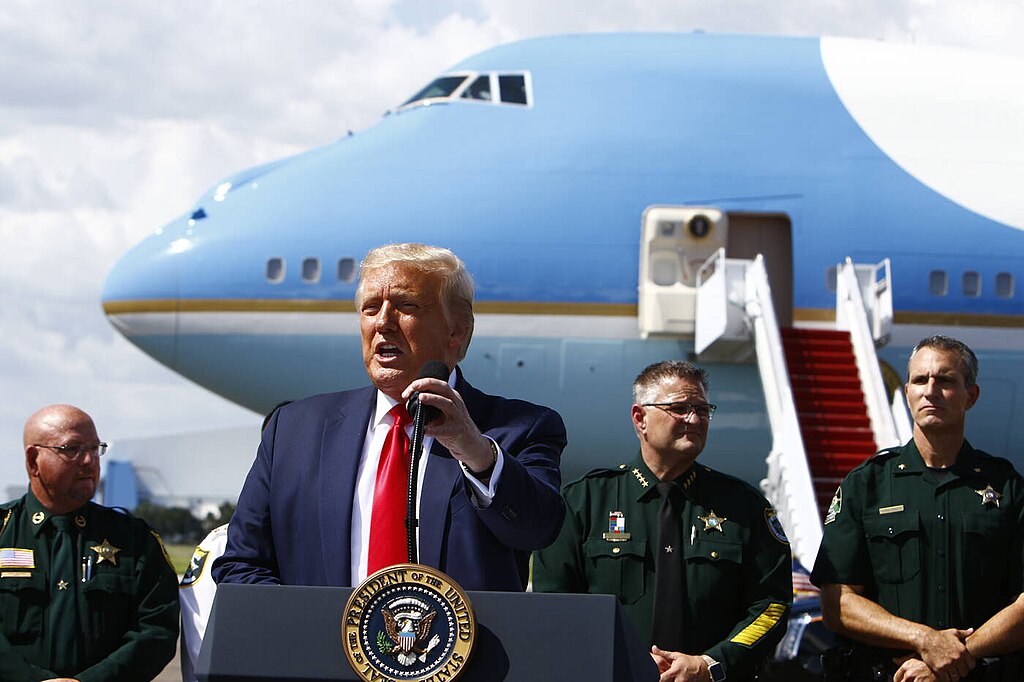
Trump had some interesting words.
President Donald Trump is sending a blunt warning to Republicans as the 2026 midterm elections approach, openly acknowledging that history — and voter psychology — could work against the GOP if the party becomes complacent.
Speaking during a recent interview with Fox News host Will Cain while campaigning in Iowa, Trump pointed to a familiar political pattern: the party holding the White House often loses ground during midterm elections, regardless of performance.
“Presidents, Republican or Democrat, it doesn’t seem to matter — they usually lose the midterms,” Trump said. “Maybe voters want a check or a guardrail. It doesn’t make sense, but that’s how it works. Hopefully, we’re going to change that. We’re doing very well.”
Trump’s comments come as Republicans work to defend narrow congressional majorities and energize voters who may assume victories are guaranteed. While some in the GOP brushed off the remarks as motivational realism, others quietly questioned whether emphasizing potential losses could send the wrong message.
One Republican strategist told The Hill that publicly warning about setbacks may undercut confidence. “It’s risky to talk about history working against you instead of selling wins,” the strategist said, suggesting Trump may be attempting to manage expectations early.
Polling Raises Concerns for GOP
Republicans are facing a challenging political environment. In addition to historical trends, recent polling has fueled concern inside the party. A Fox News poll released last week found 52 percent of voters said they would support the Democratic candidate in their House district, compared with 46 percent who favored Republicans — the strongest Democratic showing in the survey since 2017.
Still, many Republican operatives say Trump’s remarks were not pessimistic, but strategic.
“He’s stating a well-known fact,” one GOP operative said. “At the same time, he’s reinforcing that Republicans still have a strong opportunity if voters show up.”
Republican strategist Ford O’Connell argued that Trump is deliberately reminding conservative voters that elections are won through turnout, not assumptions.
“When your party controls the White House, people relax,” O’Connell said. “The other side gets fired up. Trump is warning Republicans not to fall asleep.”
That concern is reflected in the same Fox News poll, which found 82 percent of Democrats say they are motivated to vote this year, compared with 76 percent of Republicans and 61 percent of independents.
Trump Turns to High-Energy Messaging
To counter that enthusiasm gap, Trump has increasingly warned that Democrats would likely move to impeach him again if they regain control of the House — a tactic used during his first term.
The president has also backed an unusual proposal: a national Republican midterm convention in 2026. The Republican National Committee voted earlier this month to move forward with planning, viewing it as a way to keep the base engaged.
“He’s throwing multiple strategies at the problem to break the midterm curse,” O’Connell said.
Trump’s recent Iowa trip marked the beginning of what aides say will be frequent campaign appearances nationwide. White House chief of staff Susie Wiles has said the president plans to campaign aggressively, targeting lower-propensity voters who played a key role in his reelection.
“You’ve got to get out and vote,” Trump told supporters at a rally in Clive, Iowa. “We have really great Senate and House candidates.”
Although Trump has privately acknowledged he would prefer not to spend extensive time campaigning after winning reelection, advisers believe his presence remains critical. Aside from weekends at Mar-a-Lago, the Iowa event was one of his most visible domestic appearances of his second term.
Economy Remains Central Issue
The Iowa rally also previewed Trump’s renewed emphasis on affordability — an issue Republicans dominated in 2024 but where Democrats made gains in special elections last year.
Polling suggests voters remain skeptical. According to Fox News, 68 percent of respondents said Trump is not spending enough time focused on the economy. Meanwhile, 47 percent said he spends too much time on immigration and border security, and 37 percent said the same about foreign policy.
Republicans argue that perception will shift as voters begin to feel the effects of the administration’s sweeping reconciliation package, known as the One Big Beautiful Bill Act, which GOP leaders say will lower costs and strengthen household finances.
The White House has repeatedly highlighted economic indicators while accusing the media of focusing on distractions rather than results.
“President Trump is at his best when he’s with everyday Americans,” White House spokesman Kush Desai said. “The President will continue delivering results and speaking directly to voters without the Fake News filter.”
Even so, Trump continues to engage with mainstream media outlets and regularly takes questions from reporters, ensuring constant visibility as the midterm year unfolds.
One Republican strategist summed up the challenge ahead succinctly: voters don’t yet feel the recovery.
“Instead of telling people they’re wrong,” the strategist said, “Republicans should acknowledge the frustration and make clear that help is on the way.”
For Trump, the message to Republicans is unmistakable: history may be working against them — but turnout, not tradition, will decide the outcome in November.