Something shocking happened again and questions are swirling.
Another major technology failure has disrupted air travel across the United States, creating fresh headaches for thousands of passengers and raising new concerns about the reliability of America’s transportation infrastructure under President Donald Trump’s administration.
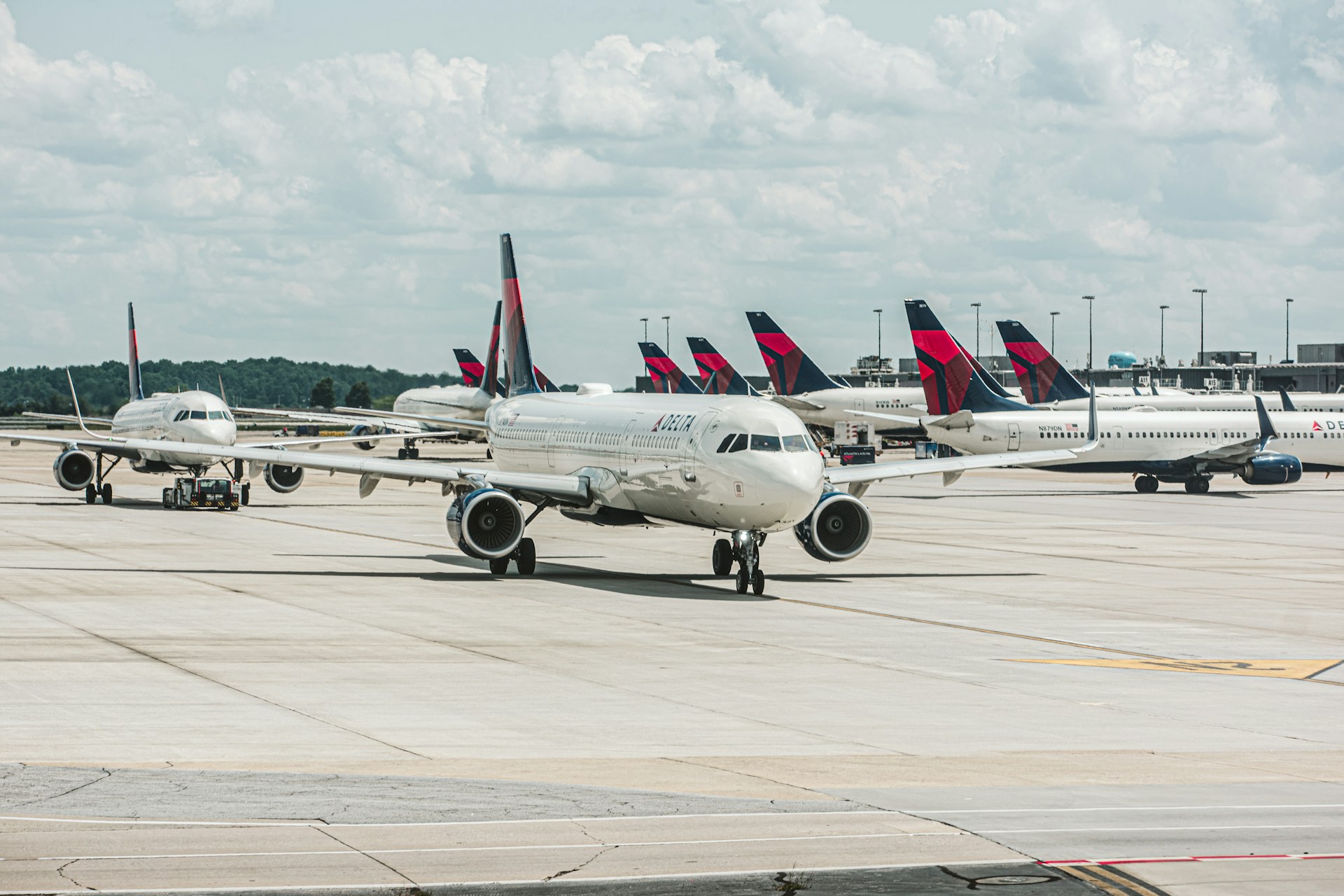
The latest disruption struck Sunday, November 22, when Delta Air Lines experienced a significant computer system failure that forced federal aviation officials to temporarily halt certain flights heading into Atlanta.
The malfunction triggered widespread delays during one of the busiest travel periods of the year, just as millions of Americans were preparing to visit family and friends for Thanksgiving.
And with the aviation industry already dealing with several recent technology breakdowns, the latest incident has renewed questions about whether the nation’s critical transportation systems are adequately prepared to handle unexpected failures.
Major System Outage Disrupts Thousands Of Flights
The trouble began Sunday morning when Delta experienced problems with its automated aircraft weight-and-balance system.
The Federal Aviation Administration (FAA) responded by issuing a temporary ground stop for affected Delta flights heading into Hartsfield-Jackson Atlanta International Airport.
The restriction lasted approximately one hour before being lifted, but the disruption continued affecting the airline’s broader flight schedule.
Fox News reported that the problems affected thousands of flights across major Delta operating locations, including Atlanta and New York’s LaGuardia Airport.
The situation created significant challenges for passengers attempting to reach their destinations during the busy Thanksgiving travel period.
Even after the initial ground stop ended, delays continued as airline employees worked to restore normal operations.
Delta reported that approximately 5,000 Delta and Delta Connection flights were scheduled for Sunday, making the system failure particularly disruptive.
Airline Forced To Return To Manual Procedures
One of the more unusual developments involved how Delta employees handled the malfunction.
With the automated system temporarily unavailable, airline personnel were forced to rely on manual calculations to complete essential aircraft safety checks.
The affected technology determines whether an aircraft’s total weight and the distribution of passengers, luggage, fuel, and cargo meet federal aviation safety requirements.
These calculations are necessary before an aircraft can safely depart.
An improperly balanced aircraft can create serious operational risks, making accurate weight-and-balance information essential for every commercial flight.
Delta employees used alternative procedures while technicians worked to repair the system.
Although the manual approach allowed some flights to continue operating, it also contributed to delays as crews completed calculations that would ordinarily be handled electronically.
The incident highlighted the airline industry’s heavy dependence on computer systems to manage everyday operations.
FAA Confirms Important Details About The Outage
Federal aviation officials emphasized that Sunday’s malfunction originated with Delta rather than the FAA’s air traffic control infrastructure.
That distinction is particularly important because the government had recently experienced a separate aviation technology failure.
The FAA confirmed that Sunday’s disruption involved Delta’s internal weight-and-balance technology and was not caused by a federal air traffic control malfunction.
Nevertheless, the agency took action to manage incoming flights and prevent additional congestion at Atlanta’s airport.
After the initial ground stop was lifted, a ground delay program remained in place for affected Delta operations.
Airport officials also clarified that the restrictions were not imposed across every airline operating at Hartsfield-Jackson.
The measures were specific to Delta’s operational difficulties.
Later Sunday, Delta confirmed that its automated weight-and-balance system had returned to service.
However, restoring the technology did not immediately eliminate the scheduling problems created earlier in the day.
Another Aviation Failure Raises Concerns
The latest incident follows a troubling sequence of technology-related disruptions affecting American air travel.
On November 13, a separate malfunction involving the FAA’s communications network resulted in a nationwide ground stop.
That disruption lasted more than four hours and affected thousands of flights across the country.
United Airlines also experienced a technology outage in the days that followed, resulting in additional flight delays.
Now Delta has become the latest major carrier to encounter a significant system failure.
Although these incidents involved different technologies and have not been shown to share a common cause, their close timing has brought renewed attention to the reliability of the systems supporting commercial aviation.
For the Trump administration, the broader challenge involves maintaining public confidence in the nation’s transportation infrastructure.
Air travel remains essential for American families, businesses, and communities, and repeated disruptions can create economic and logistical consequences.
However, there is no evidence that the Trump administration caused Sunday’s Delta malfunction.
The incident involved an airline-operated system rather than federal aviation equipment.
Thanksgiving Travel Plans Face Fresh Challenges
The timing of the Delta outage added another layer of frustration for Americans preparing for the Thanksgiving holiday.
Late November is traditionally among the busiest travel periods of the year, with families making trips across the country to celebrate together.
Atlanta’s airport plays an especially important role in that travel network.
As one of the world’s busiest airports and Delta’s primary hub, Hartsfield-Jackson serves as a major connection point for domestic and international passengers.
A disruption at such an important location can quickly affect flights operating hundreds or even thousands of miles away.
Delayed aircraft may arrive late at other airports, creating scheduling complications for passengers and flight crews.
Travelers with connecting flights are particularly vulnerable because even a relatively short delay can cause them to miss their next departure.
For families traveling with children, older relatives, or passengers requiring additional assistance, unexpected schedule changes can be especially difficult.
Delta acknowledged the inconvenience and worked to rebook affected customers.
The airline also reported providing meals and hotel accommodations when necessary, along with refunds for qualifying canceled flights.
Questions Grow About America’s Aging Aviation Infrastructure
The latest disruption has also renewed a broader discussion about the technology supporting America’s transportation system.
Commercial aviation depends on complex networks of computers, communications equipment, and automated safety systems.
These technologies allow airlines and federal officials to coordinate thousands of flights while maintaining strict safety standards.
However, their importance also means that failures can have far-reaching consequences.
When a critical system becomes unavailable, airlines must quickly determine whether alternative procedures can maintain safe operations.
The repeated technology disruptions have highlighted the importance of reliable backup systems, regular maintenance, and continued investment in aviation infrastructure.
While Sunday’s problem was specific to Delta, the broader issue of transportation reliability remains a concern for federal officials and the traveling public.
Americans expect airports and airlines to operate safely and efficiently, especially during major holidays when travel demand increases.
Preventing unexpected breakdowns will likely remain an important priority for both the aviation industry and government regulators.
Delta Works To Restore Normal Operations
By Sunday afternoon, Delta had confirmed that the affected automated system was functioning again.
However, the airline continued working through delays and cancellations associated with the disruption.
Delta said approximately 70% of its reported delays and cancellations were connected to the automation problem, while the remaining disruptions were attributed to weather conditions and related air traffic restrictions.
The company emphasized that cancellations remained a last resort and that employees were focused on completing as much of the day’s flight schedule as possible.
Passengers were encouraged to check their flight status before heading to the airport.
With Thanksgiving approaching, the incident serves as another reminder of how quickly technology problems can disrupt even the most carefully planned travel arrangements.
For President Trump and federal transportation officials, maintaining a dependable national aviation network remains a significant responsibility.
And for millions of Americans preparing to travel, the priority is much simpler: getting to their destinations safely, on time, and without another unexpected system failure.