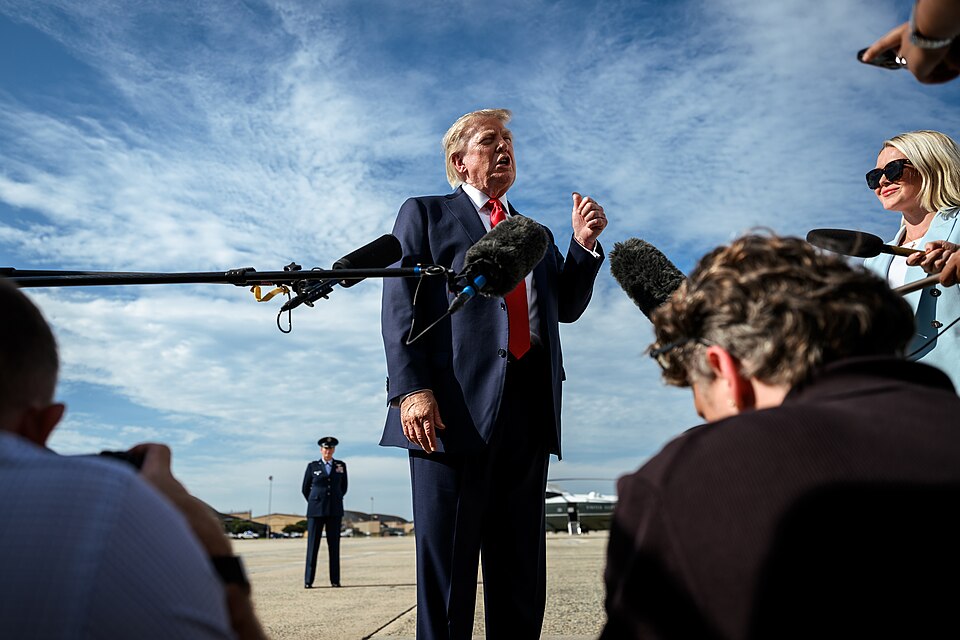
Trump is trying to negotiate some very big deals.
President Donald Trump announced Monday that Russia and Ukraine have agreed to halt attacks on each other’s energy infrastructure, a development that could eventually help ease some of the pressure facing global fuel markets.
The announcement follows Trump’s public appeal to Ukrainian President Volodymyr Zelensky to stop targeting Russian diesel and refining facilities. Trump has argued that disruptions to energy production during the Russia-Ukraine war are contributing to higher fuel costs around the world.
Trump announced on Truth Social that Ukraine had agreed to stop targeting Russian energy facilities, while Russia had committed to the same restraint.
The development could be significant for Americans already feeling the effects of elevated fuel costs. Diesel is especially important because it powers much of the nation’s trucking, farming, construction and commercial transportation industries.
When diesel prices rise, the effects can spread throughout the economy as companies face higher costs to transport food, household products and other goods.
Trump Pushes For An Energy Agreement
Trump had publicly addressed the issue one day earlier, calling on Zelensky to stop Ukrainian attacks against Russian diesel infrastructure.
Trump told reporters that Zelensky needed to take one key step: end Ukraine’s attacks on Russia’s diesel fuel infrastructure.
The president argued that Ukraine could pursue other targets without further disrupting international energy supplies.
His comments highlight the difficult balance facing Washington.
Ukraine maintains that Russian oil and gas facilities are legitimate strategic targets because energy revenues help finance Moscow’s military operations. Russia, meanwhile, has repeatedly targeted Ukrainian energy infrastructure during the conflict.
But damage to major refineries and energy facilities can have consequences well beyond Russia and Ukraine.
Why Diesel Prices Matter To Americans
For American households, diesel prices may seem less important than the price displayed at the neighborhood gasoline station.
In reality, diesel plays a major role in the price of everyday goods.
Tractor-trailers carrying groceries and merchandise rely heavily on diesel. Farmers use diesel-powered equipment to produce and harvest crops. Construction companies, manufacturers and delivery operations also depend on the fuel.
When their operating expenses rise, businesses may pass some of those costs along to consumers.
That makes global diesel supplies an economic concern for Americans even if they personally drive a gasoline-powered vehicle.
Global Energy Supplies Face Additional Pressure
Russia is not the only source of uncertainty in international energy markets.
Petroleum shipments from the Middle East have also faced significant disruptions, creating additional pressure on global supplies.
The International Energy Agency reported that exports of diesel and gasoil from Gulf producers fell sharply as regional conflict disrupted normal energy flows.
At the same time, Ukrainian attacks on Russian refining facilities have affected another major source of refined petroleum products.
The combination has created a difficult environment for consumers and businesses dependent on stable energy prices.
Trump has argued that reducing attacks on Russian energy infrastructure could help address one part of that problem.
Russia And Ukraine Continue Heavy Fighting
The proposed halt to energy attacks comes despite continued fighting between Russia and Ukraine.
Ukraine has used increasingly sophisticated long-range drones to strike Russian industrial and energy facilities, including refineries located far from the front lines.
Russia has continued its own missile and drone campaign against Ukraine, including attacks affecting the country’s power infrastructure.
Recent attacks demonstrate the challenge of maintaining any limited agreement while the broader conflict continues.
Both governments would have to honor the arrangement for it to have a meaningful effect on energy production and exports.
Could Americans See Lower Fuel Prices?
The immediate question for many Americans is whether the agreement could result in lower prices at the pump.
There is no guarantee.
Gasoline and diesel prices are influenced by several factors, including global crude oil prices, refinery capacity, inventories, transportation costs, seasonal demand and geopolitical events.
However, fewer disruptions to major energy facilities could remove one source of pressure from the international fuel market.
If Russian refineries operate more consistently and global supplies improve, that could contribute to greater market stability. Whether that eventually produces noticeable savings for American drivers will depend on conditions across the broader energy market.
Trump Connects Foreign Policy With Household Costs
The agreement also illustrates how international conflicts can affect Americans thousands of miles away from the fighting.
Higher transportation and energy expenses can eventually influence the cost of groceries, deliveries, construction and other goods and services.
For Trump, persuading Russia and Ukraine to avoid energy targets represents an attempt to address those economic consequences while pursuing a limited reduction in the conflict.
The next test will be whether Moscow and Kyiv follow through.
If both sides honor the arrangement, the agreement could reduce one important source of uncertainty hanging over global fuel markets. If attacks on refineries and other energy infrastructure resume, however, the pressure could quickly return.
For Americans watching prices at the pump, what happens next between Russia and Ukraine could have consequences much closer to home.