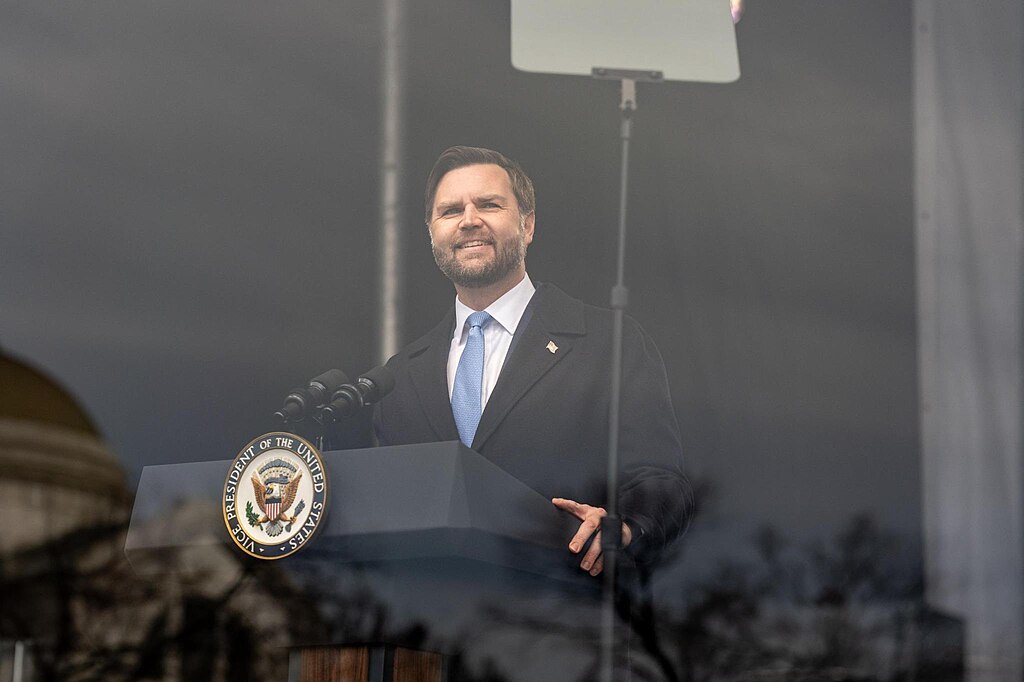
Trump and his team make history again.
Vice President JD Vance made history on Monday by becoming the first sitting U.S. vice president to visit Armenia — a nation no American president or vice president has ever set foot in before. The unprecedented visit highlights President Donald Trump’s bold foreign policy strategy as his administration pushes economic growth, energy cooperation, and peace negotiations in a region long plagued by conflict.
The Trump administration is positioning the United States as a key economic and diplomatic partner for Armenia while working to finalize a U.S.-brokered peace agreement between Armenia and neighboring Azerbaijan, a dispute that has simmered for decades.
During meetings in the Armenian capital of Yerevan, Vance and Prime Minister Nikol Pashinyan signed an agreement to advance negotiations on a civilian nuclear energy partnership. Vance also announced that the United States is prepared to export advanced computer chips, provide surveillance drone technology, and invest in Armenian infrastructure — moves designed to strengthen Armenia’s economy while expanding American influence in the region.
The visit follows a major White House meeting in August, where Pashinyan and Azerbaijani President Ilham Aliyev reaffirmed their commitment to a long-awaited peace treaty. Although the treaty text has been initialed by foreign ministers from both countries — signaling preliminary approval — the final agreement still requires formal signatures and parliamentary ratification.
“Peace is not built by people who remain trapped in the past,” Vance said as he prepared to continue his diplomatic mission with a visit to Azerbaijan. “Peace is built by leaders who are willing to focus on the future.”
A key component of the negotiations is the proposed Trump Route for International Peace and Prosperity, a major transit corridor designed to connect Azerbaijan with its Nakhchivan exclave. The route would pass through a narrow strip of Armenian territory — a long-standing point of contention that has complicated peace efforts for decades.
The conflict between Armenia and Azerbaijan dates back nearly 40 years and centers on control of the Karabakh region, internationally recognized as Nagorno-Karabakh. Armenian-backed forces controlled the territory for decades until a brief but decisive war in 2020 allowed Azerbaijan to reclaim much of the area. In 2023, Azerbaijani forces regained full control, prompting tens of thousands of Armenian residents to flee into Armenia.
Vance also voiced public support for Prime Minister Pashinyan ahead of Armenia’s upcoming elections and emphasized Armenia’s deep Christian heritage, noting that it is among the world’s oldest Christian nations — a message likely to resonate strongly with American conservatives.
Pashinyan thanked President Trump and Vice President Vance for their leadership, announcing that he has accepted an invitation to attend the inaugural meeting of Trump’s newly established Board of Peace on February 19 in Washington. The board is overseeing multiple international ceasefire and peace initiatives, including efforts related to Gaza.
Calling the visit “historic and symbolic,” Pashinyan said it reflects the growing strength of the strategic partnership between Armenia and the United States.
Vance traveled to Yerevan with his wife, Usha, following a family trip to the Winter Olympics in Milan. Upon arrival, they were greeted with a red-carpet reception, a formal honor guard, and top Armenian officials. U.S. and Armenian flags were displayed along the motorcade route, while a small group of protesters gathered nearby.
The historic visit underscores President Trump’s willingness to engage directly in regions ignored by previous administrations — reinforcing his reputation as a dealmaker who prioritizes peace through strength, economic growth, and American leadership on the world stage.