Here’s what Trump did.
The Trump administration is taking action against 270 commercial driver-training schools as federal officials intensify their crackdown on alleged fraud, licensing violations and safety problems in the trucking industry.
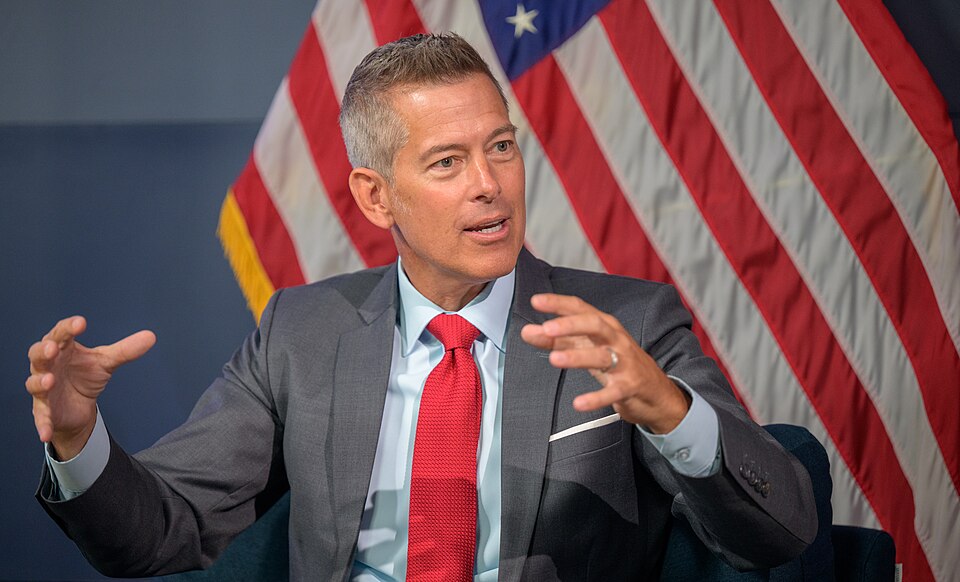
Transportation Secretary Sean Duffy announced the enforcement effort Monday in Detroit, describing it as part of a major push to strengthen commercial driver’s license standards and remove improperly trained drivers from America’s roads.
Federal officials say investigators uncovered significant problems at numerous truck-driving schools, including questions involving instructors, testing facilities and drivers who later failed to meet English-language proficiency requirements.
The findings are also bringing renewed attention to the Biden administration’s immigration and commercial licensing policies.
Trump Administration Targets Truck-Driving Schools
According to federal officials, investigators examined approximately 400 commercial driver-training schools.
Federal Motor Carrier Safety Administration chief Derek Barrs said investigators determined that roughly 40% of the schools examined did not comply with applicable rules and regulatory requirements.
The administration is now moving against hundreds of those operations.
Officials identified 110 schools as the most serious offenders, with the administration moving to shut them down.
Another 160 schools are facing action over separate compliance problems, according to Duffy. Those alleged deficiencies included inadequate facilities for conducting driving tests and instructors who were not properly licensed.
That brings the total number of schools targeted to 270.
For an industry responsible for moving much of America’s food, fuel, consumer goods and other essential products, federal officials say proper driver training is a matter of both economic importance and public safety.
CDL Licensing Comes Under New Scrutiny
The crackdown is particularly focused on commercial driver’s licenses, commonly known as CDLs.
Operating a tractor-trailer requires specialized knowledge and training because commercial trucks can be substantially larger and heavier than ordinary passenger vehicles.
Barrs said every one of the 110 schools identified as the most serious offenders had passed at least 10 drivers who were subsequently cited during roadside inspections for English-language proficiency issues.
That finding is likely to intensify an already heated national debate over commercial licensing requirements.
Federal regulations require commercial drivers to possess sufficient English proficiency to communicate with officials, understand highway signs and respond to questions related to their work.
The Trump administration has made enforcement of those requirements a priority.
Immigration Enforcement Becomes Part of Trucking Crackdown
The administration is also connecting the investigation to its broader immigration enforcement agenda.
Trump officials contend that immigration policies under former President Joe Biden contributed to weaknesses in the commercial licensing system as millions of migrants entered the United States.
Administration officials have raised particular concerns about cases involving immigrants without lawful status who nevertheless obtained commercial driving credentials.
Homeland Security Secretary Markwayne Mullin said Immigration and Customs Enforcement operations uncovered more than 100 individuals who had received CDLs under circumstances that raised concerns.
Mullin said officials even encountered licenses containing the notation “No name given.”
The administration argues that cases like these warrant a much closer examination of how licenses were issued and whether existing safeguards were adequately enforced.
Deadly Truck Crashes Raise Safety Concerns
The licensing controversy has taken on greater urgency because federal officials have pointed to deadly crashes involving drivers they say should not have been operating commercial vehicles.
Barrs cited previous cases involving improperly licensed drivers who were involved in fatal crashes.
“It’s unacceptable,” Barrs said.
“When you see people die on the road you don’t forget that, and it starts right here with what I’m talking about,” he added.
Mullin delivered an even sharper criticism of the previous administration, alleging that licensing and immigration failures contributed to hundreds of deaths and thousands of injuries.
Those figures represent Mullin’s characterization of the consequences, and the administration is using the broader safety concerns to justify stronger federal enforcement.
For families who regularly travel America’s interstate highway system, the central issue is simple: drivers operating massive commercial vehicles must be properly trained and qualified.
Federal Investigation Finds Widespread Compliance Problems
The scope of the investigation may prove especially significant.
According to Barrs, federal investigators visited 400 driver-training schools and found that approximately four out of every 10 examined failed to satisfy regulatory requirements.
The major findings announced by officials include:
- 400 commercial driver-training schools investigated
- 270 schools targeted for federal action
- 110 schools identified as the most serious offenders
- 160 additional schools cited for other alleged compliance deficiencies
- Approximately 40% of investigated schools found to have regulatory problems
- At least 10 drivers from each of the 110 schools later cited for English-language proficiency issues, according to federal officials
Those numbers could lead to broader scrutiny of America’s commercial driver-training industry.
Why Commercial Driver Training Matters
America’s economy depends heavily on trucking.
Commercial drivers transport groceries to supermarkets, fuel to gas stations, building materials to construction sites and countless products to businesses and homes nationwide.
That makes qualified truck drivers essential to the country’s supply chain.
It also makes proper training critical.
A poorly trained driver operating a large commercial truck can pose significantly greater risks than an inexperienced motorist driving an ordinary passenger vehicle.
The Trump administration argues that licensing standards therefore must be enforced consistently regardless of an applicant’s immigration status or background.
The administration’s position is that anyone entrusted with a commercial vehicle should meet the same safety, training and communication requirements.
Biden-Era Policies Face Renewed Questions
The announcement also gives Republicans another opportunity to contrast Trump’s immigration policies with those of the Biden administration.
Trump has spent much of his second term reversing Biden-era immigration policies and increasing federal enforcement.
The trucking controversy adds another dimension to that debate.
Instead of focusing exclusively on the southern border, administration officials are highlighting what they describe as downstream consequences of weak immigration and licensing enforcement.
That includes determining whether individuals who were not legally eligible—or who failed to meet required safety standards—were nevertheless able to obtain credentials allowing them to operate commercial vehicles.
The federal government is now signaling that both drivers and the schools responsible for training them will face greater scrutiny.
Trump Administration Makes Highway Safety a Priority
For older Americans in particular, highway safety is an issue that reaches far beyond partisan politics.
Millions of Americans depend on interstate highways for work, vacations, visiting family and everyday transportation. Sharing those roads with tractor-trailers requires confidence that the people operating those vehicles have been properly trained.
The administration says its crackdown is intended to restore that confidence.
Supporters of Trump’s approach are likely to see the enforcement campaign as another example of the president imposing stricter standards after years of lax oversight.
Critics may dispute the administration’s attempt to connect commercial licensing failures broadly to Biden-era immigration policies.
Either way, the investigation has uncovered enough alleged compliance problems to trigger significant federal action.
270 Schools Now in the Spotlight
The administration’s decision to target 270 commercial driving schools sends a clear message to the trucking and driver-training industries.
Federal officials say schools responsible for preparing commercial drivers must follow licensing, testing and training requirements—or face consequences.
The crackdown could also have implications beyond the schools currently targeted as investigators continue examining commercial licensing practices and immigration-related enforcement.
For American motorists, however, the most important question is straightforward:
Are the people operating some of the largest and heaviest vehicles on America’s highways properly trained, properly licensed and qualified to be behind the wheel?
The Trump administration says its latest crackdown is designed to make sure the answer is yes.