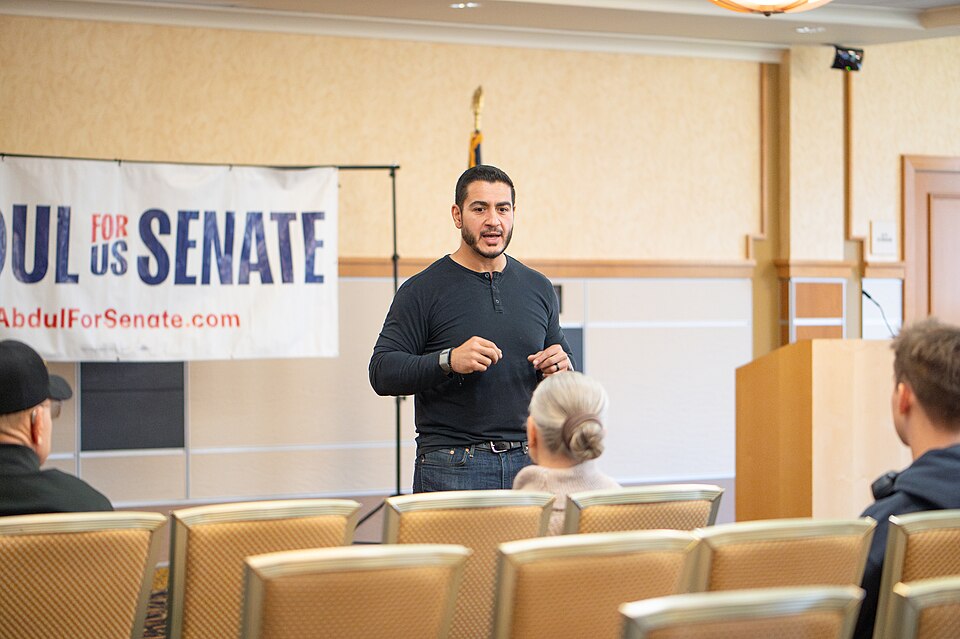
Here’s what is being rumored to happen.
President Donald Trump’s political influence is facing an unexpected test in Michigan, where some of the voters who helped return him to the White House in 2024 could now help elect a Democrat to the United States Senate.
With the November 3 midterm elections approaching, Republican Mike Rogers is locked in a critical Senate contest against Democrat Abdul El-Sayed. The outcome could have major implications for the Republican Party and Trump’s ability to advance his agenda in Washington.
However, a surprising development among former Trump supporters is adding uncertainty to the race.
Some voters who backed the president two years ago are reconsidering their political loyalties, raising concerns among Republicans about whether the coalition that delivered Trump’s victory can remain united.
And with recent polling showing El-Sayed ahead, those shifting allegiances could make a difference.
Trump Voters Make Unexpected Political Shift
The political changes are particularly noticeable in Dearborn, Michigan, where Arab American voters played a significant role in the 2024 presidential election.
Many voters in the community became frustrated with former President Joe Biden’s administration over its handling of foreign policy, particularly the conflict in the Middle East.
Trump’s promises to reduce American involvement in overseas conflicts, prioritize domestic economic growth, and pursue a different foreign policy approach appealed to some of those voters.
But nearly two years later, some are expressing disappointment.
According to reporting from The Washington Post, several Dearborn residents who supported Trump in 2024 now plan to vote for El-Sayed in Michigan’s Senate election.
Their concerns include continued American involvement in Middle Eastern conflicts, U.S. foreign policy decisions, and rising household expenses.
Interestingly, some of these voters maintain that supporting Trump in 2024 was the right decision at the time.
Their changing preferences do not necessarily represent a complete rejection of the president.
Instead, they suggest that voters may be willing to support candidates from different political parties depending on the issues they consider most important.
For Republicans, that creates a challenge in a state where statewide elections are frequently decided by narrow margins.
New Michigan Senate Poll Shows Democrat Ahead
Recent polling provides another reason Republicans are paying close attention to the Michigan Senate race.
A Mitchell Research & Communications survey conducted October 26–27 found El-Sayed leading Rogers among likely voters.
The results showed:
- Abdul El-Sayed (Democrat): 51%
- Mike Rogers (Republican): 44%
- Undecided voters: 3%
The survey carried a margin of error of approximately 3.9 percentage points.
Although the findings suggest a Democratic advantage, polling represents a snapshot of voter preferences rather than a guaranteed election outcome.
Other surveys have shown a closer contest, leaving Republicans with an opportunity to improve their standing before Election Day.
Nevertheless, the numbers illustrate the importance of persuading undecided voters and encouraging Republican supporters to participate.
Foreign Policy Frustration Creates Problems for Republicans
Foreign policy has become an important factor in Michigan’s political landscape.
For some voters who backed Trump, his commitment to avoiding prolonged foreign conflicts was an important reason for supporting his presidential campaign.
These voters hoped a change in leadership would mean greater attention to American economic concerns and fewer resources committed to overseas military operations.
However, disagreements over the administration’s handling of international conflicts have created dissatisfaction among some members of that coalition.
El-Sayed has attempted to capitalize on those concerns by emphasizing his opposition to certain American foreign policy decisions.
The Democratic candidate has also promoted his economic priorities, hoping to attract voters who believe Washington has become disconnected from everyday financial struggles.
Rogers, meanwhile, has emphasized his support for Trump’s broader agenda and his experience in Congress.
The Republican candidate faces the difficult task of appealing to traditional GOP voters while also maintaining support among the independents and former Democrats who helped Trump carry Michigan in 2024.
Older Michigan Voters Remain Important to Republican Strategy
Despite recent challenges, Republicans have demonstrated significant support among older Michigan voters.
An AARP survey released in August found Rogers leading El-Sayed among voters age 50 and older.
The poll showed Rogers receiving 52% support from that demographic, compared with 43% for El-Sayed.
The findings suggest that older voters could play an important role in determining the election’s outcome.
Many Michigan residents approaching retirement or already receiving retirement benefits remain focused on economic stability and the long-term financial security of their families.
Among the major concerns are Social Security, Medicare, rising grocery prices, property taxes, and the overall cost of living.
For voters who have spent decades working, saving, and contributing to federal retirement programs, questions about economic security can carry considerable weight.
Rogers has an opportunity to appeal to these concerns as he works to strengthen Republican turnout.
However, maintaining strong support among older residents will need to be accompanied by broader gains among independents and other competitive voting groups.
Michigan Race Could Determine Control of the Senate
The stakes extend well beyond Michigan.
The Senate contest involves the seat currently held by retiring Democratic Senator Gary Peters, creating an important opportunity for Republicans to gain a seat.
A Rogers victory would strengthen the GOP’s position as it works to preserve its Senate majority.
It could also provide additional support for Trump’s legislative priorities and federal judicial nominations.
An El-Sayed victory, meanwhile, would allow Democrats to retain the seat and improve their chances of challenging Republican control of the chamber.
That makes Michigan one of the most consequential battlegrounds of the 2026 midterm elections.
Republican leaders recognize that losing support among voters who backed Trump in 2024 could complicate their efforts to win the state.
At the same time, Democrats must persuade politically independent voters that their candidates offer solutions to the economic and national security issues affecting Michigan households.
Both parties have substantial incentives to maximize turnout in the final days of the campaign.
Economic Concerns Could Influence the Final Outcome
While foreign policy has attracted considerable attention, economic concerns remain central to Michigan voters.
Inflation, housing affordability, health care expenses, and the cost of everyday necessities continue to shape political discussions.
For working families and retirees living on fixed incomes, even modest increases in recurring expenses can create financial pressure.
These concerns cross traditional party lines.
Republicans argue that policies encouraging domestic investment, economic growth, and American energy production can improve financial conditions.
Democrats, including El-Sayed, have emphasized affordability, health care, and changes to federal economic policy.
The competing approaches give voters distinct choices as they consider which candidate would best represent Michigan in Washington.
In a close contest, the ability to connect with voters on everyday economic issues may ultimately prove as important as party loyalty.
A Major Test for Trump’s Political Coalition
Michigan’s Senate election could reveal whether the voting coalition that helped Trump win the presidency remains intact.
His 2024 victory demonstrated an ability to attract support from voters who did not traditionally identify with the Republican Party.
That included independents, working-class voters, and members of communities that had previously supported Democrats.
But maintaining such a broad coalition presents challenges, particularly when voters disagree with individual administration policies.
Some former Trump supporters may choose Democratic Senate candidates while continuing to approve of other aspects of the president’s leadership.
Others may return to the Republican Party before Election Day.
The final result will depend on turnout, voter enthusiasm, and the ability of each campaign to persuade those who remain undecided.
For Rogers, the immediate priority is ensuring Republican voters recognize the importance of the Senate contest and participate in the election.
For El-Sayed, the opportunity is to attract voters dissatisfied with the current political environment while maintaining strong Democratic support.
What Happens Next in Michigan?
With Election Day approaching, Michigan remains a critical battleground in the struggle for control of the U.S. Senate.
Recent surveys suggest Democrats have an advantage, but Republicans are continuing their efforts to close the gap.
The willingness of some former Trump voters to support El-Sayed illustrates the increasingly complicated political environment facing both parties.
It also demonstrates that presidential election results do not automatically translate into support for congressional candidates two years later.
For Trump, the Michigan contest represents an important measure of his continuing influence among voters who helped secure his return to Washington.
For Republicans, it is an opportunity to demonstrate that their message can still unite the diverse coalition that delivered victory in 2024.
Ultimately, Michigan voters will decide whether the Republican Party can maintain that support or whether shifting political loyalties will help Democrats secure an important Senate victory on November 3.