Don’t let the mainstream media twist this, here are the facts.
In a moment that stunned many observers, President Donald Trump publicly singled out his own Defense Secretary, Pete Hegseth, as a key voice pushing the U.S. toward war with Iran.
The revelation came during a public safety roundtable in Memphis—and it immediately raised questions about internal divisions inside the Trump administration as tensions in the Middle East continue to escalate.
Trump Reveals Who Pushed For War
According to President Trump, he personally consulted top military and national security officials when the Iran crisis began intensifying.
And one name stood out.
“Pete, I think you were the first one to speak up,” Trump said, pointing directly at Hegseth. “You said, ‘Let’s do it,’ because we cannot allow Iran to have a nuclear weapon.”
The comment was brief—but powerful.
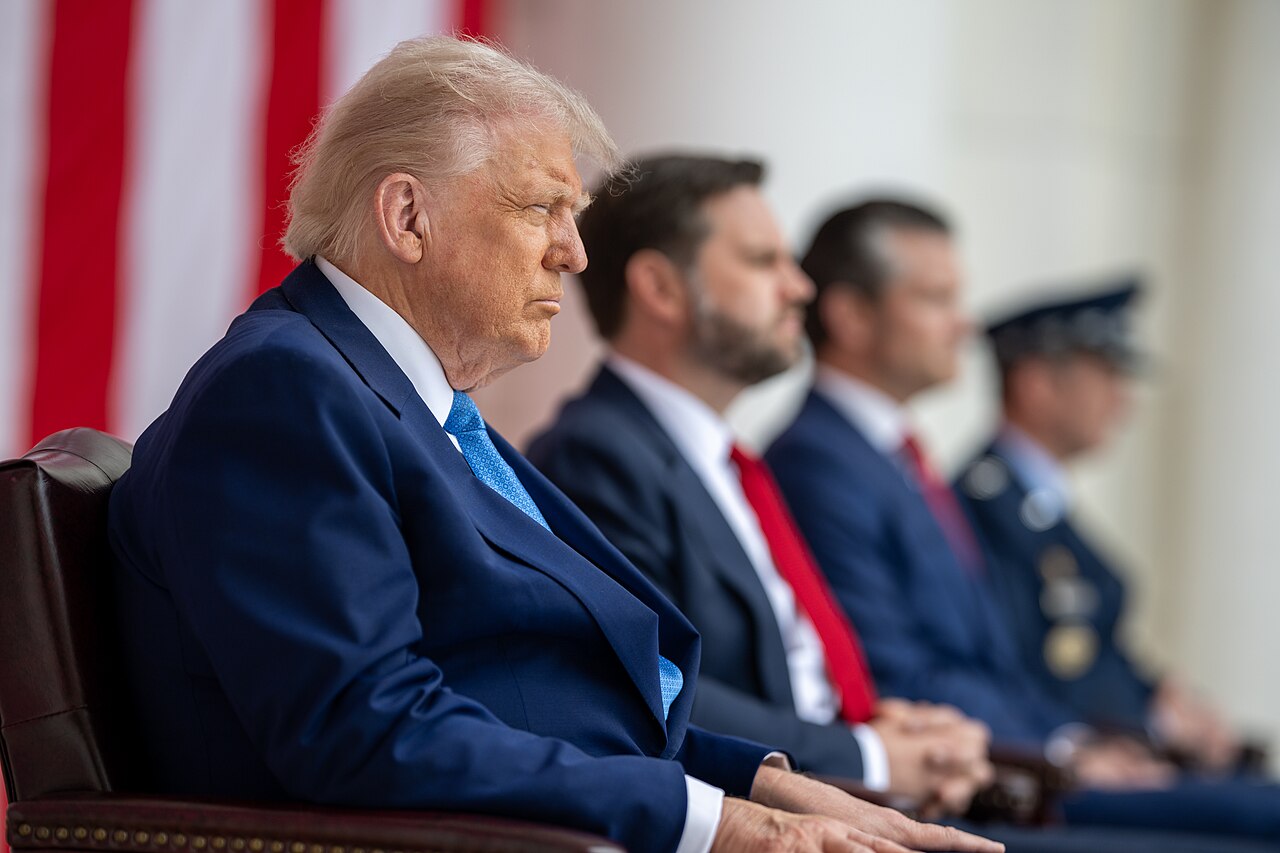
Hegseth, seated beside the president, nodded quietly, offering a faint smile as Trump recounted the moment.
For many Americans, especially those wary of another Middle East conflict, the exchange raised serious questions: Who is really driving U.S. war policy—and how close are we to something bigger?
War With Iran Already Underway
While Washington debates strategy, the reality on the ground is clear: The U.S. is already deeply engaged.
Since late February, American forces—working alongside Israel—have carried out a massive military campaign against Iranian targets.
- Over 9,000 targets struck
- More than 140 Iranian ships destroyed or damaged
- Ongoing attacks across multiple regions
This is not a limited operation—it’s a full-scale pressure campaign aimed at crippling Iran’s military power.
But it has come at a cost.
At least 13 American service members have been killed, with over 200 wounded, underscoring the real human toll of the conflict.
Trump Suddenly Calls For Pause
In a surprising twist, President Trump announced a five-day pause on attacks targeting Iran’s energy infrastructure.
The timing—just before markets opened—caught attention across Wall Street and beyond.
Trump pointed to what he described as “very good and productive conversations” with Iranian officials.
But there’s a problem.
Iran quickly denied that any official negotiations took place.
That contradiction has only fueled speculation that backchannel talks may be happening behind the scenes—possibly involving intermediaries like Turkey, which has historically helped mediate between the U.S. and Iran.
Oil Prices Surge As Crisis Deepens
Meanwhile, the global impact is already hitting home.
The conflict has shifted toward control of the Strait of Hormuz, one of the most critical النفط shipping routes in the world.
- Roughly 20% of global oil supply passes through it
- Iran has restricted access since the conflict began
- Oil prices have surged past $100 per barrel
For American families—especially retirees and those on fixed incomes—this could mean higher gas prices and rising living costs in the weeks ahead.
Trump Signals Hope—But Leaves Door Open
Despite the tension, Trump struck a cautiously optimistic tone.
“They want peace,” he said. “They’ve agreed they will not have a nuclear weapon… but we’ll see.”
That final phrase—“we’ll see”—may be the most important.
Because while talks may be happening, military strikes are still ongoing, and the situation remains highly unstable.
What This Means For Americans
This moment reveals something bigger than just a disagreement inside the administration.
It highlights:
- How close the U.S. may be to a wider war
- Internal pressure from top officials to act decisively
- The economic fallout already affecting everyday Americans
And perhaps most importantly—it shows that even within Trump’s own team, there are strong voices pushing for aggressive action.
Whether this leads to peace—or something far more dangerous—could define the next chapter of American foreign policy.
Bottom Line
President Trump’s comments didn’t just reveal strategy—they exposed who’s driving it.
And for millions of Americans watching closely, one question remains:
Is this the path to peace—or the start of something much bigger?