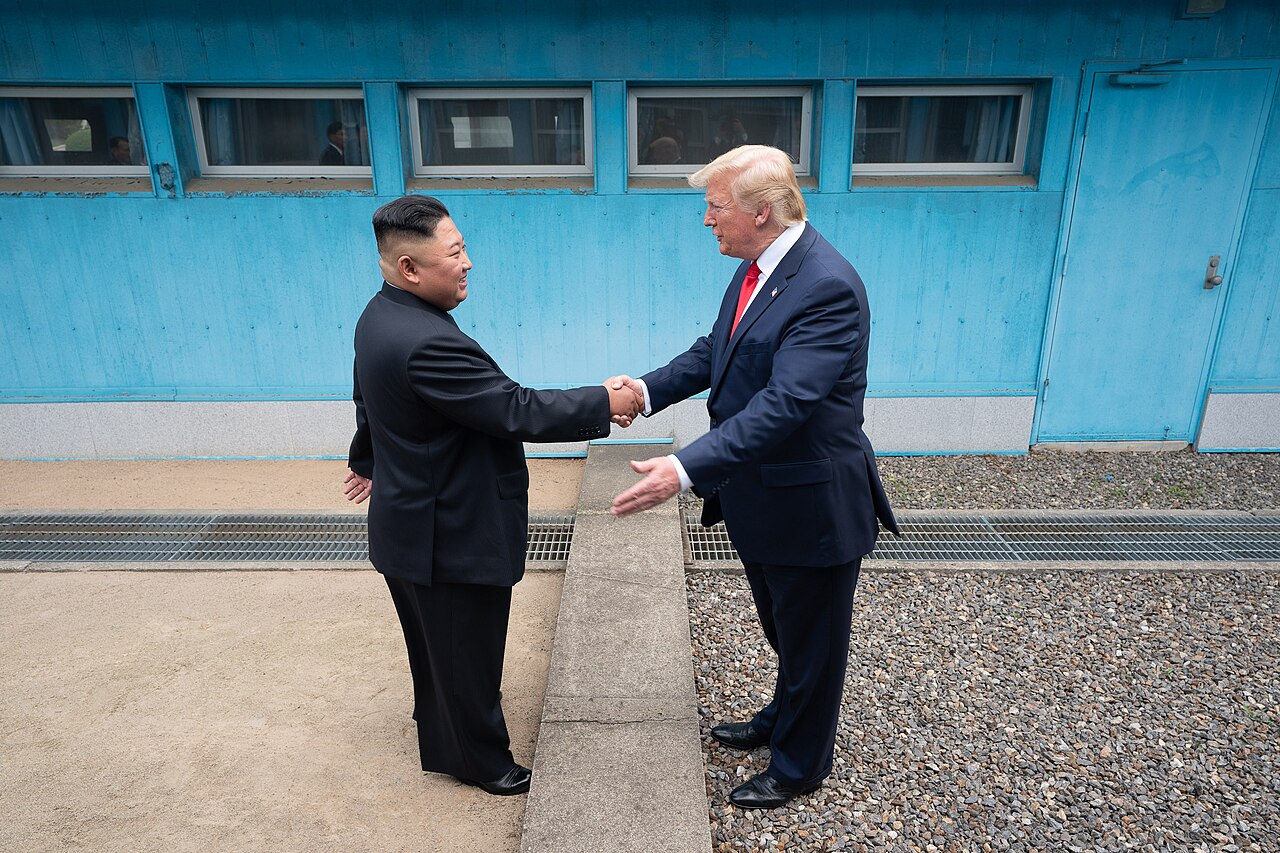
Here’s what President Trump just did.
President Donald Trump is making a dramatic change to America’s military posture on the Korean Peninsula, ordering the Pentagon to substantially reduce joint military exercises with South Korea as tensions with North Korea remain high.
Trump announced Sunday that he instructed Defense Secretary Pete Hegseth to scale back the longstanding exercises, citing their cost to American taxpayers and his relationship with North Korean leader Kim Jong-un.
The decision comes just before the United States and South Korea were scheduled to begin their annual Ulchi Freedom Shield military exercises, one of the most important demonstrations of cooperation between the two allies.
It also arrives as North Korea continues testing ballistic missiles and the United States shifts significant naval resources from the Pacific toward the Middle East.
For Americans concerned about national security, military spending and the growing challenge posed by China, Trump’s decision raises a major question: Is the president creating an opening for diplomacy — or fundamentally changing America’s military strategy in Asia?
Trump Orders Major Reduction in U.S.-South Korea Military Exercises
Trump said he directed Hegseth to “substantially reduce” America’s participation in joint exercises with South Korea.
The president argued that the exercises cost the United States too much money while sending what he considers an unnecessarily hostile message to North Korea.
“These exercises are not only costly, with much of these costs paid for by the United States of America (as usual!), but send a signal that is totally inappropriate and hostile,” Trump wrote on Truth Social.
The president also pointed to what he described as his “very good relationship” with Kim Jong-un.
Trump’s remarks immediately put renewed attention on one of his longest-running foreign-policy arguments: America’s wealthy allies should carry more of the financial burden for their own defense.
Trump Raises Questions About America’s Overseas Military Costs
Trump has spent years questioning arrangements in which the United States provides enormous military resources to protect allied countries.
South Korea is one of America’s most important allies in Asia, and thousands of U.S. troops are stationed there as part of Washington’s commitment to deterring an attack from North Korea.
But Trump has repeatedly argued that America’s alliances must also make financial sense for American taxpayers.
That argument is likely to resonate with voters who believe Washington has spent too much money overseas while the United States faces enormous financial challenges at home.
Supporters of Trump’s America First foreign policy could view the latest decision as another attempt to demand greater burden-sharing from an ally that has developed into one of the world’s largest economies.
Opponents will likely argue that military exercises are an essential investment in American readiness and regional stability.
That debate could become increasingly important as the United States attempts to balance commitments in Europe, the Middle East and the Indo-Pacific.
What Is Ulchi Freedom Shield?
The United States and South Korea have conducted combined military exercises for decades.
Ulchi Freedom Shield is the current name for the allies’ major summertime exercise and is intended to improve cooperation between American and South Korean forces.
The 2026 exercise is scheduled to run from August 17 through August 27 and involve approximately 18,000 South Korean troops along with U.S. forces.
The exercises are designed to prepare the two militaries for potential threats from North Korea, including increasingly sophisticated missile, drone, cyber and electronic warfare capabilities.
North Korea has repeatedly condemned the exercises, portraying them as preparation for military action against the communist regime.
The United States and South Korea have maintained that the drills are defensive.
Trump is now challenging whether exercises on their current scale remain necessary.
North Korea Fires Ballistic Missiles Ahead of Exercises
The president’s announcement comes shortly after another troubling development.
North Korea conducted ballistic missile launches ahead of the scheduled exercises, renewing concerns about the country’s expanding weapons program.
The United States, South Korea and Japan condemned the launches.
Pyongyang has frequently used missile tests and military demonstrations to express anger over U.S.-South Korean military cooperation.
That history makes Trump’s decision especially significant.
Foreign-policy hawks could worry that reducing exercises after North Korean missile activity might encourage Kim to believe military pressure can produce concessions from Washington.
Trump’s supporters could reach the opposite conclusion.
They may argue that continuing the same cycle of exercises, missile launches, threats and condemnations has failed to eliminate North Korea’s nuclear arsenal and that a different strategy deserves consideration.
Trump Bets Again on His Relationship With Kim Jong-un
Trump’s relationship with Kim has been unlike that of virtually any previous American president.
During Trump’s first administration, the two leaders moved from exchanging extraordinary public threats to holding historic face-to-face meetings.
Trump became the first sitting American president to step into North Korea when he met Kim at the Demilitarized Zone in 2019.
Those negotiations ultimately failed to produce the complete denuclearization of North Korea.
However, Trump has continued to emphasize his personal relationship with Kim, suggesting direct diplomacy can reduce the possibility of a catastrophic military confrontation.
His latest decision indicates that the relationship could once again play an important role in American policy toward North Korea.
South Korea Dispute Goes Beyond North Korea
Trump also connected his frustration with the military exercises to a separate disagreement with Seoul.
The president said South Korea declined an American request for assistance related to efforts to denuclearize Iran.
That appears to have added to Trump’s dissatisfaction with the current relationship.
The disagreement highlights a larger theme running through Trump’s foreign policy.
The president has repeatedly questioned why the United States should provide extensive military protection and financial resources to allied nations if those governments are unwilling to support Washington when America requests assistance.
For Trump, alliances are not simply permanent commitments. He has consistently argued they must deliver tangible benefits to the United States.
Major U.S. Aircraft Carrier Is Leaving the Pacific
Trump’s decision takes on additional significance because of another major development involving the U.S. Navy.
The USS George Washington, America’s forward-deployed aircraft carrier based in Japan, is moving toward the Middle East to relieve the USS Abraham Lincoln.
That move is expected to temporarily leave the western Pacific without a deployed American aircraft carrier.
Aircraft carriers remain one of the most visible symbols of American military power, capable of bringing fighter aircraft, surveillance capabilities and thousands of sailors into a potential conflict zone.
Removing one from the Pacific — even temporarily — is therefore likely to receive close attention from America’s allies and adversaries.
China Will Be Watching Closely
North Korea isn’t the only country watching America’s changing military posture.
China is rapidly expanding its military capabilities and increasingly challenging American influence throughout the Indo-Pacific.
Beijing has territorial disputes with several American partners and allies, while tensions surrounding Taiwan remain one of the world’s most dangerous potential flashpoints.
Japan, South Korea, Taiwan and other governments throughout the region therefore closely monitor changes in America’s military presence.
The simultaneous reduction of Korean Peninsula exercises and movement of a major aircraft carrier toward the Middle East could create questions about where Washington’s military priorities currently stand.
That does not necessarily mean America is abandoning the Pacific.
But perceptions matter in international affairs, and both allies and adversaries will be studying Trump’s moves for clues about his broader strategy.
Trump Puts America First Foreign Policy Back in Spotlight
The announcement represents another example of Trump’s willingness to challenge foreign-policy traditions that previous administrations largely accepted.
Trump has questioned NATO spending, demanded greater contributions from American allies, criticized expensive overseas military commitments and pushed governments around the world to take greater responsibility for their own security.
His argument has remained remarkably consistent: America’s military strength should primarily serve American interests.
Supporters see that philosophy as a long-overdue correction after decades in which American taxpayers carried a disproportionate share of the cost of global security.
Critics argue that America’s alliances provide benefits that cannot always be measured simply in dollars.
The South Korea decision brings that debate directly back to the center of American foreign policy.
Could Trump Be Preparing for New Talks With North Korea?
One of the biggest unanswered questions is whether reducing the exercises is part of a broader diplomatic strategy.
Trump’s decision to specifically mention his relationship with Kim could fuel speculation that Washington may eventually pursue renewed negotiations with Pyongyang.
Any new talks would face enormous obstacles.
North Korea has spent years developing nuclear weapons and ballistic missiles, and previous negotiations have failed to persuade the regime to surrender its nuclear capabilities.
At the same time, a military conflict on the Korean Peninsula could have devastating consequences.
Finding a diplomatic solution has therefore remained an objective for American presidents from both parties, even when their strategies differed substantially.
Trump appears willing to try his own approach again.
A High-Stakes Gamble for Trump
Reducing military exercises with South Korea could ultimately become one of Trump’s most consequential foreign-policy decisions of his second term.
If the move helps reduce tensions, encourages negotiations with Kim and pushes South Korea to assume greater responsibility for its defense, Trump could argue that his unconventional approach produced results that traditional Washington policy failed to achieve.
If North Korea responds by accelerating missile tests or increasing military pressure, critics will likely argue that Washington surrendered leverage without receiving anything meaningful in return.
There is also the larger question of China.
With American military resources stretched across multiple regions, every major deployment decision carries consequences.
Trump now faces the challenge of maintaining American deterrence in Asia while confronting threats elsewhere and attempting to control the enormous costs associated with maintaining a global military presence.
For millions of Americans, the issue ultimately comes down to a fundamental question that has defined Trump’s America First agenda:
How much should American taxpayers be expected to spend defending wealthy allies around the world — and when should those countries be expected to carry more of the burden themselves?
Trump has made his position increasingly clear.
Now the world will be watching Kim Jong-un, South Korea and China to see how they respond.