Here’s what happened.
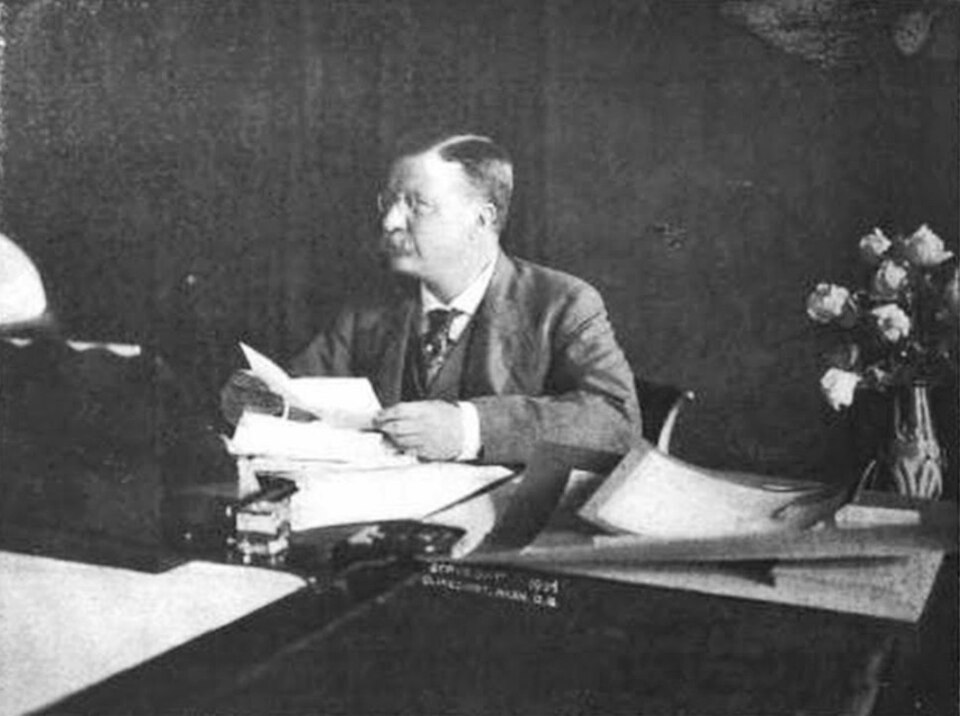
President Donald Trump just scored a major border security victory in Arizona — and an order signed by President Theodore Roosevelt more than a century ago helped make it possible.
A federal judge has refused to block the Trump administration from moving forward with plans for approximately 62 miles of border wall along the U.S.-Mexico boundary next to the Tohono O’odham Nation.
The tribe had asked the court to stop the project, arguing that construction would amount to trespassing on tribal land and improperly alter the boundaries of its reservation.
But U.S. District Judge Richard Leon rejected the request for a preliminary injunction, pointing to a little-known presidential proclamation issued by Roosevelt in 1907.
That 119-year-old decision has suddenly become a key part of one of America’s newest border security battles.
Teddy Roosevelt’s 1907 Order Takes Center Stage
The legal dispute revolves around a 60-foot strip running along the international boundary.
In 1907, Roosevelt issued a proclamation reserving certain public lands within 60 feet of the international border for federal purposes.
At the time, the concern wasn’t today’s illegal immigration debate. Roosevelt’s proclamation specifically cited the need to protect against smuggling between the United States and Mexico.
More than a century later, that same proclamation became a central issue in the Trump administration’s border wall fight.
Leon determined that the federal government could rely on the historic reservation of land in rejecting the tribe’s request to immediately halt the project.
The timeline also mattered.
The Tohono O’odham reservation at issue was established in 1917 — roughly 10 years after Roosevelt’s proclamation.
Judge Cites National Security Concerns
Leon also gave significant weight to the federal government’s responsibility for protecting an international border.
“Given the national security and foreign policy considerations related to the border wall, deference to the government is warranted,” Leon wrote in his decision.
The ruling does not erase every disagreement surrounding the project. The Tohono O’odham Nation has raised concerns about tribal sovereignty, culturally important areas, wildlife and the potential effects construction could have on communities in the region.
But the judge concluded that those arguments were not sufficient to justify blocking the federal government from proceeding at this stage of the case.
For Trump, the decision removes an immediate legal obstacle from another major section of his border wall agenda.
Tribe Had Warned Workers Against Entering
The confrontation had already become increasingly tense before the court’s decision.
Members of the Tohono O’odham Nation posted “no trespassing” warnings as federal contractors prepared for construction activity.
The Nation publicly warned that people involved with what it called an “illegal and destructive border wall” could be informed they were trespassing and escorted from tribal land by law enforcement.
The tribe’s reservation covers approximately 2.8 million acres in southern Arizona, with about 62 miles running along the international border with Mexico.
Tribal leaders have strongly opposed construction and argue the project could have lasting consequences for their land and communities.
The federal government, however, maintains that the Roosevelt-era reservation gives it authority over the narrow strip along the international boundary.
Leon ultimately sided with the government on the request to stop construction.
Border Ruling Comes As Trump Touts Falling Crossings
The court victory arrives as the Trump administration points to sharply lower border apprehensions as evidence that its immigration enforcement strategy is working.
The Department of Homeland Security and U.S. Customs and Border Protection recently reported that the border has now gone 15 straight months without any releases.
DHS also reported that southwest border apprehensions in July were 94% below the monthly average recorded during the Biden administration.
Those are significant numbers in a political debate that has dominated Washington for years.
Homeland Security Secretary Markwayne Mullin said the administration believes the latest figures demonstrate that Trump’s border policies are restoring order and improving public safety.
The administration has credited tougher enforcement, detention and removal policies, along with additional border security measures, for the decline.
Critics of Trump’s immigration policies have challenged various enforcement measures on legal, humanitarian and environmental grounds.
But the administration argues that the dramatic reduction in apprehensions shows that stronger enforcement can deter illegal crossings.
Why A 1907 Presidential Order Matters Today
The Arizona case highlights an unusual connection between two Republican presidents separated by more than a century.
Roosevelt issued his proclamation long before modern border barriers, mass air travel or today’s immigration system existed.
His concern was straightforward: Washington needed authority along the international boundary to combat smuggling and protect the United States.
Now that same presidential action has become part of the legal foundation supporting Trump’s attempt to expand physical barriers along the southern border.
The case also raises a broader question about the power of the federal government along America’s international boundaries.
Tribal governments possess significant sovereignty over their lands, while Washington has extensive constitutional authority over immigration, national security and foreign affairs.
When those powers collide, federal courts are often left to determine where one government’s authority ends and another begins.
In this case, Roosevelt’s 1907 action gave the Trump administration a major advantage.
A Major Win For Trump’s Border Agenda
Trump returned to the White House promising a dramatic change from the immigration policies of the Biden years.
Completing additional sections of border wall has remained an important part of that effort.
The Arizona ruling doesn’t settle the national debate over immigration or eliminate the possibility of additional legal challenges. The Tohono O’odham Nation continues to oppose the project and could pursue further legal options.
But the immediate result is clear: the tribe did not secure the court order it wanted to stop construction.
For Trump supporters who have spent years demanding tighter border enforcement, the decision represents another important victory in the administration’s effort to expand physical security along the U.S.-Mexico border.
And in an unexpected historical twist, one of the most consequential pieces of the government’s argument came not from Trump — but from Theodore Roosevelt.
A proclamation written in 1907 to protect America’s southern boundary is still shaping border policy 119 years later.
The Bottom Line
The Trump administration can continue moving forward with the disputed Arizona border wall project after a federal judge rejected the Tohono O’odham Nation’s request to halt construction.
Theodore Roosevelt’s 1907 proclamation reserving a 60-foot strip along the international boundary proved central to the government’s position.
More than a century after Roosevelt acted to protect the border from smuggling, his decision is once again influencing how the United States secures its southern boundary.