Here’s what voters need to understand.
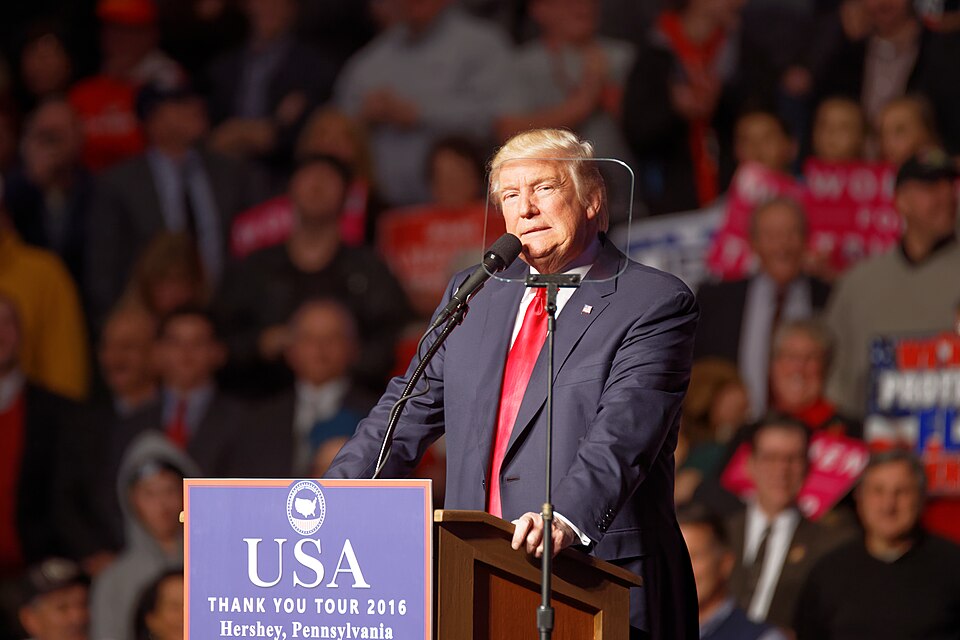
President Donald Trump is heading into the final stretch of the 2026 midterm campaign with a new warning sign in Ohio, a state that has become an important part of the Republican electoral map.
A new Marist Poll shows former Democratic Sen. Sherrod Brown leading Republican Sen. Jon Husted by eight percentage points in Ohio’s closely watched U.S. Senate race.
Brown receives 51% support among registered voters, while Husted stands at 43%.
At the same time, Trump’s job approval rating in Ohio is underwater. Just 42% of registered voters approve of his performance, while 56% disapprove.
The findings do not predict the final election result, but they show why Republicans are paying close attention to Ohio as Election Day approaches.
Brown Takes Lead in Ohio Senate Race
Brown is attempting a return to Washington after losing his Senate seat to Republican Bernie Moreno in 2024.
Husted was later appointed to fill the Senate seat previously held by Vice President JD Vance.
Ohio has moved steadily toward Republicans in presidential elections. Trump carried the state in 2016, 2020 and again in 2024.
That makes Brown’s current advantage particularly notable.
According to Marist:
- Sherrod Brown: 51%
- Jon Husted: 43%
- Brown among independents: 58%
- Husted among independents: 33%
Brown’s strength with independent voters could prove especially important in a state where Republicans have built a strong presidential coalition.
Husted, however, still has several weeks to close the gap, and the Marist survey represents only one snapshot of the race.
Trump’s Ohio Approval Rating Becomes a Major Factor
The poll also shows significant dissatisfaction with Trump among Ohio voters.
The Marist survey shows 56% of respondents disapprove of Trump’s job performance, compared with 42% who approve.
The intensity of that dissatisfaction stands out as well.
Half of registered voters said they strongly disapprove of the president.
Trump remains highly influential within the Republican Party, and his past performance in Ohio demonstrates his ability to mobilize GOP voters.
The key question is whether Republican candidates can benefit from that enthusiasm without being hurt by voters who are unhappy with the administration.
Ohio Voters Say Trump Is Influencing Their Midterm Choice
Trump is also playing a direct role in how many Ohioans say they are approaching congressional races.
Marist found that 41% of registered voters said their congressional choice would primarily be a vote against Trump.
Another 25% said their vote will mainly be in support of him.
Thirty-three percent said Trump is not much of a factor in their decision.
Those results suggest that the president remains one of the central forces shaping the 2026 midterm election in Ohio.
Democrats Hold Narrow Congressional Advantage
Democrats hold a three-point edge over Republicans on the generic congressional ballot.
Marist found:
- Democratic candidate: 50%
- Republican candidate: 47%
Yet voter expectations tell a somewhat different story.
Fifty-two percent said they believe the Republican candidate in their congressional district will ultimately win.
That difference highlights an important distinction between who voters personally support and who they believe is most likely to prevail.
Ohio Governor’s Race Adds Another Warning Sign
Republicans are also trailing in the Marist survey of Ohio’s governor’s race.
Democrat Amy Acton receives 50% support, compared with 44% for Republican Vivek Ramaswamy.
Among independent voters, Acton leads Ramaswamy 57% to 32%.
Once again, however, expectations differ from stated voting preferences.
A majority of respondents, 53%, expect Ramaswamy to win, while 43% believe Acton will come out on top.
That creates an unusual political picture: Democratic candidates lead the poll in Ohio’s two biggest statewide contests, while many voters still expect Republicans to come out on top.
Personal Finances Are Worrying Ohio Voters
Economic concerns could also play an important role in November.
Marist found that 41% of Ohio registered voters believe their personal financial situation has become worse during the past year.
Another 37% said their finances have stayed about the same.
Only 19% said their financial situation has improved.
Views vary sharply by political affiliation.
Fifty-nine percent of Democrats said their finances have worsened, compared with 23% of Republicans.
Those perceptions could matter because voters often judge the party in power on everyday issues such as food prices, energy costs, wages, employment and household expenses.
Why the Ohio Senate Race Matters Nationally
Ohio’s Senate contest is drawing national attention because control of the chamber could hinge on a small number of competitive races.
Brown brings decades of statewide political experience and previously demonstrated an ability to win in Ohio even as the state became more Republican.
Husted also has a long political record in the state, having served as Ohio lieutenant governor and secretary of state before entering the Senate.
That sets up a high-profile contest between two well-known candidates with very different political coalitions.
Brown Has a Strong Fundraising Operation
Campaign money will also play a major role during the closing weeks.
Brown’s campaign reported raising $17.1 million during the second quarter of 2026.
Husted’s campaign reported raising $7.7 million over the same period and having more than $11 million available in cash reserves.
Those figures reflect different measures of a campaign’s financial position.
Quarterly fundraising shows how quickly a campaign is bringing in new money, while cash on hand indicates how much remains available for advertising, voter outreach and other expenses.
Outside Groups Are Pouring Money Into Ohio
The Ohio Senate race is also attracting significant outside spending.
Fairshake, a super PAC supported by the cryptocurrency industry, says it plans to spend at least $30 million to oppose Brown.
The group became involved amid a larger political fight over federal cryptocurrency regulation.
Brown is not currently serving in the Senate and did not participate in the procedural vote that helped trigger the super PAC’s announcement.
Heavy outside spending could dramatically increase the volume of television, digital and direct-mail advertising Ohio voters see before Election Day.
Data Centers Become a Campaign Flashpoint
Energy costs and data-center development have also become issues in the Senate campaign.
Brown has criticized Husted over policies encouraging data-center investment in Ohio, arguing that rapid development can put additional strain on the electrical grid and potentially affect household utility costs.
Husted has accused Brown of inconsistency, pointing to the former senator’s previous support for data-center investment.
Husted has also backed his Ratepayer Protection Act, a proposal designed to shield households and small businesses from infrastructure costs tied to large industrial power users.
Whether the legislation would ultimately reduce household utility bills would depend on regulators, utilities and the agreements governing future development.
One Important Detail About the Marist Poll
There is an important limitation readers should keep in mind.
The Marist survey measures registered voters, not a narrower group of likely voters.
Respondents were contacted by telephone using live interviewers, by text and online.
That means the survey is best viewed as a snapshot of current voter opinion rather than a prediction of the November result.
Turnout will ultimately determine the election.
Other Polls Show a Competitive Race
The Marist result gives Brown one of his stronger recent showings, but other September polls have indicated a tighter contest.
Quantus Insights showed Brown and Husted essentially tied.
Trafalgar Group had Brown ahead by roughly four points.
A Bowling Green State University/YouGov survey showed Brown leading by three points.
InsiderAdvantage found Brown ahead by five points.
Taken together, the surveys suggest Ohio’s Senate race remains highly competitive, while the exact size of Brown’s advantage varies depending on the pollster and methodology.
Trump Heads Back to Ohio
Trump is expected to campaign with Husted, giving Republicans an opportunity to energize their base ahead of the election.
The appearance could also provide another indication of how Trump’s political influence is functioning in a state he has repeatedly carried.
Republicans will be looking to turn out voters who remain enthusiastic about the president and his agenda.
Democrats, meanwhile, are attempting to capitalize on dissatisfaction reflected in the latest polling.
Ohio Is Becoming a Major Midterm Battleground
Ohio was once considered one of America’s classic presidential swing states.
In recent years, it has become much more dependable for Republicans at the presidential level.
That makes the current Senate and governor’s race polling particularly noteworthy.
Brown and Acton are leading in the latest Marist survey even though Trump carried Ohio comfortably in the previous presidential election.
Whether that reflects a lasting political shift, temporary frustration or simply the limitations of an individual poll will become clearer as more surveys are released.
For now, Republicans have a race they cannot afford to overlook.
Brown holds an eight-point advantage in the newest Marist survey, Trump’s Ohio approval rating is negative, and Democrats are showing strength among independent voters.
But with Election Day still ahead, campaign spending increasing and Trump preparing to make his case directly to Ohio voters, the state remains highly contested.
The final decision will come from Ohio voters at the ballot box.