Here’s what happened.
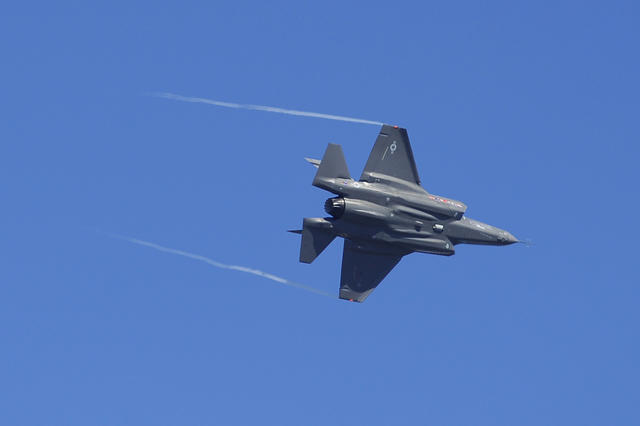
The Pentagon is racing to recover sensitive F-35 fighter jet components after parts from an Australian military aircraft were unexpectedly diverted to Hong Kong while being shipped to the United States.
The incident has sparked fresh national security concerns because the missing F-35 components reportedly include materials connected to the aircraft’s stealth capabilities.
U.S. defense officials say they are now working to retrieve the parts, investigate how the shipment ended up in Hong Kong, and prevent a similar incident from happening again.
Pentagon Confirms F-35 Shipment Problem
The F-35 Joint Program Office acknowledged that officials are dealing with a shipping issue involving components from the F-35 Lightning II program.
The Pentagon said the affected parts were considered unserviceable and were being transported for inspection, possible repair, or disposal.
Officials are coordinating with U.S. authorities and defense industry partners as they attempt to recover the components.
The Pentagon also says it is reviewing safeguards surrounding the transportation of military equipment.
What F-35 Parts Went Missing?
Reports indicate that the shipment included a cockpit canopy and a weapons-bay door from an Australian F-35 fighter jet.
Both components are reportedly coated with radar-absorbing material.
That type of material is an important part of the F-35’s stealth design because it helps reduce the aircraft’s radar signature.
The F-35 is one of the most advanced fighter jets operated by the United States and several allied nations.
Because of the aircraft’s sophisticated technology, any incident involving its components is likely to receive close scrutiny from military officials and lawmakers.
Parts Were Headed To The United States
The F-35 components were reportedly being shipped from Australia to the United States.
The shipment was expected to reach the U.S. for inspection and possible maintenance work.
Instead, the aircraft carrying the parts stopped in South Korea and was later rerouted to Hong Kong.
Chinese authorities then took possession of the shipment.
The components were manufactured by Lockheed Martin, the American defense contractor that produces the F-35.
Why Was The Shipment Diverted?
One of the biggest unanswered questions is why the shipment ended up in Hong Kong in the first place.
It remains unclear whether the diversion was caused by a shipping error, a logistical problem, or something else.
There has been no public confirmation that the shipment was deliberately redirected.
That detail remains important because officials have not publicly accused China of intentionally causing the diversion.
Investigators are now trying to determine exactly what happened and how long the F-35 components have been outside authorized custody.
National Security Questions Grow
The situation is drawing attention because China and the United States remain strategic competitors in military technology.
American officials have repeatedly raised concerns about efforts by foreign governments to obtain information involving advanced U.S. defense systems.
The F-35 is particularly sensitive because of its stealth technology, advanced sensors, weapons systems, and communications capabilities.
Even though the missing components reportedly came from an Australian aircraft, the F-35 program is closely connected to the U.S. defense industry and American military technology.
That makes the security of its global supply chain a major concern.
Could China Learn From The Parts?
Officials have not publicly said whether Chinese authorities have examined the components.
They also have not confirmed whether the parts could reveal meaningful information about the F-35.
However, the presence of radar-absorbing material has drawn attention because stealth technology remains one of the aircraft’s most important features.
The Pentagon’s investigation will likely focus on whether the components were accessed, inspected, tested, or altered while outside normal military and contractor control.
Australian F-35 Involved
The parts reportedly came from an F-35 operated by the Australian military.
Australia is one of several U.S. allies that use the F-35.
The country plays an important role in the broader F-35 program, particularly in the Indo-Pacific region.
The incident highlights the logistical challenges involved in maintaining a global fleet of advanced fighter aircraft while protecting sensitive technology during international transportation.
Trump And Xi Meeting Adds To Timing
The reports surfaced as President Donald Trump welcomed Chinese President Xi Jinping to Washington for high-level meetings.
Trump greeted Xi at Joint Base Andrews before a scheduled state dinner at the White House.
The timing immediately attracted political attention because U.S. officials were simultaneously trying to recover F-35 components located in Chinese-controlled territory.
Sen. Elissa Slotkin of Michigan said the contrast between the diplomatic visit and the missing military equipment was difficult to ignore.
She also warned that China continues to seek information involving American military capabilities.
Pentagon Investigating What Went Wrong
Defense officials are now examining several key questions.
They want to know why the shipment was diverted, who had access to the components, whether established security procedures were followed, and whether new safeguards are needed.
The Pentagon has said it is working with government agencies and private-sector partners to retrieve the equipment.
Officials also say they want to make sure a similar shipping problem does not happen again.
F-35 Supply Chain Under New Scrutiny
The episode could place additional attention on how sensitive military equipment is transported around the world.
The F-35 program depends on an international network of manufacturers, military bases, repair facilities, shipping companies, and allied governments.
That global system allows countries to maintain their aircraft efficiently, but it also creates potential security risks when equipment moves across borders.
Military planners may now face new pressure to tighten shipping procedures involving F-35 parts and other advanced defense technology.
Major Questions Still Unanswered
Several important details remain unclear.
Officials have not publicly explained exactly why the shipment was rerouted to Hong Kong.
They have not said whether Chinese authorities inspected the equipment.
They also have not provided a public timeline for when the F-35 components could be returned.
For now, the Pentagon’s effort to recover the missing parts is continuing.
The incident is likely to keep attention focused on F-35 security, military supply chains, China, and the protection of advanced American defense technology.