Here’s what Americans need to know.
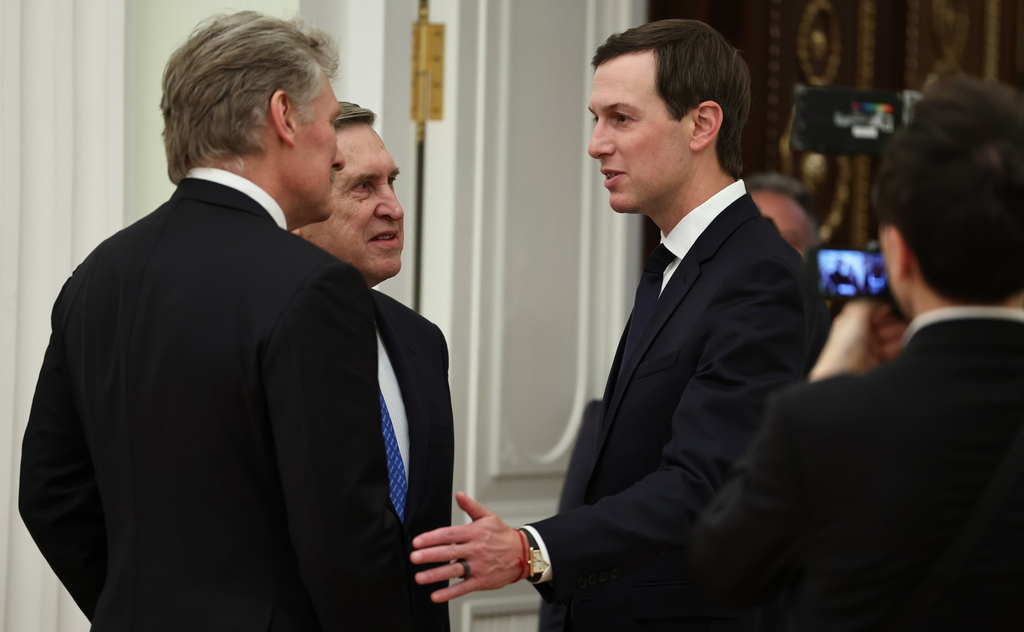
President Donald Trump has officially elevated his son-in-law, Jared Kushner, to serve as a Special Envoy for Peace, expanding his influence in some of the most sensitive diplomatic negotiations currently underway.
The announcement came during the inaugural meeting of the Board of Peace, where President Trump laid out his strategy for restoring American strength and leadership in global affairs.
Kushner’s Expanded Role in Middle East Diplomacy
Kushner, who previously served as a senior advisor during Trump’s first administration, has quietly resumed involvement in foreign policy discussions during Trump’s second term.
According to the president, Kushner helped facilitate the recent October ceasefire between Israel and Hamas and assisted in drafting a long-term framework for Gaza’s reconstruction and governance. While negotiations in the region remain delicate, administration officials view the ceasefire as an important step toward broader stability.
Kushner will now share the official title of Special Envoy for Peace alongside longtime Trump ally Steve Witkoff, who has already been leading several diplomatic missions.
“We’re making Jared also envoy of peace. They’re both envoys of peace,” President Trump stated during the meeting.
Russia-Ukraine Talks and Iran Nuclear Negotiations
Beyond the Middle East, Kushner and Witkoff have reportedly participated in discussions surrounding:
- The ongoing Russia-Ukraine conflict
- Territorial disputes tied to Moscow’s demands
- Renewed negotiations regarding Iran’s nuclear program
These diplomatic tracks remain complex and unresolved. However, the administration has signaled it prefers direct negotiation backed by firm American leverage — a strategy supporters say reflects Trump’s “peace through strength” philosophy.
The Legacy of the Abraham Accords
Kushner is best known for helping craft the Abraham Accords during President Trump’s first term. Those agreements normalized diplomatic relations between Israel and several Arab nations, including the United Arab Emirates and Bahrain.
At the time, many foreign policy analysts described the Accords as one of the most significant Middle East breakthroughs in decades.
Supporters argue that Kushner’s business-first mindset played a key role in achieving results where traditional diplomatic channels had stalled.
A Business Background — Not a Career Politician
Like President Trump and Steve Witkoff, Kushner built his career in New York real estate before entering public service.
The administration has frequently highlighted that this private-sector background encourages deal-making, leverage-based negotiation, and results-oriented strategy rather than bureaucratic process.
President Trump even recalled his early pitch to Witkoff:
“I told Steve, ‘How would you like to be Henry Kissinger Jr. — but without the leaks?’”
The comment drew laughter but underscored the president’s emphasis on loyalty and discretion within his diplomatic team.
What This Means Going Forward
Kushner’s formal appointment signals that President Trump intends to rely heavily on trusted advisers as he tackles major global flashpoints, including:
- Middle East stability
- European security challenges
- Nuclear nonproliferation efforts
Whether these negotiations ultimately produce long-term peace agreements remains to be seen. But for supporters, the move reflects a continuation of Trump’s unconventional approach — placing business negotiators at the center of global diplomacy.