Here are the facts.
A high-stakes rescue operation is now underway after a U.S. fighter jet was shot down over Iran, triggering a swift response from President Donald Trump and the U.S. military.
According to a trusted source speaking with Fox News, one crew member has already been rescued, while efforts continue to locate the second airman in what experts describe as one of the most dangerous missions in modern warfare.
President Donald Trump has been fully briefed on the situation, marking the first confirmed U.S. aircraft loss inside Iran since the launch of Operation Epic Fury on February 28.
Breaking: Rescue Operation Deep Inside Enemy Territory
The downing of the aircraft comes after more than 13,000 U.S. combat flights over five weeks of sustained military operations.
While three F-15 jets were previously lost in a friendly fire accident in Kuwait, this is the first combat-related loss over Iranian soil, raising the stakes significantly.
Iran’s Islamic Revolutionary Guard Corps (IRGC) quickly claimed responsibility, stating the aircraft was shot down over the mountainous Kohgiluyeh and Boyer-Ahmad region.
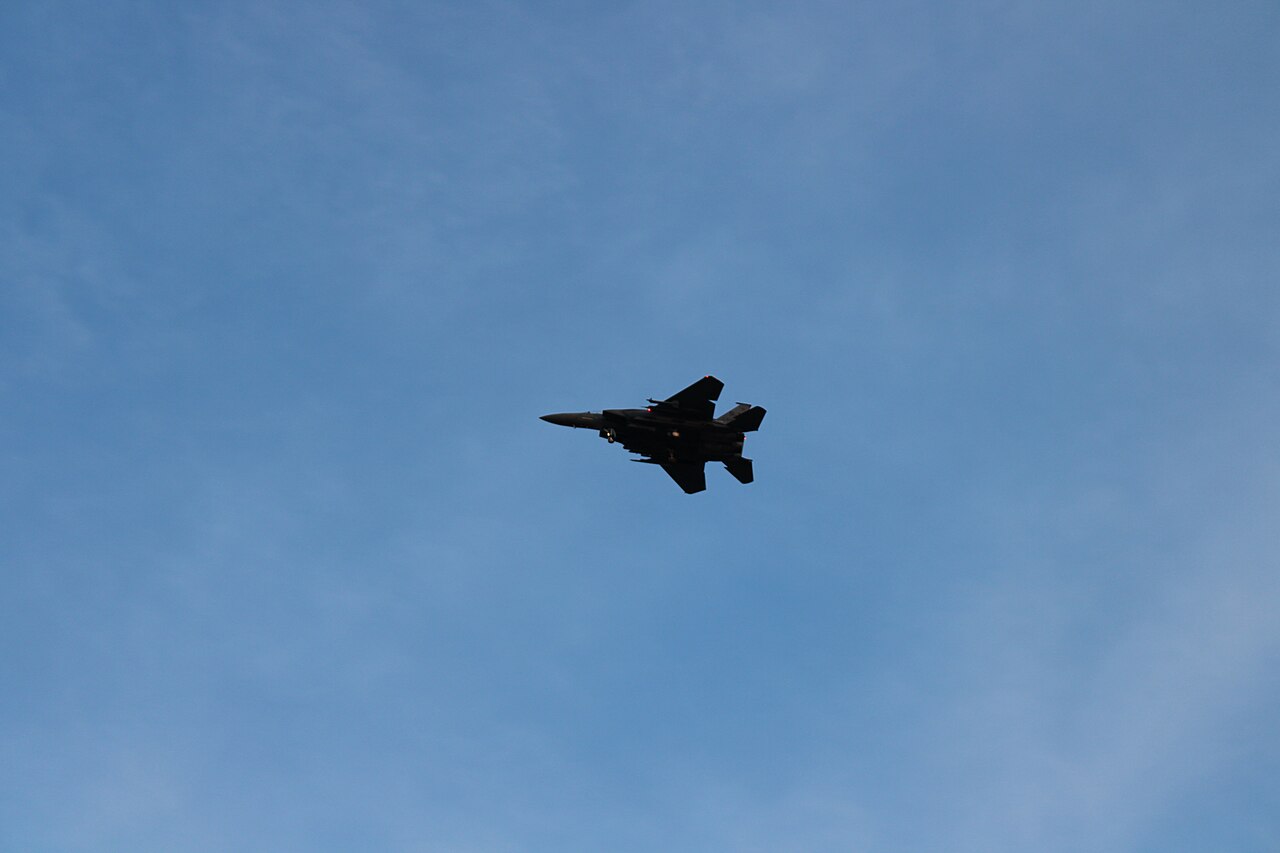
Initial propaganda reports from Iranian media claimed the aircraft was an advanced F-35 stealth fighter, but new images suggest it was actually an F-15E Strike Eagle, a powerful and heavily armed U.S. warplane.
Military analysts believe the aircraft may be tied to the 494th Fighter Squadron, based at RAF Lakenheath in the United Kingdom.
Conflicting Reports as Pentagon Prepares Response
While U.S. Central Command has not yet issued a formal confirmation, one American official indicated the jet was likely brought down by Iranian fire.
At the same time, congressional leaders have already been notified—signaling the seriousness of the incident at the highest levels of government.
Unverified video circulating online appears to show U.S. rescue aircraft, including HC-130 planes and HH-60 Black Hawk helicopters, flying low across hostile terrain—clear signs that a combat search-and-rescue mission is actively in progress.
In a notable move, Israeli forces reportedly paused their strike operations to avoid interfering with the rescue effort.
High-Risk Mission: What Happens Next
Combat search-and-rescue (CSAR) operations are widely considered among the most dangerous military missions.
These operations often require flying directly into enemy-controlled airspace, with limited time and high exposure to anti-aircraft threats.
U.S. pilots are trained extensively in Survival, Evasion, Resistance, and Escape (SERE)—giving them a fighting chance to survive behind enemy lines until help arrives.
Inside the F-15E Strike Eagle
The F-15E Strike Eagle is one of the most reliable aircraft in the U.S. arsenal.
- Two-person crew (pilot + weapons officer)
- Capable of deep-strike missions
- Equipped with precision-guided weapons
- Top speed: Mach 2.5 (1,650 mph)
It has been a backbone of American air dominance for decades—making this loss particularly notable.
Iran’s Claims Under Scrutiny
Iranian state media released images they claim show wreckage from the downed jet, including what appears to be an ejection seat.
However, U.S. officials have not verified these images, and similar claims from Iran in the past have often proven exaggerated or false.
Trump Sends Strong Message: “We Control the Skies”
Despite the incident, President Trump projected confidence in the mission’s success.
“We are 32 days into this operation, and Iran’s capabilities have been devastated,” Trump said in a recent address.
“They are no longer a serious threat.”
He added:
- “Their radar systems are completely destroyed.”
- “They have no effective air defenses left.”
- “We are unstoppable.”
Trump also signaled that the next phase of the operation will be decisive, warning that intensified strikes are coming over the next two to three weeks.
The Human Cost of Operation Epic Fury
While the mission has seen major strategic gains, it has not come without sacrifice.
- 13 U.S. service members killed
- 350+ wounded
- Majority of injured have returned to duty
This reflects both the intensity of the conflict and the resilience of America’s fighting forces.
What to Watch Next
As the rescue mission continues, several key questions remain:
- Will the second crew member be found alive?
- Will the U.S. escalate its response?
- How will Iran react next?
One thing is clear: this moment could mark a turning point in the conflict.