Here’s what Democrats are trying to do now.
The Justice Department is under growing scrutiny after quietly removing materials from the Epstein files website—raising serious questions about transparency, legality, and political influence.
Over the weekend, the department removed 16 photographs from a public database created to comply with a federal disclosure law passed by Congress and signed by President Donald Trump. The removals occurred without public notice or explanation, immediately drawing attention from lawmakers and watchdogs.
Multiple accounts indicate that one of the removed images was among the few that even tangentially involved President Trump. The photograph allegedly captured the interior of a credenza drawer inside Jeffrey Epstein’s Manhattan townhouse, where several pictures were stored, including one believed to feature Trump. In addition, a dozen images showing Epstein’s third-floor massage room—an area central to the federal probe—were also taken down. However, other photographs of that same room remain publicly available, highlighting inconsistencies in what was removed.
That inconsistency has fueled further concern.
Members of the House Oversight Committee asked the Justice Department whether the Trump-related image had been removed. The department declined to respond.
Soon after, the Justice Department issued a statement on X quoting Deputy Attorney General Todd Blanche, saying that Epstein-related materials would continue to be “reviewed and redacted consistent with the law” as additional information becomes available. Blanche also stated that the materials were released under the Epstein Files Transparency Act and that future disclosures would follow while protecting victims.
Critics argue that explanation does not align with the statute.
The Epstein Files Transparency Act requires the Justice Department to release all Epstein-related materials in its possession, allowing only narrow redactions to protect victims. Legal analysts note that the law does not authorize ongoing curation, selective removal, or retroactive redaction once materials have been publicly released.
By removing already published content, the department may have placed itself in direct conflict with the law.
That interpretation gained traction online. Community Notes were added to both Blanche’s post and the Justice Department’s official statement, citing the statute’s requirement for full disclosure and noting that political sensitivity is not listed as a valid reason for removal. Community Notes only appear when users across political viewpoints agree, underscoring how widely shared that interpretation became.
The timing has intensified suspicions.
The files were released. Public reaction followed. Then, after political attention focused on the president’s name, the public record was altered. Critics say transparency appeared to last only until it became politically uncomfortable.
Earlier disputes over Epstein records focused on delays or redactions. This situation is different. The Justice Department initially determined the images met legal standards for release—then removed them after the fact.
That distinction is significant.
Congress passed the Epstein disclosure law specifically to limit executive discretion, following years of controversy over how politically sensitive investigations were handled. Lawmakers intended to prevent selective transparency and ensure equal application of the law, regardless of who might be implicated.
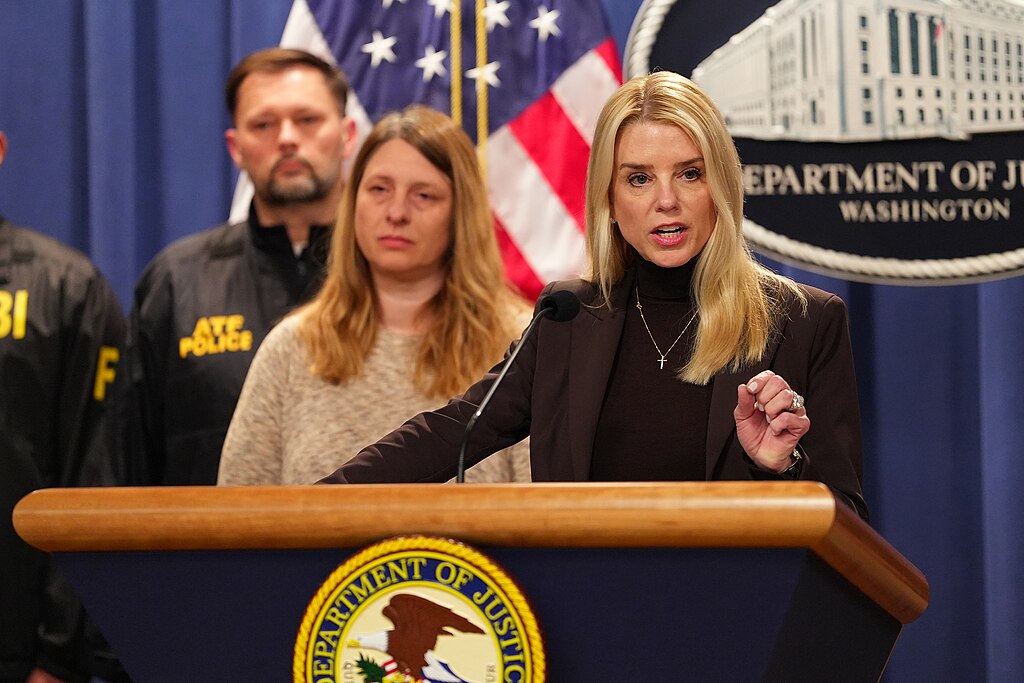
Attorney General Pam Bondi had several lawful options. She could have sought judicial guidance, consulted Congress, or publicly acknowledged limitations in the statute and requested legislative clarification. Critics argue that instead, the department chose quiet removal paired with a justification that does not appear in the law.
The result is a growing credibility problem.
If disclosure laws apply only when politically convenient, critics warn, then oversight collapses. The rule of law depends on statutes binding the executive branch even when compliance carries political cost.
Reaction on Capitol Hill was swift and bipartisan.
Democratic Rep. Ro Khanna of California, a co-author of the Epstein Files Transparency Act, and Republican Rep. Thomas Massie of Kentucky, who pushed for the House vote compelling disclosure, both stated publicly that the Justice Department failed to comply with the law. Khanna has confirmed that he and Massie are now preparing potential impeachment and contempt measures related to the handling of the files.
Congress now faces a clear choice.
Lawmakers can accept selective enforcement and the quiet disappearance of public records. Or they can assert their constitutional authority and enforce the law as written.
At stake is more than one set of files. The outcome will determine whether transparency laws have real force—or whether executive agencies can override Congress when compliance becomes politically inconvenient.