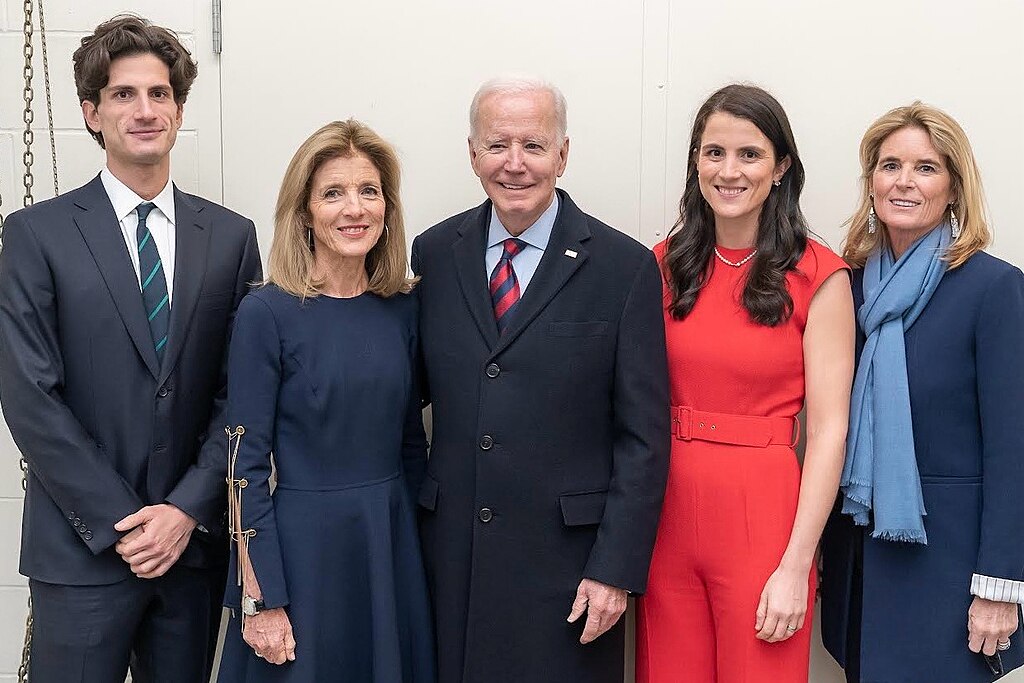
The Kennedy family has suffered another devastating loss.
Tatiana Schlossberg, a writer and journalist from one of America’s most famous political families, has died after a long and painful battle with cancer. She was only 35 years old.
In a brief statement released Tuesday, the family confirmed her passing. “Our beautiful Tatiana passed away this morning. She will always be in our hearts,” the message said.
Schlossberg, the granddaughter of President John F. Kennedy, publicly revealed her diagnosis in a deeply personal essay published late last year. She explained that she had been diagnosed with acute myeloid leukemia, a fast-moving and aggressive blood cancer involving a rare genetic mutation.
According to her account, doctors discovered the illness on May 25, 2024 — the same day she gave birth to her second child. A routine blood test revealed dangerously elevated white blood cell levels, prompting further examination and an immediate diagnosis.
She spent more than five weeks hospitalized in New York before continuing treatment at home. Over the following months, Schlossberg endured chemotherapy and eventually underwent a bone marrow transplant in hopes of extending her life.
In one of the most heartbreaking passages of her writing, she recalled a doctor telling her that experimental treatment might keep her alive “for a year, maybe.” Her first thought, she said, was not of herself — but of her children.
She feared they would grow up without memories of their mother.
Schlossberg was the daughter of Caroline Kennedy and artist Edwin Schlossberg. Despite her famous last name, she carved out a serious career of her own, working as an environmental journalist and author. She previously reported for major national publications and wrote a book examining the hidden environmental costs of everyday American life.
Friends and colleagues described her as disciplined, thoughtful, and physically active. She once completed a demanding 30-mile cross-country ski race, and she wrote that just one day before giving birth, she had swum a full mile — making her diagnosis all the more shocking.
In her final months, Schlossberg also addressed political tensions within her own family. She was openly critical of her cousin, Robert F. Kennedy Jr., particularly during his rise in national politics. Writing from her hospital bed, she questioned his qualifications and expressed concern over his public skepticism toward vaccines.
As an immunocompromised patient who needed to receive childhood vaccinations again, she worried that political debates could interfere with access to lifesaving medical care.
Her death adds to the long history of tragedy surrounding the Kennedy name — a family that has endured assassination, accidents, illness, and loss across generations.
For many Americans, her story is a sobering reminder that fame, power, and legacy offer no shield against the most unforgiving realities of life.