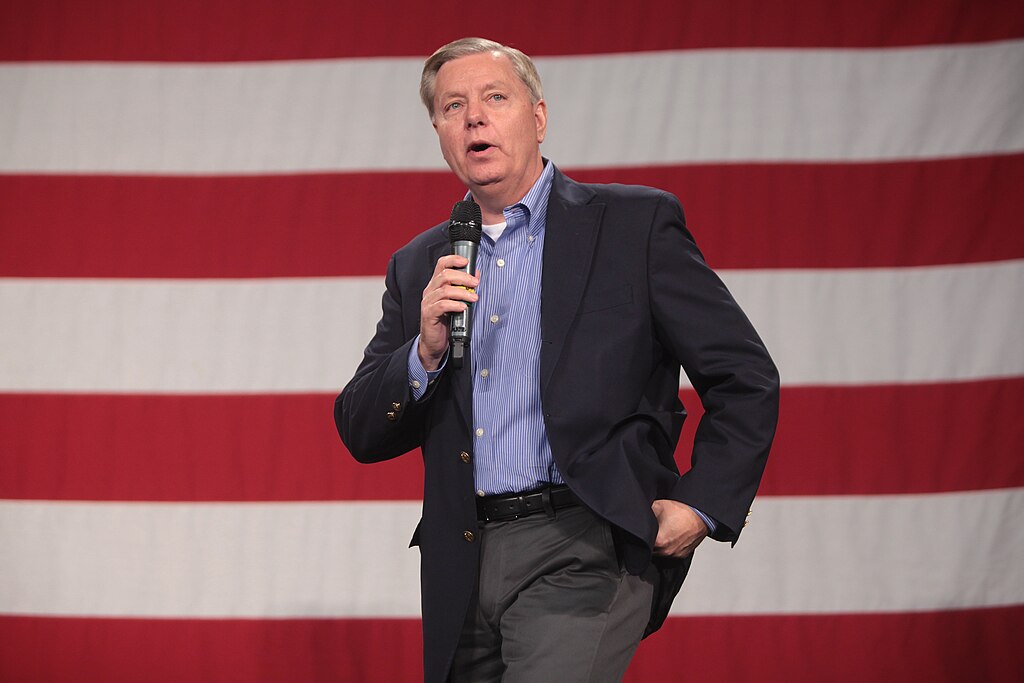
Graham isn’t happy.
The White House is crediting President Donald Trump’s hard-line posture toward Iran for a sudden pause in executions carried out by the Islamic regime, even as reports emerge that foreign leaders urged restraint against immediate military action.
According to Press Secretary Karoline Leavitt, Iranian authorities halted as many as 800 planned executions following President Trump’s recent warnings and increased military pressure.
“Only President Trump knows what he’s going to do,” Leavitt said during a White House briefing, emphasizing that all options remain on the table if Iran resumes its crackdown on protesters.
She said the administration has clearly warned Tehran that continued violence against civilians would result in serious consequences.
Foreign Pressure Behind the Scenes
While the administration projects strength publicly, foreign leaders appear to be urging caution. A senior Saudi official told international media that Saudi Arabia, Qatar, and Oman encouraged President Trump to delay direct military action, citing fears of broader instability across the region.
Separately, unnamed U.S. officials claimed Israeli Prime Minister Benjamin Netanyahu requested a delay to allow Israel time to prepare for possible retaliation.
Not everyone in Washington believes those reports.
Analysts familiar with President Trump’s leadership style note that similar pauses in rhetoric have preceded decisive action in the past. Last year, Trump publicly stated he would make a decision on Iran’s nuclear program “within two weeks.” Days later, U.S. forces launched major strikes on key nuclear sites.
Mark Dubowitz of the Foundation for Defense of Democracies questioned whether reports of Israeli hesitation were accurate, suggesting the messaging could be strategic rather than genuine.
Trump Draws Clear Red Lines
President Trump has repeatedly warned Iran against killing peaceful protesters. Earlier this month, he said the United States was “ready to act” if the regime continued violence against civilians.
Human rights organizations claim Iran’s security forces have killed thousands during the unrest, though exact figures are difficult to confirm due to internet blackouts imposed by the regime.
This week, Trump announced plans for a sweeping economic embargo, including 25 percent tariffs on countries that continue doing business with Iran. He also publicly encouraged Iranians to keep protesting and warned regime officials that accountability would come.
A Shift in Tone — Or Strategic Pause?
On Wednesday, President Trump told reporters he had received assurances that executions had stopped and that no immediate hangings were planned. He declined to identify his sources but described them as “very important.”
The change in tone sparked debate in Washington. Some insiders believe the administration may be deliberately lowering Iran’s guard, while others point to military logistics and regional defense concerns.
Meanwhile, the Pentagon has moved a U.S. carrier strike group toward the Middle East. The USS Abraham Lincoln and its support vessels are expected to arrive soon, reinforcing the message that military options remain viable.
Representative Joe Wilson of South Carolina said the movements suggest the administration is preparing to support change driven by the Iranian people themselves.
Graham Breaks With Trump
Despite the developments, Senator Lindsey Graham, a longtime advocate of aggressive action against Iran, publicly criticized reports that foreign governments influenced U.S. decision-making.
Graham called it “deeply disturbing” if Arab nations intervened to discourage decisive action against what he described as a violent regime.
He warned that Iran’s leadership has American blood on its hands and continues to suppress its own people.
Iranian state media further escalated tensions by broadcasting a threatening message referencing the failed assassination attempt against President Trump during the 2024 campaign.
Situation Remains Volatile
Casualty estimates vary widely, but videos and eyewitness accounts suggest widespread violence in major cities. Some international watchdog groups estimate nearly 3,500 protesters have been killed, with unofficial figures potentially much higher.
The White House confirmed the halted executions represent a significant development. Iran’s foreign minister later acknowledged there would be no hangings in the immediate term — news President Trump described as positive.
At the same time, U.S. officials have reduced personnel at regional bases, embassies have limited travel, and Iran briefly closed its airspace before reopening it as protests appeared to ease.
Bottom Line
President Trump’s strategy appears to combine maximum pressure with calculated restraint. Whether the current pause leads to lasting change — or sets the stage for stronger action — remains to be seen.
For now, the message from the White House is clear: America is watching, and Iran has been warned.