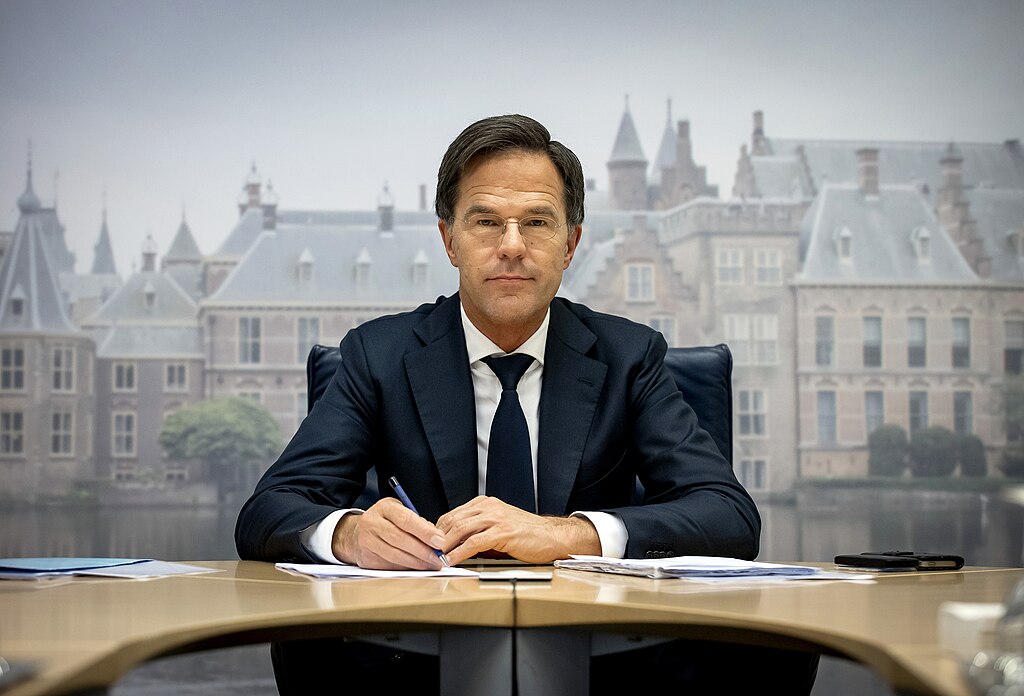
NATO clearly can’t handle Trump.
NATO Secretary General Mark Rutte delivered a blunt admission this week: Europe’s recent economic and defense spending surge would not have happened without President Donald Trump back in office.
Speaking at the World Economic Forum in Davos, Rutte credited Trump’s leadership with forcing European governments to finally meet long-ignored NATO commitments.
For years, NATO allies faced criticism for failing to spend enough on their own defense. According to Rutte, that changed rapidly after Trump’s return to the White House.
Several major economies—including Spain, Italy, Belgium, and Canada—reached the alliance’s long-standing 2 percent of GDP defense spending benchmark in 2025. At the start of the year, many were still closer to 1.5 percent.
Rutte made clear he does not believe the shift was accidental.
“There is simply no way this would have happened without Donald Trump,” he said, pushing back against critics who oppose the president’s confrontational approach to NATO.
Trump Pressure Forces NATO Action
Rutte acknowledged that defending Trump is unpopular in elite political circles but argued the results speak for themselves. He said Trump’s firm stance ended years of delays, excuses, and underfunding by European governments.
That pressure reached its peak ahead of last year’s NATO summit, where alliance members agreed to dramatically increase defense spending targets to 5 percent of GDP, including 3.5 percent for core military readiness.
Rutte was unequivocal about the outcome. He said the agreement reached in The Hague would not have occurred if Trump had not been re-elected.
“Without President Trump, this would never have happened,” he said. “No way.”
According to Rutte, Europe was forced to confront a reality it had avoided for decades: the United States would no longer shoulder the full burden of defending the continent.
Europe Told to Take Responsibility
Rutte argued that Trump’s leadership compelled NATO members to take responsibility for their own security instead of relying on American taxpayers.
While the message has angered some political leaders, Rutte said it ultimately strengthened the alliance by making it more balanced and sustainable.
Trump’s appearance in Davos came amid renewed tensions with several Western allies over his interest in Greenland, a strategically critical territory governed by Denmark.
During his remarks, Trump stated he would not pursue Greenland through military force, a clarification that eased some concerns. However, he emphasized that the territory remains vital to U.S. national security interests.
Arctic Security Takes Center Stage
Rutte echoed Trump’s focus on the Arctic, warning that the region is becoming increasingly important as shipping routes open and global competition intensifies.
He noted that Russia and China are expanding their activity in the Arctic, raising concerns among NATO leaders.
Seven of the eight Arctic-bordering nations are NATO members, with Russia as the only exception. Rutte also described China as a growing presence in the region despite lacking direct Arctic territory.
According to Rutte, Trump and other leaders are right to push for stronger defenses in the Arctic.
“We have to do more,” he said. “Protecting the Arctic is essential to long-term security.”
The Bottom Line
The message from NATO leadership was unmistakable: Europe’s long-overdue shift toward serious defense spending came only after President Trump applied sustained pressure.
For allies accustomed to American protection without full participation, Trump’s return marked a turning point—and NATO’s own leadership is now saying so openly.