President Donald Trump’s immigration enforcement strategy is once again dominating headlines — this time in Minnesota.
But despite critics claiming a retreat, the facts suggest something very different.
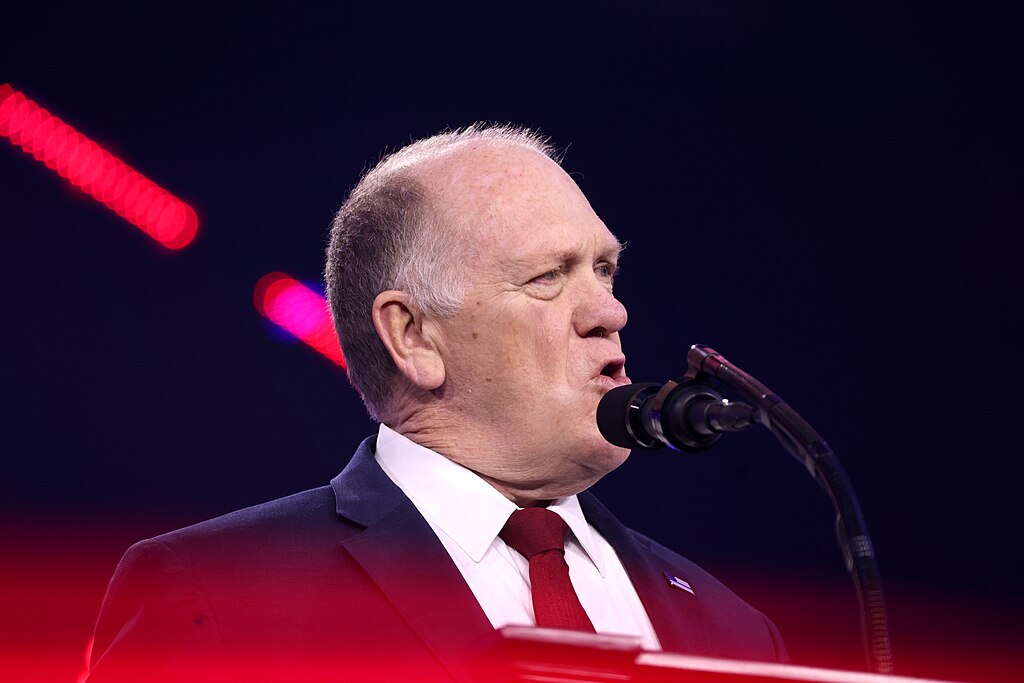
Tom Homan, President Trump’s border czar and former acting ICE director, announced Thursday that Operation Metro Surge — the large-scale federal immigration enforcement effort in Minnesota — will begin concluding.
The key question: Is this a backdown… or proof the operation worked?
What Was Operation Metro Surge?
Operation Metro Surge was launched to address rising concerns over illegal immigration enforcement gaps in the Minneapolis–St. Paul metro area.
The mission focused on:
- Targeting criminal illegal aliens
- Strengthening cooperation between ICE and local jails
- Reducing sanctuary-style protections
- Disrupting fraud and organized agitator activity
- Increasing public safety enforcement
According to federal officials, more than 4,000 arrests were made during the ICE sweeps.
For many Americans concerned about law and order, that number alone signals a serious impact.
Tom Homan: “Minnesota Is Less of a Sanctuary State”
Speaking at a news conference in Minneapolis, Homan said the surge achieved its intended results.
“As a result of our efforts here, Minnesota is now less of a sanctuary state for criminals.”
He added that he recommended concluding the surge — and President Trump agreed.
That distinction matters.
This was not a political concession to state leadership. It was a recommendation based on enforcement benchmarks being met.
What Does the “Drawdown” Actually Mean?
The term “drawdown” can sound dramatic. In reality, here’s what’s happening:
- Approximately 700 federal officers will leave Minnesota
- Roughly 2,000 federal personnel will remain
- Criminal and fraud investigations will continue
- A smaller federal footprint will stay in place
- Homan will remain temporarily to oversee the transition
This is not a full withdrawal.
It is a phased operational shift — contingent on continued cooperation and the absence of illegal activity targeting federal agents.
Homan made clear that further reductions depend on stability and compliance.
For conservative voters who prioritize border security and ICE enforcement, that’s an important safeguard.
Governor Tim Walz Reacts
Minnesota Governor Tim Walz, a Democrat, responded with visible frustration.
After speaking with Homan, Walz told reporters:
“We will help you get to the airport. We will clear the roads to get you to the airport. I will come over and pack your damn bags if that’s what it takes.”
The comment underscores the ongoing political tension between state officials and the Trump administration’s immigration policies.
But despite the rhetoric, federal enforcement remains active in Minnesota.
Why This Matters for Public Safety
Homan initially took control of the Minnesota operation in late January after heightened controversy — including two fatal shootings involving federal agents and growing political backlash.
Under his leadership, the mission focused heavily on coordination, transparency, and measurable enforcement outcomes.
From the administration’s standpoint, Operation Metro Surge:
- Reduced sanctuary-style resistance
- Increased jail cooperation
- Targeted criminal offenders
- Stabilized a politically volatile enforcement environment
For many Americans over 50 — who consistently rank crime and border security among their top concerns — the results may speak louder than the headlines.
Backdown — or Strategic Completion?
Critics may frame the move as President Trump stepping back.
Supporters see something else:
A surge deployed.
Benchmarks met.
Agents reduced — but not removed.
Enforcement maintained.
The Trump administration’s broader immigration strategy remains firmly intact nationwide.
Minnesota appears to be transitioning from emergency surge operations to sustained enforcement oversight.
That’s not retreat.
That’s mission adjustment.
The Bigger Picture
Immigration enforcement, sanctuary state policies, and ICE cooperation will remain central issues heading into future election cycles.
What happened in Minnesota may serve as a blueprint:
Deploy federal resources.
Restore compliance.
Scale back when stability returns.
Keep a federal presence in place.
Whether critics call it escalation or de-escalation, one thing is clear:
The debate over border security and public safety in America is far from over.
And Minnesota just became another chapter in that story.